PTC CEO Harpreet Sahni highlights role of literature and media in social change at Patialas Modi college event
Says literature not only records history but also questions it; it encourages readers to think, reflect and analyse their surroundings
PTC Web Desk: An extension lecture on the theme “Literature, Media and Social Change” was organised at Multani Mal Modi College on the occasion of National Management Day. The event was jointly hosted by the Departments of English, Journalism and Business Management. The keynote address was delivered by Harpreet Singh Sahni, CEO and Editor-in-Chief of PTC News, PTC Digital and PTC Simran. The session focused on the deep connection between literature, media and their role in shaping society.
College Principal Dr Neeraj Goyal, in his welcome address, said literature and media were powerful tools that influence social thinking and leadership. He added that such academic interactions help students understand how ideas expressed through books, news platforms and digital media can bring meaningful change in society.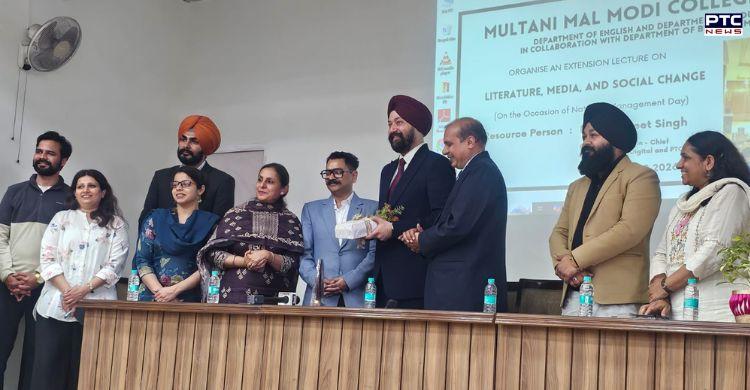
The formal introduction of the speaker was given by Dr Vaneet Kaur, Head of the Department of English.
During his lecture, Harpreet Singh Sahni explained that literature acts as a mirror of society. He said through stories, poems, novels and essays, writers reflect the realities of their times, whether it is social inequality, cultural shifts, moral conflicts or political change. Literature not only records history but also questions it. It encourages readers to think, reflect and analyse their surroundings.
He emphasised that every era has produced literature that speaks to its own challenges. From ancient texts to modern writings, literature has always helped society understand itself better. He urged students to develop the habit of reading regularly, stating that literature broadens perspective, improves critical thinking and strengthens emotional intelligence.
Speaking about media, Harpreet Sahni highlighted its role as the voice of society. He said media brings issues to the forefront, raises awareness and gives a platform to unheard voices. Responsible journalism, he noted, can influence policy decisions, highlight injustice and promote transparency.
However, he also cautioned students about the responsible use of social media. He stressed that while digital platforms offer opportunities for expression and learning, they must be used wisely. Misinformation, negativity and misuse of technology can harm individuals and society. He encouraged students to verify facts, think critically and maintain ethical standards while engaging online.
Addressing the role of artificial intelligence, he advised students not to treat AI as a weapon for shortcuts or misinformation. Instead, he suggested that AI should be used as a tool for gaining knowledge, enhancing research and improving productivity. Technology, he said, should support learning rather than replace genuine effort and creativity.
He further added that literature remains relevant in every period of time. Even as technology evolves, the need to read and understand human experiences does not diminish. According to him, reading literature regularly helps individuals stay grounded, empathetic and socially aware.
The session concluded with an interactive discussion, where students asked questions about media ethics, career opportunities and the evolving landscape of digital communication.
The proceedings of the event were conducted by Dr Harleen Kaur and Prof Ravinder Singh, while the vote of thanks was delivered by Dr. (Lt) Rohit Sachdeva. Faculty members and students from various departments attended the lecture.
The event served as an important platform for intellectual engagement, encouraging students to explore how literature and media contribute to social awareness and responsible leadership in a changing world.