Moderna, Merck’s personalised cancer vaccine shows breakthrough results in high-risk melanoma trial





PTC Web Desk: Moderna and Merck have reported positive results from a late-stage clinical trial of a personalised mRNA cancer vaccine aimed at reducing the chances of melanoma returning or spreading after surgery.
The vaccine was tested alongside Merck’s cancer immunotherapy Keytruda (pembrolizumab) in patients with high-risk melanoma. According to the companies, the combination met the main goal of the Phase 3 trial by reducing the risk of cancer recurrence.
The treatment also met a key secondary goal by lowering the risk of the cancer spreading to other parts of the body, a condition known as distant metastasis.
Full details of the trial are expected to be presented at a forthcoming medical conference.
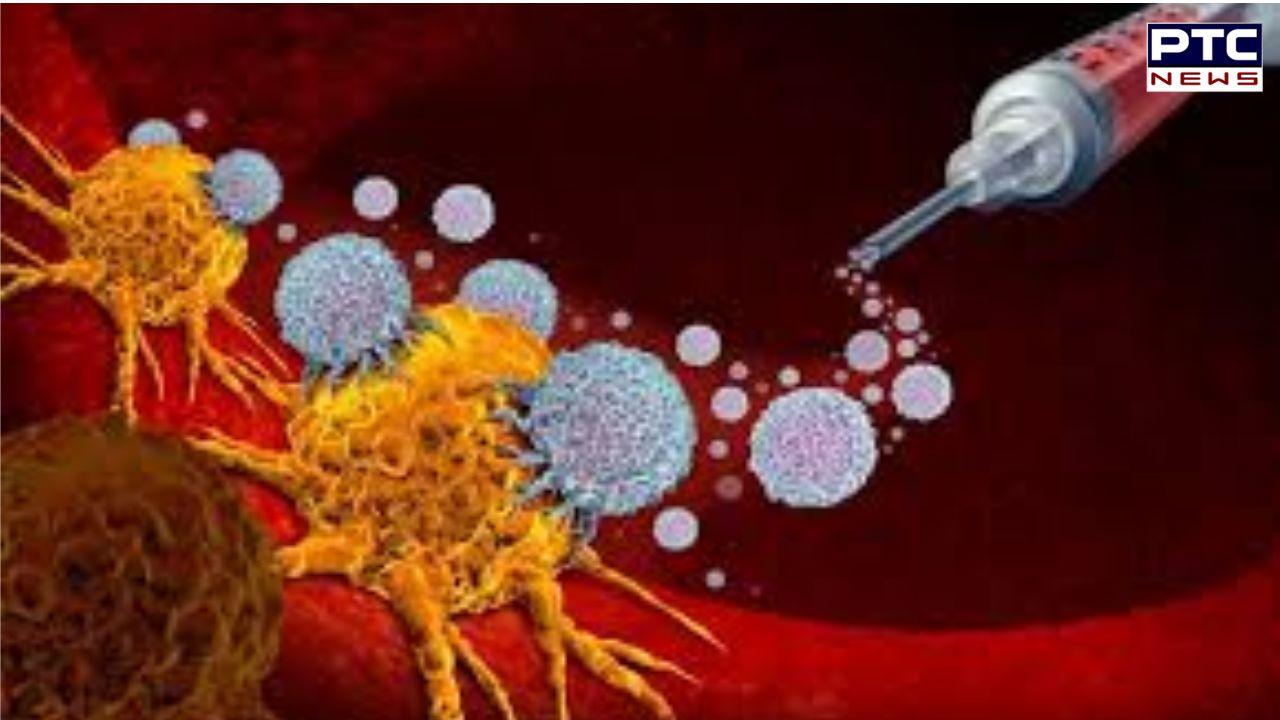
Unlike vaccines used to prevent infections, personalised cancer vaccines are designed for individual patients. After a tumour is removed through surgery, doctors can examine its genetic makeup and identify mutations that are specific to the cancer. The information can then be used to create a vaccine designed to help the immune system recognise and attack cancer cells carrying those mutations.
Moderna’s approach uses mRNA technology to deliver these instructions to the immune system. The aim is to create a stronger immune response against cancer cells that may remain in the body after surgery.
The Phase 3 study included 1,137 patients with high-risk stage IIB to IV melanoma whose tumours had been surgically removed.
Participants received either Keytruda together with the personalised mRNA vaccine or Keytruda alone for about one year.
The companies said patients receiving the combination had a lower risk of melanoma returning compared with those treated with Keytruda alone. The treatment also reduced the risk of distant metastasis.
No new safety concerns were identified during the trial, according to Moderna and Merck.
The findings are important because Keytruda is already widely used to treat melanoma. If adding a personalised vaccine can further improve patient outcomes, it could open the door to a new way of combining immunotherapy with mRNA technology.
Moderna and Merck described the results as the first positive Phase 3 findings for an individualised mRNA cancer vaccine. The companies believe the results could be an important step towards making personalised cancer vaccines part of future cancer treatment.
Moderna president Stephen Hoge said discussions with regulators are already underway. The treatment has also received breakthrough therapy designation, which could help speed up the regulatory process.
However, the vaccine is not yet approved for routine use. More detailed trial data will be needed to understand its full benefits, risks and long-term impact.
Importantly, the latest announcement does not yet provide final overall survival results, meaning it is still unclear whether the treatment will help patients live longer.
The latest Phase 3 findings follow encouraging results from an earlier study of the same treatment.
In January, Moderna and Merck reported five-year follow-up data showing that the combination reduced the risk of recurrence or death by 49% compared with Keytruda alone.
The new results add further support to the idea that personalised mRNA vaccines could help prevent cancer from returning following surgery.
Researchers are also investigating similar approaches for other cancers, including lung, breast and pancreatic cancers.
Melanoma is an aggressive form of skin cancer, particularly when it spreads beyond the original tumour.
For people with high-risk melanoma who have already undergone surgery, preventing the disease from returning is an important part of treatment.
A personalised vaccine could provide another layer of treatment by training the immune system to identify cancer cells based on mutations found in the patient's own tumour.
Still, patients and doctors will need to wait for the complete clinical data and regulatory decisions before knowing how the treatment could fit into standard melanoma care.
The results could have significance beyond melanoma. Personalised mRNA vaccines are being studied as a potential form of precision cancer treatment, with researchers looking at ways to tailor therapy to the genetic features of each patient's tumour.
If future studies continue to show that these vaccines are safe and effective, they could become an important part of treatment for several types of solid tumours.
For Moderna, the development also represents an effort to expand its mRNA technology into areas beyond infectious diseases. For Merck, combining a personalised vaccine with Keytruda could potentially create another important use for the company's established immunotherapy.
Questions remain over manufacturing, cost, large-scale production and the long-term survival benefits of the treatment. Even so, the positive late-stage results are being viewed as an important development in the search for more personalised cancer therapies.
Also Read | Telangana horror: Class 10 students stab principal to death for money, attacked 27 times; two detained
- With inputs from agencies