Israeli airstrike kills Hamas commander who helped plan, oversee October 7 attack



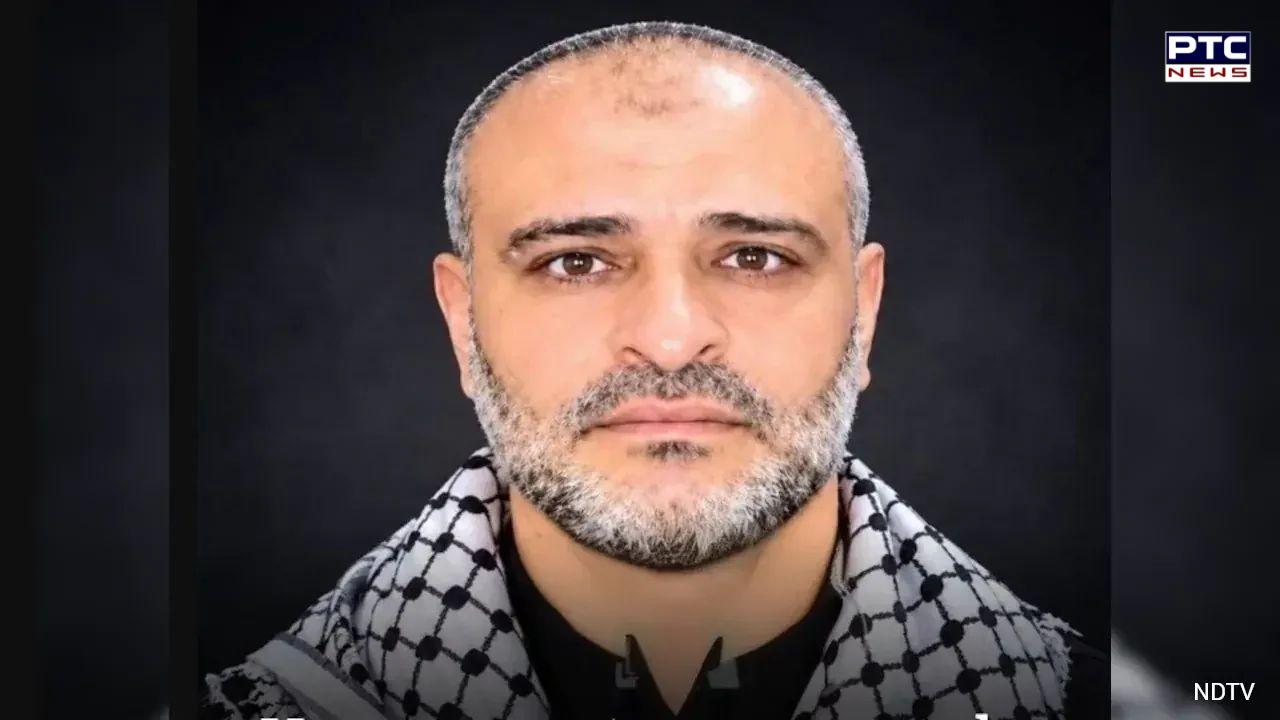
The Israeli military said on Sunday that it had targeted a senior commander of Hamas' armed wing in an airstrike in Gaza. Hamas sources told Reuters that the strike killed senior commander Samir Abu Younis in Khan Younis.
Hamas later confirmed his death and announced that his funeral would take place on Sunday afternoon in Khan Younis, in southern Gaza.
Abu Younis, 53, was the commander of the Rafah brigade of Hamas' armed wing, the Al-Qassam Brigades. He had been associated with the group since 1991 and held several senior operational positions in Rafah.
According to medical officials, Abu Younis was killed and several others were injured when an Israeli airstrike targeted him on a street in the Mawasi area of Khan Younis.
Ceasefire fails to stop Israeli strikes
A ceasefire agreement that came into effect in October 2025 brought an end to major fighting but has failed to stop Israeli attacks in Gaza. The agreement has also not resulted in the disarmament of Hamas.
According to Gaza health authorities, at least 1,600 Palestinians have been killed since the ceasefire began. The Israeli military has reported that seven soldiers and one civilian contractor have also died during the same period.
Both Israel and Hamas have accused each other of violating the ceasefire.
The US-backed agreement was reached after nearly two years of war, which began following the October 7, 2023, attack by Hamas-led fighters on southern Israel. Around 1,200 people were killed in the attack.
Palestinian authorities say more than 74,000 people have been killed in Israel's military campaign in Gaza since the war began. The United Nations considers figures provided by Gaza's health ministry, which operates under Hamas authority, reliable.
Meanwhile, Israel has continued carrying out regular airstrikes in Gaza despite the ceasefire largely reducing the scale of fighting.
Political developments in Israel
In Israel, former army chief Gadi Eisenkot is involved in negotiations to form a governing coalition. His political rival, caretaker Prime Minister Benjamin Netanyahu, continues to oversee the country's military operations.
Eisenkot, who was given the first opportunity by President Isaac Herzog on Sunday to form a government, had hoped to build a coalition with the four Jewish-led parties opposed to Benjamin Netanyahu. However, these parties secured only 48 seats in the 120-member Knesset. Netanyahu's alliance won 53 seats, while the two Arab parties together secured 19 seats.
This means Eisenkot's bloc will need support from Arab-led parties or other political partners to form the government.
However, Avigdor Liberman, a secular right-wing leader, has ruled out depending on Arab parties for support. He has also opposed forming a minority government, arguing that such an arrangement would not last long and could eventually strengthen Netanyahu's bloc.
Instead, Liberman wants the opposition parties led by Zionist groups to secure a majority of 61 seats by reaching an agreement with the ultra-Orthodox parties United Torah Judaism, which has seven seats, and Shas, which has six seats. Notably, Liberman had strongly opposed an alliance with these parties for several years.
- PTC NEWS