The world took 40 years to discover Rupa Biswas' music; now GTA 6 is giving it a global stage



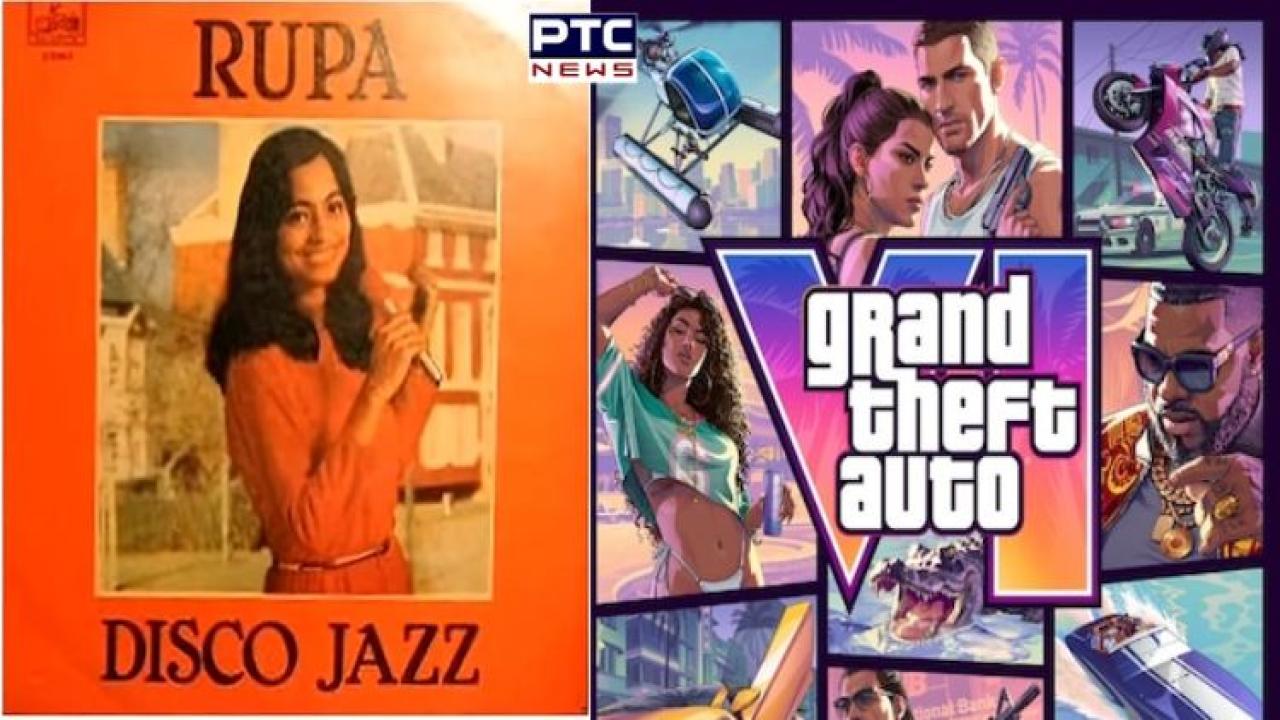
PTC Web Desk: A Bengali disco track that struggled to find listeners when it was released more than 40 years ago is now preparing to reach millions of music and gaming enthusiasts worldwide. Rupa Biswas' 1982 song 'Aaj Shanibar' has been included in the soundtrack of the much-awaited video game Grand Theft Auto 6 (GTA 6), giving the singer's long-forgotten musical creation an unexpected international spotlight.
The song will feature on the game's Worldwide FM radio station. Its inclusion marks a remarkable turnaround for Rupa Biswas, whose debut album once left her deeply disappointed and made her question whether she should continue pursuing music.
Interestingly, Indian music has appeared in the Grand Theft Auto franchise before. GTA: Liberty City Stories, released in 2005, featured tracks such as Asha Bhosle's 'Dum Maro Dum', Ananda Shankar's 'Raghupati' and Vijaya Anand's 'Neeve Nanna' on its Radio Del Mundo station.
But the story of how 'Aaj Shanibar' made its way into GTA 6 is particularly unusual. It is a tale of an ambitious young singer, an album that failed commercially, years away from the music industry and a revival that she never expected.
From Malda to Canada: The beginning of Rupa's musical journey
Born Shukla Biswas in 1955 in Malda Town, West Bengal, Rupa grew up surrounded by music. She had tried to establish herself as a professional singer in India and had even performed cover versions of popular songs for All India Radio.
Her life took an unexpected turn in 1981 when she travelled to Canada with her family.
Her elder brother, who was living in Calgary, arranged a musical gathering where she was invited to perform. What was supposed to be a casual performance soon turned into an impressive concert.
According to a profile published by Vogue India in April 2024, Biswas sang nearly 30 songs over a three-hour performance at the University of Calgary's recital hall.
Among those present were renowned sarod musician Aashish Khan and his brother Pranesh Khan. Impressed by her voice and stage presence, the two approached her with an offer to record an album.
That opportunity eventually resulted in 'Disco Jazz', a record that brought together disco rhythms, jazz arrangements and elements of Indian classical music.
Recorded in Calgary, the album featured Biswas' vocals alongside instruments such as the sarod and tabla, creating a sound that was quite different from conventional Indian pop music of the period.
In a 2021 conversation with Wax Poetics, Biswas recalled being excited about the opportunity to explore a new musical style. She believed the album could open doors for her and establish her as a recognised singer.
One of its most distinctive tracks was 'Aaj Shanibar', a Bengali disco number that would eventually become the album's most celebrated song.
When disco ruled India, Rupa Biswas struggled to find listeners
The early 1980s were among the most exciting years for disco music in India. The genre had captured the imagination of audiences, with several singers and composers producing songs that went on to become major hits.
Nazia Hassan had already become a household name with 'Aap Jaisa Koi' from the 1980 film Qurbani. Her non-film album 'Disco Deewane', released in 1981, further strengthened the disco wave. A July 1981 report in Billboard highlighted the album's impressive commercial performance, with sales crossing 200,000 copies within three weeks.
At the same time, Bappi Lahiri was giving Bollywood a new musical identity through popular tracks such as 'Hari Om Hari' and 'Ramba Ho'. His music for the 1982 film 'Disco Dancer', particularly 'I Am A Disco Dancer' and 'Jimmy Jimmy Aaja Aaja', became hugely popular in India and overseas.
Asha Bhosle's 'Disco Station' from 'Haathkadi' was another addition to the growing list of disco hits.
Despite the popularity of the genre, Rupa Biswas' 'Disco Jazz' failed to attract much attention.
In a 2019 interview with The Guardian, she recalled how poorly the album performed after its release. Sales were so disappointing that she eventually had to visit a music shop and purchase a cassette of her own album.
She had expected listeners to show enthusiasm for her experimental sound. Instead, the response left her heartbroken.
The disappointment affected her confidence and desire to continue making music.
In the same interview, she spoke about losing the motivation to record another album or rebuild her career. She was just 26 when the record came out and had invested considerable hopes in its success.
For years, she kept her distance from the music she had once been so passionate about.
Marriage, personal loss and a long break from music
After the album failed to make an impact, Biswas gradually moved away from the music industry.
She married a textile engineer in 1984 and relocated to Indonesia with him. Although she occasionally performed there, music was no longer the centre of her life. Her personal struggles deepened following her husband's death in 2010.
In her 2024 conversation with Vogue India, she recalled how the loss left her emotionally shattered. She stopped singing and largely withdrew from public life. For a long time, it appeared that her musical journey had come to an end.
However, unknown to her, the record she had once considered a failure was slowly becoming a favourite among international music collectors and DJs.
How a forgotten Bengali album became an international discovery
The first significant revival of 'Disco Jazz' came in 2012 when filmmaker Ashim Ahluwalia used music from the album in his film 'Miss Lovely'. The film was selected for the Un Certain Regard section at the Cannes Film Festival, bringing renewed attention to the unusual recordings.
The next major breakthrough came through the international DJ community.
As reported by Vogue India, Swedish DJ Albion Venables came across the album after a Hamburg-based record seller listed it online. He was particularly fascinated by 'Aaj Shanibar' and began including it in his DJ sets.
The track eventually reached Canadian musician and DJ Dan Snaith, widely known by his stage names Caribou and Daphni.
Snaith became an enthusiastic supporter of the song, playing it at live performances and on radio broadcasts. His interest helped the track reach audiences far beyond its original market.
Speaking to The Guardian in 2019, he described being immediately captivated by the recording and its unusual combination of Indian pop, disco and Balearic sounds.
The growing interest among DJs and collectors soon translated into renewed demand for the album.
A German label, Ovular, released an unofficial edition in 2017. Two years later, Chicago-based archival record label Numero Group brought out an official reissue of 'Disco Jazz', allowing a new generation of listeners to discover the music.
Her son rediscovered the album and brought her back to music
One of the most emotional parts of the story was that Rupa herself had no idea her music was becoming popular internationally.
The breakthrough came when her son, Debayan Sen, stumbled upon the old album at their Kolkata home.
When he showed her the cassette, her initial reaction was to suggest throwing it away. She had no reason to believe that anyone would be interested in a record she had spent years trying to forget.
It was only after learning about the growing international appreciation for her music that she began to understand the remarkable journey of 'Disco Jazz'.
The renewed attention also gave her the confidence to return to performing.
In December 2023, Biswas made her first live appearance in nearly three decades at the Kolkata Jazz Fest, marking an emotional return to the stage.
In an April 2024 interview with Vogue India, she expressed happiness at receiving invitations to perform again, describing the experience as something she had never expected at this stage of her life.
GTA 6 gives Rupa Biswas another chance at global recognition
Now, more than four decades after 'Aaj Shanibar' first appeared on 'Disco Jazz', the song is set to reach an entirely different audience through GTA 6.
The game's inclusion of the Bengali track is another milestone in its extraordinary revival, taking a relatively obscure Indian recording from the early 1980s to one of the world's biggest gaming franchises.
For Rupa Biswas, the journey has come full circle in the most unexpected way.
An album that once sold only a handful of copies, a song she barely wanted to revisit and a musical career she had almost left behind have all found a new beginning.
Sometimes, recognition arrives much later than expected. In Rupa's case, the world took more than 40 years to discover what she had created in 1982.
- PTC NEWS