India gets first hydrogen-powered train| From key features to safety, all you need to know
This marks an important milestone in Indian Railways' journey from coal and steam engines to modern, eco-friendly technology.
PTC News Desk: Indian Railways is all set to launch India's first Hydrogen Fuel Cell Train, a major step towards cleaner and greener transportation. Unlike regular electric trains that get power from overhead wires, this train produces its own electricity onboard using hydrogen, one of the cleanest fuels available. The only by-products are water vapour and heat, making it a near-zero emission train.
This marks an important milestone in Indian Railways' journey from coal and steam engines to modern, eco-friendly technology.
Also Read: PM Modi Punjab visit LIVE UPDATES: Prime Minister to roll out projects worth around Rs 25,000 crore
How does the hydrogen train work?
Instead of using diesel, the train has a hydrogen fuel cell that acts like a small power plant. Hydrogen stored in cylinders reacts with oxygen from the air to produce electricity, which powers the train's motors and moves the wheels.
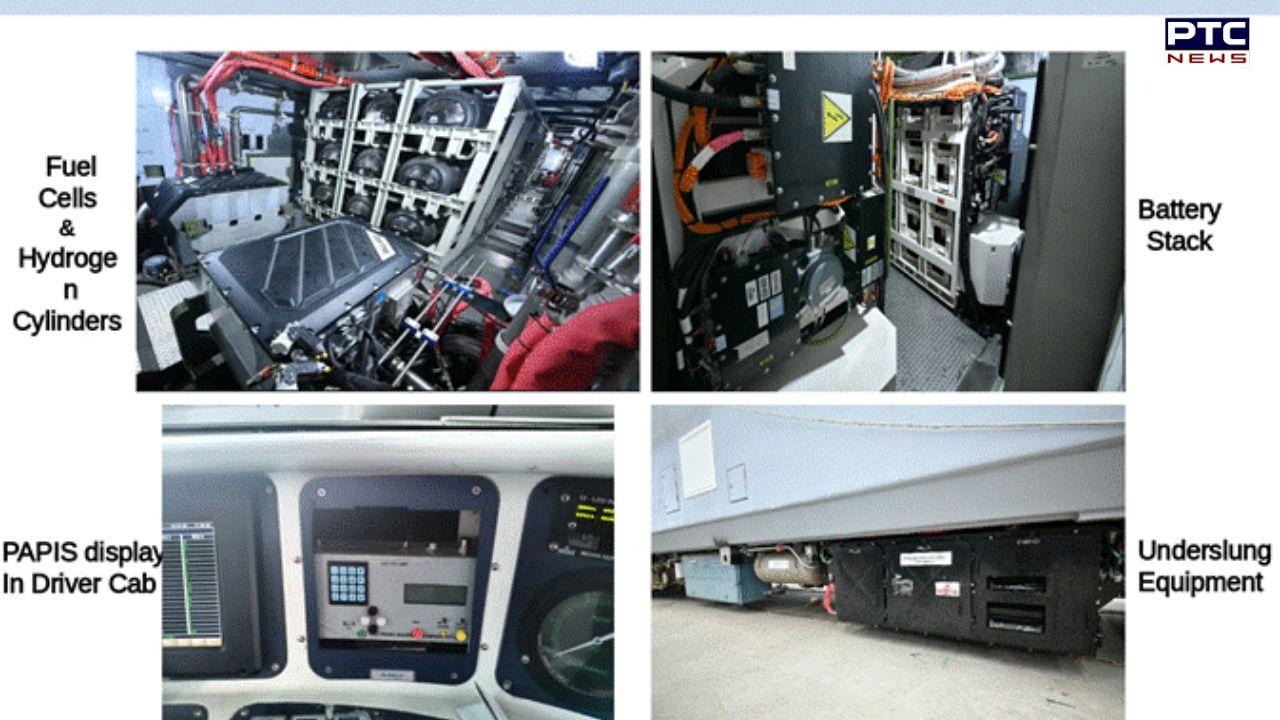
Since there is no fuel burning, the train produces no smoke or carbon emissions, making it one of the greenest forms of rail transport.
Faster and built for more passengers
The hydrogen train will run on the Jind-Sonipat route in Haryana. It will have:
- An operational speed of 75 kmph
- A maximum design speed of 110 kmph
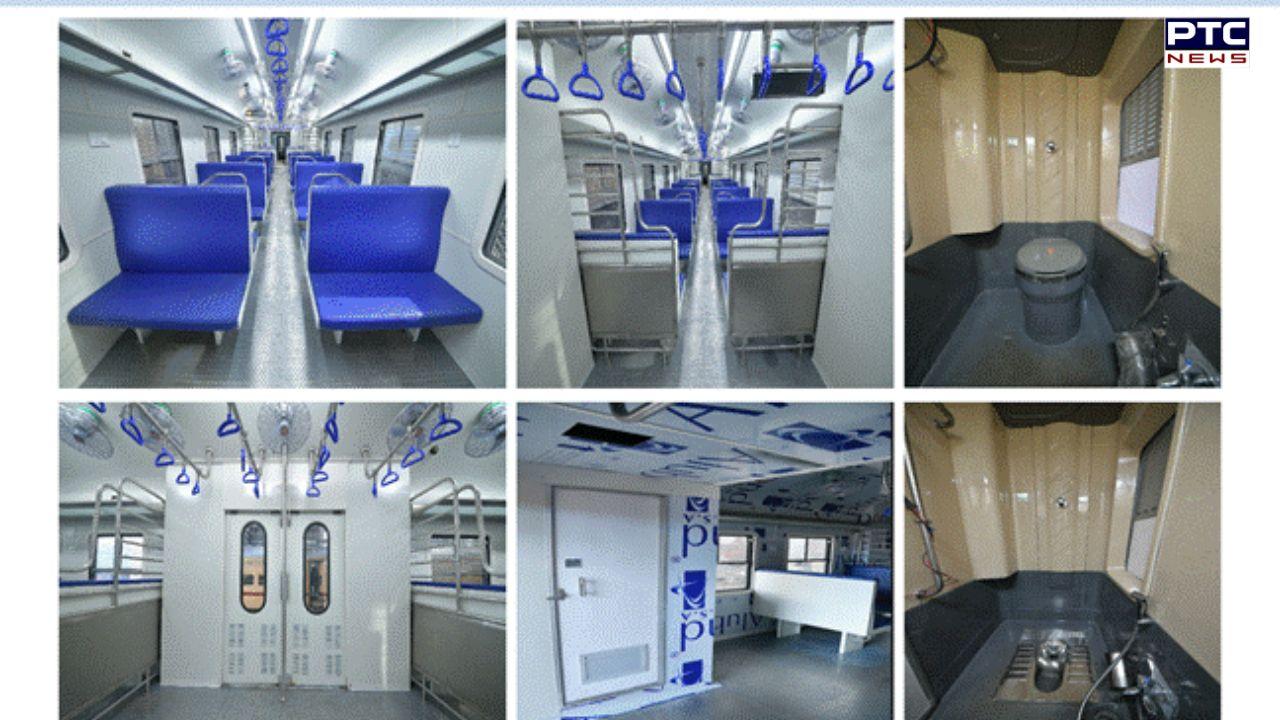
- 10 coaches with a capacity of around 2,600 passengers
This makes it much larger than hydrogen trains in many other countries, which usually have only 2 to 4 coaches and operate on short regional routes.
Hydrogen refuelling station at Jind
To support the new train, Indian Railways has built India's largest railway hydrogen refuelling station at Jind, Haryana. Like a petrol or CNG station, it will supply hydrogen to the train before its journey.
Safety features
Indian Railways has added several safety systems to ensure safe operation.
Sensors constantly monitor for hydrogen leaks, heat, flames and smoke.
Continuous ventilation prevents hydrogen from building up by allowing fresh air to circulate.
An automatic shut-off system immediately stops the hydrogen supply if any problem is detected.
The loco pilot's cabin has been specially designed for safety and includes a real-time monitoring system that displays the health of the train. In an emergency, the train can also be moved to a safe location using a special operating mode.
With these features, Indian Railways aims to make hydrogen-powered travel cleaner, safer and more sustainable for the future.
Where does India stand globally?
Hydrogen-powered trains are still new around the world. Germany was the first country to introduce them commercially, while France, Italy, China, Japan, and a few others are testing or using them on a limited scale.
India's hydrogen train stands out because it has 10 coaches, showing that hydrogen technology can also be used for high-capacity passenger services.