This Arab astronaut makes history, completes spacewalk on ISS
Steps to ensure the safety of the astronauts prior to the space walk
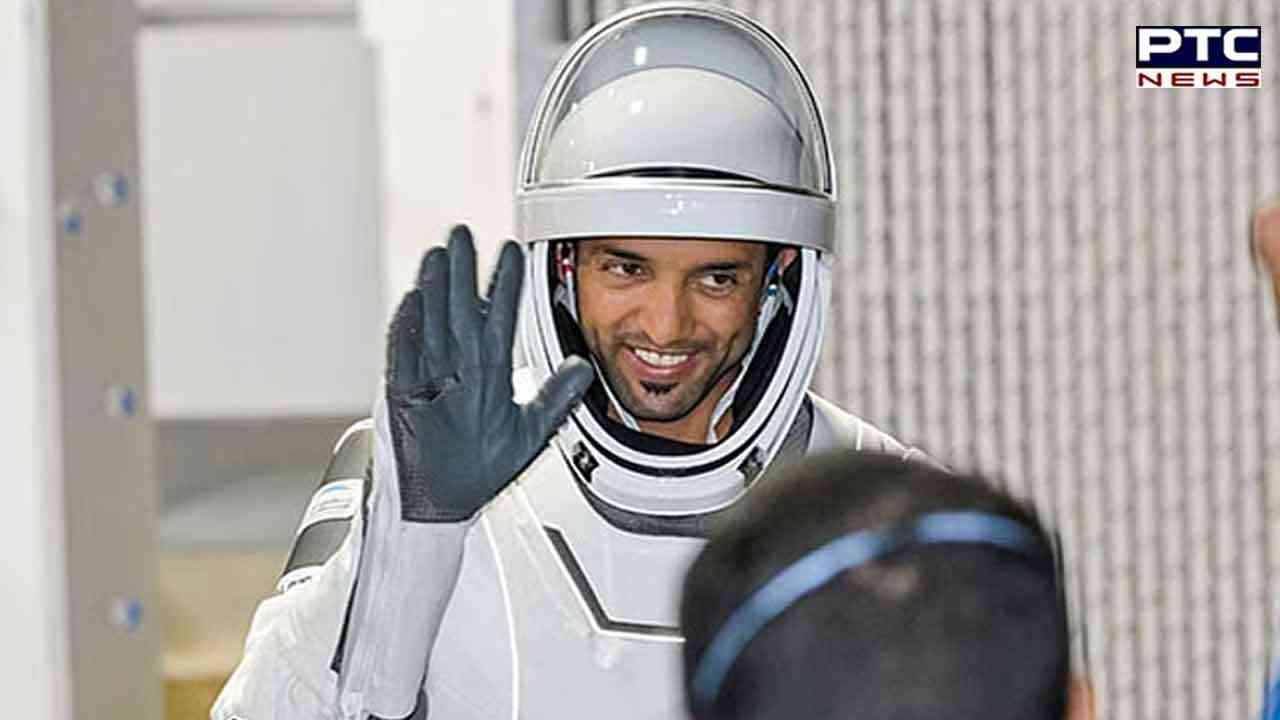
Dubai, April 29: The Mohammed Bin Rashid Space Centre (MBRSC) achieved a new milestone on Friday when astronaut Sultan AlNeyadi ventured out of the International Space Station (ISS) and completed his spacewalk.
With the conclusion of the mission task, the UAE commemorates AlNeyadi as the first Arab to undertake a spacewalk during Expedition 69, currently underway on the ISS. This accomplishment marks an important step forward for the Arab world's participation in space exploration.
Also Read: Wrestlers' protest: Who is Brij Bhushan Sharan Singh; why FIRs registered against him?
His Highness Sheikh Mohammed bin Rashid Al Maktoum, Vice President and Prime Minister of the UAE and Ruler of Dubai, said, "After three years of intensive training, today we see Sultan AlNeyadi on his first spacewalk, carrying out several tasks outside the International Space Station. AlNeyadi is the first ever Emirati, first Arab and first Muslim astronaut to perform a spacewalk."
His Highness Sheikh Mohammed bin Rashid added, "It is a fact that many stars have Arabic names. Arabs are capable and innovative. Our focus on science and investment in youth will shape our future."
The historic first Arab spacewalk lasted 7.01 hours in the vacuum of space on the starboard side of the International Space Station's truss structure, accomplishing two key objectives. One of the objectives of the Extravehicular Activity (EVA), undertaken by AlNeyadi along with NASA Flight Engineer Stephen Bowen, was to work on a series of preparatory tasks which involved routing power cables, which was successfully concluded.
Key safety checks of Sultan's spacewalk
Prior to the spacewalk, a thorough set of checks were conducted to ensure the safety of the astronauts. During their high-altitude walk outside the ISS, AlNeyadi and Bowen had to contend with two major challenges: radiation and extreme temperatures. The surrounding environment in space can reach scorching temperatures of up to 120 degrees Celsius in the sunlight and drop as low as -150 degrees Celsius when the sun is out of sight. While the spacesuit is geared to handle all this, careful management of the suit during the mission was also a task at hand.
- Collect air samples from the Destiny and Columbus laboratory modules before cleaning the Veggie Space botany facility. The samples were analysed for research purposes.
- Sending approximately 1,950 kg of valuable scientific experiments and other cargo back to Earth on a Dragon cargo spacecraft, as part of the 27th contracted cargo resupply mission to the International Space Station (ISS). The spacecraft splashed down off the coast of Tampa, Florida in the US earlier this month.
- Setting up the hardware for the CapiSorb Visible Systems fluid physics study. This experiment investigates the potential of using a liquid-based carbon dioxide removal system to promote more efficient space-based solutions and advanced Earth-bound applications.
- Treating samples In the Kibo laboratory module for the Engineered Heart Tissues-2 experiment using Kibo's Life Sciences Glovebox. This research may help doctors treat, as well as prevent, space-caused heart conditions and Earth-bound cardiac disorders.
- Working on two technology experiments. In the first experiment, AlNeyadi demonstrated the use of a 3D printer to manufacture tools, components, and experiments on the orbital outpost. The second experiment entailed collecting and stowing samples in a science freezer for a study exploring the biomanufacturing of pharmaceuticals in space.
Also Read: Chhattisgarh Naxal attack: Major revelations in IED blast