Afghanistan earthquake death toll rises to 1,411; India, UK and China send aid after Taliban’s appeal





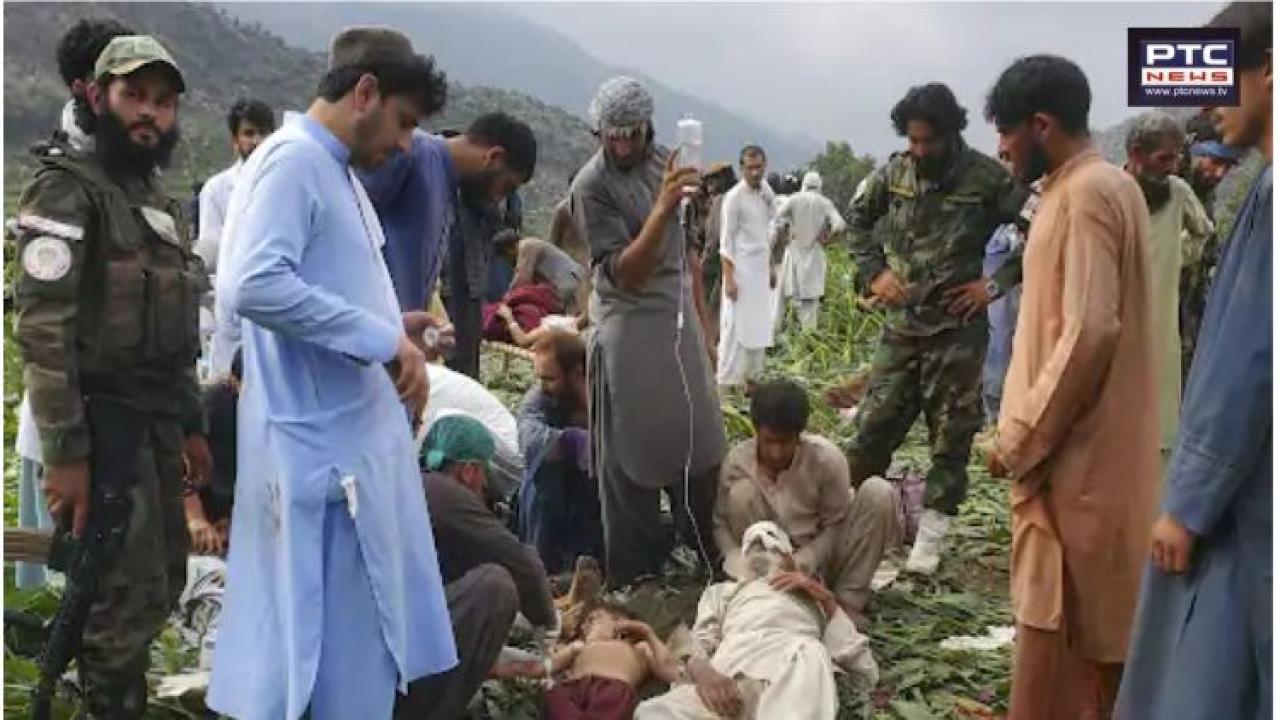
PTC Web Desk: The death toll from the 6.0-magnitude earthquake in Afghanistan has climbed to 1,411, while more than 3,250 persons have been injured, according to figures released by the Taliban administration on Monday.
The quake struck near Jalalabad on Sunday night, when most people were asleep, leaving many trapped under collapsed homes and buildings. The epicentre was located about 17 miles from Jalalabad in Nangarhar province, a mountainous region classified as a seismic red zone. Several villages in the area were reduced to rubble.
The Taliban government has issued an urgent appeal for international assistance. Responding quickly, India dispatched 1,000 tents to Kabul and sent 15 tonne of food supplies from Kabul to Kunar province.
Indian External Affairs Minister S Jaishankar posted on X (formerly Twitter) that New Delhi would continue sending relief supplies. This marks one of the largest humanitarian gestures by India since the Taliban takeover in 2021, when many global agencies suspended aid to Afghanistan.
Other countries have also stepped forward. The United Kingdom announced an emergency relief package worth £1 million (Rs 10 crore) to support quake-hit families. Meanwhile, China pledged to provide assistance in line with Afghanistan’s needs and Beijing’s capacity.
According to the US Geological Survey (USGS), the earthquake devastated parts of Nangarhar province and affected neighbouring regions. The worst casualties have been reported from Kunar province, where aftershocks, including a 4.6-magnitude tremor on Monday, worsened the destruction.
The impact was also felt beyond Afghanistan’s borders. Strong tremors were reported in Pakistan’s Khyber Pakhtunkhwa and Punjab provinces, while mild shocks were felt as far as Gurugram, India.
Relief efforts remain challenging due to the mountainous terrain, poor infrastructure, and restricted international aid. With thousands displaced and emergency resources stretched thin, humanitarian agencies warn of a deepening crisis if large-scale assistance does not reach affected communities swiftly.
- With inputs from agencies