LIVE UPDATES | Qatar says 10 drones, two missiles intercepted from Iran





LIVE BLOG ENDS HERE
At least 101 people are missing and 78 injured after a submarine attack on an Iranian ship off Sri Lanka’s coast, according to Sri Lanka Navy and Defence Ministry sources.
Iranians will bid farewell to late Supreme Leader Ayatollah Ali Khamenei at a ceremony in Tehran late on Wednesday, a senior Iranian official told state media.
Lebanon: 50 killed in Israeli strikes.
Israel: 10 civilians, including nine in a missile strike on Beit Shemesh near Jerusalem
Kuwait: Three killed, including two soldiers, in Iranian attacks.
UAE: Three killed.
Bahrain: One killed after a fire broke out in Salman Industrial City following a missile interception.
Oman: One killed after a projectile hit the Marshall Islands–flagged tanker MKD VYOM off Muscat.
US Military: Six service members killed in a strike on a facility in Kuwait.
The Kuwait Army said it is dealing with a wave of missiles and drones in its airspace as Iran targets U.S. interests in the Gulf, news agency Reuters reported.
US-made Kuwaiti jet shot down 3 American F-15s, finds probe
An Iranian missile was intercepted over Jerusalem by Israel’s Iron Dome defense system in the early morning hours. pic.twitter.com/SIh9SWAuEJ
— Mossad Commentary (@MOSSADil) March 4, 2026
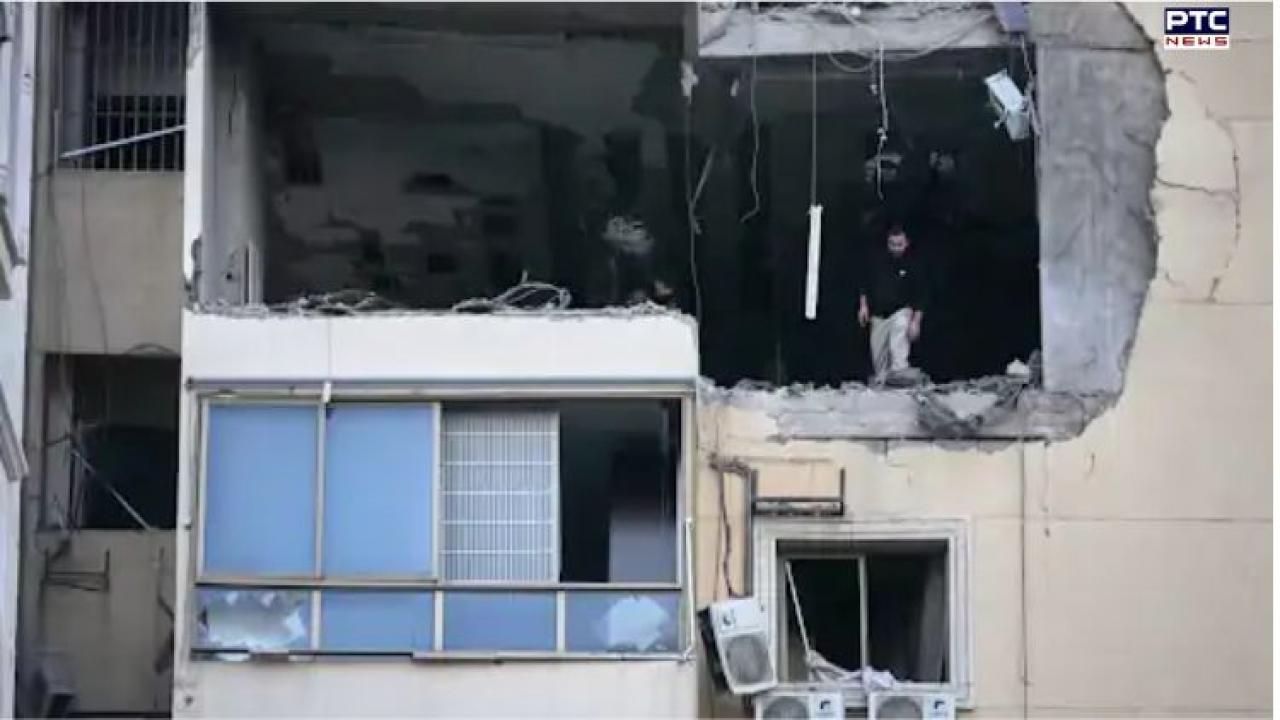
The conflict between Israel and Hezbollah has intensified further, with the Israeli military carrying out a strike on the Comfort Hotel in Beirut, Lebanon. The attack is believed to have been a targeted operation aimed at a specific individual, though there has been no official confirmation regarding the intended target.
According to the Lebanese Army, four people were injured in the strike, one of whom is reported to be in critical condition.
Meanwhile, Hezbollah has stepped up its retaliatory actions. The group claimed it carried out more than 10 attacks inside Israel over the past 24 hours, signaling a sharp escalation in hostilities between the two sides.
The Ministry of Civil Aviation on Wednesday said it is closely tracking the evolving airspace restrictions across parts of West Asia and assessing their impact on international flight operations.
According to official data, a total of 1,221 flights operated by Indian airlines and 388 services by foreign carriers have been cancelled so far due to the ongoing situation in the region.
The ministry stated that Indian carriers have made calibrated changes to their flight schedules. Long-haul and ultra long-haul services are gradually being restored using alternative flight paths that bypass restricted or sensitive airspace.
Authorities are also working to assist stranded passengers. Airlines are deploying additional aircraft capacity where necessary and are coordinating with foreign aviation regulators as well as Indian missions overseas to ensure smooth and safe passenger movement.
As part of the revised operations, 24 flights are being operated by Indian carriers on Wednesday. Additionally, Gulf-based airlines Emirates and Etihad together operated nine flights to and from the region in the past 24 hours.
The ministry reiterated that it remains in constant touch with airlines and international aviation authorities to minimise disruptions and maintain passenger safety amid the changing geopolitical situation.
1,117 international flights xancelled by Indian airlines in 4 days
200 passengers arrive from Jeddah to Ahmedabad
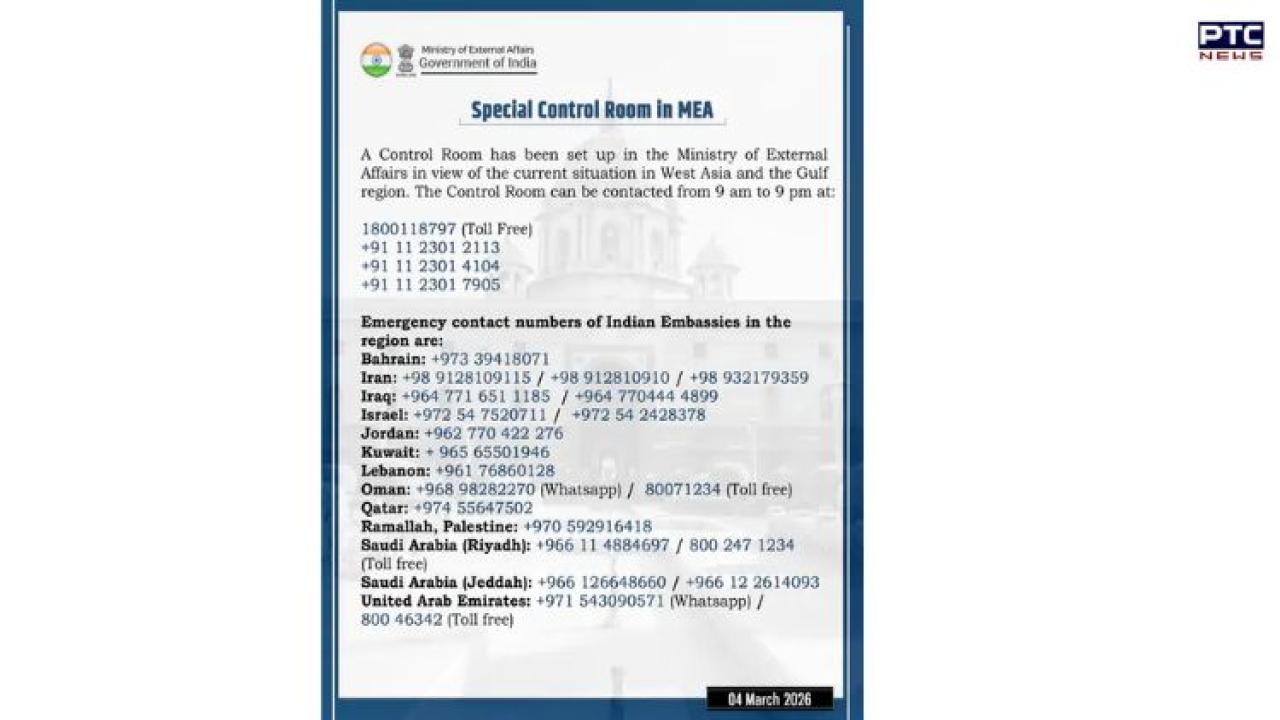
India’s External Affairs Ministry sets up special control room
Mojtaba Khamenei, son of Ali Khamenei, appointed Iran's new Supreme Leader
The war between the US, Israel and Iran has entered its fifth day. Iran claimed that the American embassy in Dubai was targeted, while Israel carried out airstrikes on Iran’s capital Tehran and Lebanon’s capital Beirut. Iran’s Islamic Revolutionary Guard Corps (IRGC) claimed that around 650 American soldiers were killed or injured during retaliatory strikes over the first two days. However, the US has not confirmed these figures.
Meanwhile, US President Trump said on Tuesday night that he had ordered the American military, in coordination with Israel, to strike Iran because Iran had initiated the first attack.
Attack on US Embassy in Baghdad: Israel bombs Tehran and Beirut; Iran claims 650 US soldiers killed in 2 days
Find below latest updates
The Ministry of External Affairs (MEA) spokesperson emphasised India’s strong call for dialogue and diplomacy amid the ongoing conflict in the West Asia region. “We raise our voice clearly in favour of an early end to the conflict. Already, many lives have regrettably been lost, and we express our grief in that regard,” the spokesperson said.
Highlighting India’s ties to the region, the statement noted that nearly one crore Indian citizens live and work in the Gulf, whose safety and well-being remain a top priority. The spokesperson also pointed to India’s critical trade and energy supply chains passing through the region, warning that any major disruption could have serious economic consequences.
India reiterated its firm opposition to attacks on merchant shipping, noting that some Indian nationals have already lost their lives or gone missing in recent incidents. The MEA expressed concern over the continuous deterioration of the situation, particularly during the holy month of Ramadan.
Israeli Prime Minister Benjamin Netanyahu said the ongoing war against Iran will not be long or indefinite. He expressed confidence that the conflict could ultimately pave the way for broader regional stability.
Netanyahu stated that the war could open new avenues for peace in the Middle East.
He recalled that under the Abraham Accords, Israel had normalised relations with four Arab nations.
The Israeli leader added that by working closely with the United States, further normalisation and peace agreements with additional countries could be achieved.
???????? A fire broke out at the Fujairah Oil Industry Zone in the UAE, a key oil storage and export hub near the Strait of Hormuz.
— Europa.com (@europa) March 3, 2026
Authorities say the blaze was caused by falling debris from an intercepted drone, though some reports suggest a drone or missile may have been involved.… pic.twitter.com/sksw7QMS82
A fire erupted at the Fujairah Oil Industry Zone (FOIZ) in the Fujairah, United Arab Emirates, on Tuesday morning after debris from an intercepted Iranian drone fell in the area, officials said.
Authorities confirmed that the drone was intercepted mid-air, but fragments landed within the oil zone, triggering the fire.
The Fujairah Media Office stated that no injuries were reported in the incident. Firefighting and emergency response teams swiftly brought the blaze under control.
Officials added that normal operations in the area have resumed following containment of the fire.
Fujairah is a key energy center in the UAE, hosting major oil storage and export infrastructure. The emirate is located along the Gulf of Oman, outside the Strait of Hormuz — a critical global oil transit route.
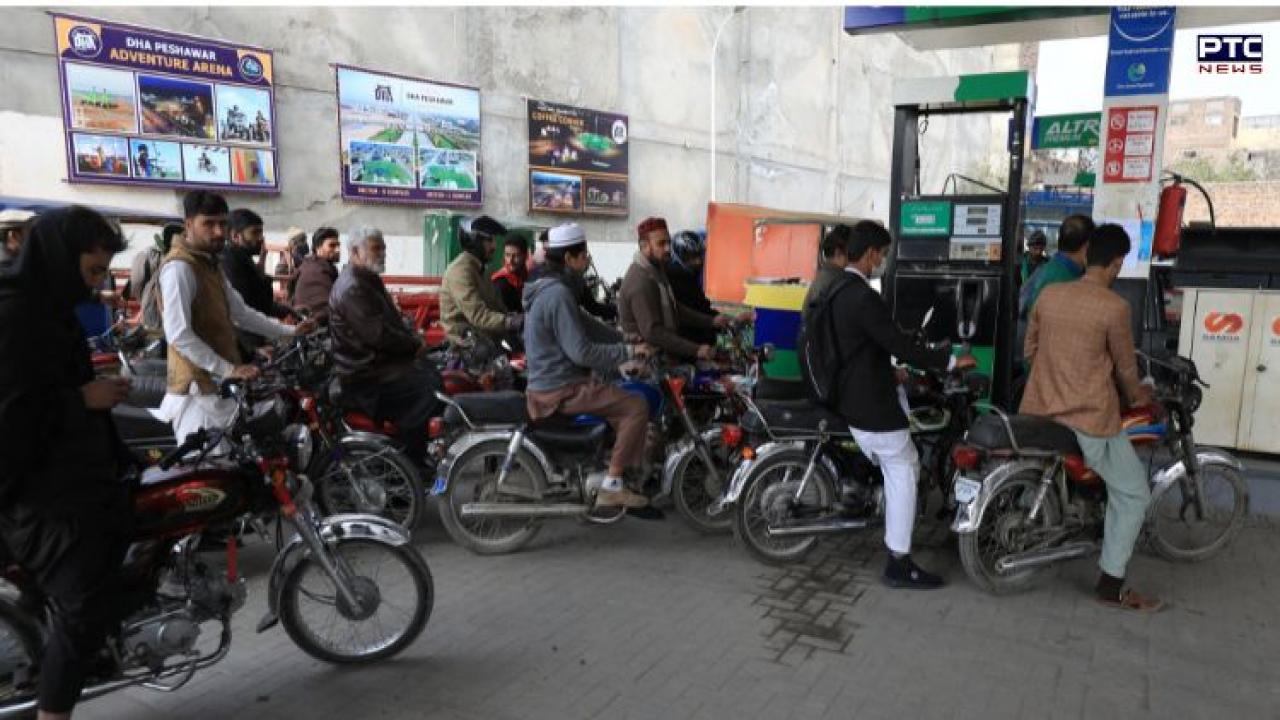
India has 25 days of crude oil and refined oil stocks. Scouting for alternative sources for importing crude oil, LPG and LNG, say govt sources: No Immediate plan to raise the prices of Petrol-Diesel: Govt Sources
Israeli army enters Lebanon amid Iran tensions: 59 areas evacuated, 30,000 displaced; missiles fired at Hezbollah
Satellite imagery and assessments by the International Atomic Energy Agency (IAEA) indicate that some entrance structures at Iran’s underground Natanz Fuel Enrichment Plant were damaged in recent hostilities, though the core nuclear facilities remain intact. The United Nations nuclear watchdog said the impact was limited to surface-level buildings used for access, and no radiological release or harmful radiation levels are expected as a result of the damage. Earlier statements from the IAEA had emphasised that, so far, there is no confirmed evidence that Iran’s safeguarded nuclear sites have been struck in the current military escalation.
A magnitude-4.3 earthquake struck near Gerash in southern Iran on Tuesday at a shallow depth of around 10 km, the United States Geological Survey reported.
The Embassy of Canada in Riyadh has announced that it is closing operations today due to the current security situation.
In an official statement, the mission said all in-person appointments have been cancelled through Friday, March 6. Further updates are expected based on the evolving security conditions.
Security Alert: Consular Appointments Cancelled – U.S. Mission to the Kingdom of Saudi Arabia (Mar. 3, 2026)
— U.S. Embassy Riyadh (@USAinKSA) March 3, 2026
The U.S. Mission to Saudi Arabia is closed on Tuesday, March 3. All routine and emergency American Citizen Services appointments are cancelled. The shelter in place…
The Israeli military has carried out strikes targeting Iran’s radar systems and missile launchers.
According to Israeli military spokesperson Avichay Adraee, the Israeli Air Force is conducting multiple operations aimed at Iran’s air defense systems and has destroyed several of its military assets.
In a post on X, Adraee stated that Israeli aircraft targeted personnel operating Iran’s defense infrastructure, including radar systems and missile launchers.
He further said that the Israeli Air Force also struck sites associated with Iran’s ballistic missile platforms.
"The past few days have been challenging and filled with uncertainty, but I’m incredibly thankful to have returned home. I sincerely appreciate the efforts of the ground teams, Dubai authorities, airport and immigration staff, and everyone who ensured our safety and comfort during such a stressful time. Your kindness and professionalism truly made a difference.
For now, I’m going to take some time to rest, recharge, and plan the way forward."
PV SIndhu
Amid escalating tensions between Iran and several Gulf nations, multiple Western governments have issued fresh travel advisories for their citizens in the region.
The Government of Canada has advised its nationals residing in the United Arab Emirates to depart as soon as commercial flights become available. Canadian authorities warned that the country’s airspace could be partially or temporarily closed at short notice due to the deteriorating security situation.
Similarly, the Government of Australia has urged its citizens to avoid travel to the UAE for the time being.
The United States has also asked its citizens to leave parts of the Middle East amid the growing conflict. The advisory covers Bahrain, Egypt, Iran, Iraq, Israel, Jordan, Kuwait, Lebanon, Oman, Qatar, Saudi Arabia, Syria, the United Arab Emirates and Yemen.
In addition, American citizens have been advised to leave the West Bank and Gaza as security risks continue to rise across the region.
Global oil prices rose for a third consecutive day as the expanding US-Israel confrontation with Iran intensified concerns over potential supply disruptions.
Growing fears over the safety of shipping routes through the Strait of Hormuz, a key global oil transit corridor, have added to market volatility.
غارات إسرائيلية عنيفة على الضاحية الجنوبية لبيروت#الضاحية_الجنوبيةhttps://t.co/bUb3NiIXDr#عاجل #لبنان #بيروت pic.twitter.com/mraPHa8x9j
— ZNN-LEB (@znn_lb) March 3, 2026
The United States is expected to launch a significant second phase of military strikes aimed at weakening Iran’s ballistic missile capabilities, according to Michael Mulroy, former US Deputy Assistant Secretary of Defense for the Middle East.
Speaking to Al Jazeera, Mulroy said the current operations appear to be in their early stages. He noted that initial strikes have focused on disabling Iran’s air defence and missile defence systems — a strategy designed to establish air superiority.
He indicated that a more substantial wave of attacks could follow, targeting ballistic missile stockpiles and related military infrastructure. The objective, he suggested, would be to significantly degrade capabilities that both the United States and Israel view as strategic threats before the campaign concludes.
Mulroy added that such a move would represent a critical escalation in the broader effort to limit Iran’s long-range strike capacity.
Israel has continued its military operations against Hezbollah, with the Israeli army reportedly forcing evacuations in several villages in Lebanon on Monday.
A military spokesperson issued an order stating that due to Hezbollah’s activities, the Israel Defense Forces has been compelled to take strong action. The statement added that the army has no intention of harming civilians.
Residents were instructed to remain at least 1,000 metre away from their villages. The warning said that anyone approaching areas near Hezbollah facilities would be putting their lives at risk.
The development follows a similar evacuation order issued earlier on Monday morning for 52 settlements, as tensions along the Israel-Lebanon border continue to escalate.
An airstrike was reported in central Tehran, the capital of Iran, intensifying tensions in the region.
According to the Iranian newspaper Shargh Newspaper, the strike occurred near the old parliament building in the heart of the city. Reports said the attack took place close to the Vali Asr and Jomhuri (Jami) streets area.
The locality is considered one of Tehran’s busiest zones, known for its commercial activity and the presence of several cultural centres and museums. Further details regarding casualties or damage were not immediately available.
India has reported its first fatality connected to the ongoing conflict, after an Indian sailor lost his life when an explosive-laden drone hit an oil tanker in the Gulf of Oman, underscoring the escalating threat to key commercial shipping routes.
In a separate incident, another Indian national sustained injuries during missile strikes in the United Arab Emirates. Officials said the injured person is currently stable and out of danger.
The Ministry of External Affairs has, meanwhile, set up emergency monitoring cells at Indian missions across the region to track developments and assist citizens, as thousands of Indians continue to face travel disruptions due to widespread airspace closures and transport restrictions.
Iran has reportedly launched 20 drones and three missiles at a US air base in Bahrain. The Islamic Revolutionary Guard Corps (IRGC) claimed responsibility for the attack, stating that it targeted an American air base located in the Sheikh Isa area of Bahrain.
According to the IRGC, the assault caused damage to the main building of the base and triggered a fire in the fuel storage tanks. However, Bahraini authorities have not yet issued any official statement confirming or denying the incident.
The situation remains tense as the regional conflict continues to escalate.
The war between Israel, the United States and Iran has entered its fourth day. Amid the escalating conflict, Israel reportedly carried out an attack on the historic Golestan Palace, a 500-year-old landmark in Tehran. Parts of the palace sustained damage during the strike. However, valuable and historic artifacts housed inside had already been moved to secure locations, preventing major losses.
According to Iran’s Mehr News Agency, the palace was originally built in the 16th century during the Safavid era. For centuries, it served as the residence of Iranian monarchs and the main seat of political power. Today, it is one of Iran’s most prominent tourist attractions. In 2013, it was designated as a UNESCO World Heritage Site in recognition of its historical and architectural significance.
Meanwhile, US President Donald Trump has urged American citizens to leave the Middle East as soon as possible. Speaking at the White House on Monday, Trump warned that a major offensive against Iran is still pending. He stated that the conflict could last between four to five weeks, but operations may continue longer if necessary.
According to reports by Al Jazeera, joint US-Israeli forces have targeted more than 1,000 locations across Iran so far. In the first 30 hours alone, over 2,000 bombs were reportedly dropped.
The death toll has climbed to 742, including 176 children, while more than 750 people have been injured. On the first day of fighting, which began on February 28, Iranian Supreme Leader Ayatollah Ali Khamenei was reportedly killed in the initial wave of bombardment. Additionally, three American soldiers were reported dead on Sunday as the conflict intensified further.
The situation remains volatile, with fears of a prolonged and wider regional war growing by the day.
Fresh explosions heard in Tehran; Trump says 'have unlimited supply of weapons, wars can be fought forever'
Iran has accused Pakistan of allowing the US to use its airspace for recent military strikes against Iran.
A senior commander of the Iranian Revolutionary Guard (IRGC) stated that if Pakistan did indeed do this, it will not remain safe and will have to pay the price.
The wife of Iran’s Supreme Leader Ayatollah Ali Khamenei, Mansoureh Khozhasteh Bagherzadeh, has passed away. According to Iranian state media, her death was due to injuries sustained during the recent joint US-Israeli airstrikes.
India’s Ministry of Petroleum and Natural Gas is closely monitoring the impact of the Middle East crisis on domestic fuel supplies. The minister held a review with senior officials and public sector units to assess the availability of crude oil, LPG, and other petroleum products. The ministry assured that all necessary measures will be taken to ensure uninterrupted supply and affordability of key petroleum products nationwide.
'WE HAVE ACCEPTED US REQUEST TO USE OUR BASES' — UK PM Keir Starmer
— RT (@RT_com) March 1, 2026
'For limited defensive and offensive purposes' https://t.co/u73TJUyCij pic.twitter.com/fdg13eiL63
'WE HAVE ACCEPTED US REQUEST TO USE OUR BASES' — UK PM Keir Starmer
— RT (@RT_com) March 1, 2026
'For limited defensive and offensive purposes' https://t.co/u73TJUyCij pic.twitter.com/fdg13eiL63
8 passenger flights have been able to take off from Abu Dhabi since 14:00 local time. pic.twitter.com/4eYs3ReJaJ
— Flightradar24 (@flightradar24) March 2, 2026
According to Flight Radar, the flight tracking website, eight passenger flights have successfully departed from Abu Dhabi since 2:00 PM local time (11:00 GMT).
The International Atomic Energy Agency (IAEA) has confirmed that both the United States and Iran recognise the importance of resuming dialogue on nuclear matters, according to IAEA Director General Rafael Grossi.
Grossi stated that the agency is prepared to assist in facilitating discussions if requested. “We have been seeking permission to return to Iran since last fall, but so far, our requests have not been approved,” he added.
While communication with Iran remains limited, Grossi emphasised that ongoing channels are still in place. The IAEA continues to monitor developments and maintain contact as it awaits further engagement from Tehran.
Qatar Energy, one of the world’s leading natural gas producers, has halted the production of liquefied natural gas (LNG) and related products after drone strikes targeted energy facilities in the industrial hubs of Ras Laffan and Mesaieed, Qatar’s Defence Ministry reported earlier.
The drone attacks reportedly caused damage to the facilities, but no casualties have been reported so far. The suspension of LNG production underscores the immediate impact on Qatar’s energy operations and highlights growing security concerns in the region.
Qatar Energy has not yet provided a timeline for resuming production, while authorities continue to assess the situation and reinforce safety measures at critical energy infrastructure.
A missile attack targeted the provincial emergency services building in downtown Tehran, causing significant damage, according to a spokesperson for the department, as reported by Tasnim News Agency.
The spokesperson confirmed that several emergency personnel were injured during the strike, though most are reported to be in stable condition. “While the building sustained serious damage, the majority of our staff are safe and receiving medical attention,” the official stated.
Details on the perpetrators of the attack or the broader context were not immediately available.
The Israeli army has announced that it killed Hussein Makled, the head of Hezbollah’s intelligence operations, in a targeted strike in Beirut, Lebanon overnight.
The military described the operation as a precise attack aimed at neutralising the high-ranking Hezbollah commander.
There has been no immediate response or comment from Hezbollah regarding the strike.
The MEA has released a list of emergency contacts for Indians in the region:
Ramallah (Palestine): Phone: 970592916418; Email: repoffice@mea.gov.in / cons.ramallah@mea.gov.in
Doha (Qatar): Phone: 00974-55647502; Email: cons.doha@mea.gov.in
Riyadh (Saudi Arabia): Phone: 00-966-11-4884697; WhatsApp: 00-966-542126748; Toll Free: 800 247 1234; Email: cw.riyadh@mea.gov.in
Tel Aviv (Israel): Phone: 972-54-7520711 / 972-54-2428378; Email: cons1.telaviv@mea.gov.in
Tehran (Iran): Phone: 989128109115 / 989128109109 / 989128109102 / 989932179359
Abu Dhabi (UAE): Toll Free: 800-46342; WhatsApp: 971543090571; Email: pbsk.dubai@mea.gov.in / ca.abudhabi@mea.gov.in
Kuwait: Phone: 96565501946; Email: community.kuwait@mea.gov.in
Bahrain: Phone: 00973-39418071
Muscat (Oman): Toll Free: 80071234; WhatsApp: 96898282270; Email: cw.muscat@mea.gov.in / cons.muscat@mea.gov.in
Jordan: Phone: 00962-770 422 276
Baghdad (Iraq): Phone: 964 771 651 1185 / 964 770444 4899
French Foreign Minister Jean-Yves Le Drian stated that unilateral attacks by the US and Israel on Iran should have been discussed internationally first.
He emphasised that platforms like the UN exist to decide on such matters. If the issue had been taken there, especially to the Security Council, military action could have gained international legitimacy.
Le Drian made these remarks while speaking to journalists in Paris. He also said that, so far, there are no reports of any French citizens being harmed in the incident.
According to the UK Ministry of Defence, a suspected drone attack took place at a British military base in Cyprus. In response, the British military is taking action, and there are no reports of any casualties in the incident.
The ministry stated that the attack occurred around midnight at the RAF Akrotiri base.
Saudi Aramco is one of the largest oil and gas companies in the world. It is owned by the government of Saudi Arabia. The company was founded in 1933 under an agreement with American companies.
In 1980, it came fully under the control of the Saudi government. Its headquarters is located in Dhahran. Aramco holds one of the largest oil reserves in the world and produces millions of barrels of crude oil daily, making it a major supplier in the global energy market.
Saudi Arabia’s economy relies heavily on the revenue generated by this company. Aramco is not only involved in crude oil production but is also active in refining, petrochemicals and natural gas.
It controls the world’s largest conventional oil field, Ghawar. In 2019, the company launched its IPO on the stock market, which was considered the largest IPO in history. In recent years, Aramco has been increasing its investments in renewable energy, hydrogen and carbon capture technologies.
The United Kingdom is preparing contingency plans to evacuate its citizens from the Middle East as regional tensions escalate. British Foreign Secretary Yvette Cooper said that approximately 3,00,000 British nationals have registered their presence in the region.
The government is working on multiple evacuation options and has indicated it is ready to directly assist citizens in leaving safely if the situation deteriorates.
Authorities are coordinating with travel companies and airlines, urging the reopening of air routes at the earliest to facilitate the safe return of British nationals.
JUST IN: ???????? Iran strikes Saudi Arabia's Aramco Ras Tanura oil refinery. pic.twitter.com/eTmPGRFAY5
— BRICS News (@BRICSinfo) March 2, 2026
The conflict between Israel, United States and Iran has entered its third day, with hostilities intensifying across the region.
Iran has reportedly targeted the Ras Tanura oil refinery in Saudi Arabia. The facility is owned by state oil giant Saudi Aramco. According to reports, operations at the refinery were suspended following the strike.
The Ras Tanura refinery is estimated to have a production capacity of approximately 550,000 to 600,000 barrels per day.
The Ras Tanura oil export terminal is considered one of the world’s largest offshore oil loading terminals, handling crude shipments to the United States, Asia and Europe via large oil tankers.
Meanwhile, Iran’s top national security official Ali Larijani stated on Monday that Tehran will not engage in any negotiations with the United States. His remarks came in response to reports suggesting that Iran had sought to reopen dialogue with Washington.
Iran has also resumed attacks targeting Israel as well as Gulf nations, including Qatar, Bahrain and United Arab Emirates.
The conflict has further widened with the involvement of Lebanon-based militant group Hezbollah, which has launched multiple strikes inside Israel.
Hezbollah, which receives backing from Iran, has claimed it is acting in retaliation for the killing of Iran’s Supreme Leader, Ali Khamenei.
Turkey on Monday said it has temporarily suspended short-term border crossings by Iranian nationals, amid growing public concern that escalating regional tensions could spark fresh migration flows.
In a statement, the Trade Ministry said the decision was taken in mutual agreement with Tehran. Under the arrangement, Turkish citizens and third-country nationals are still permitted to enter Turkey from Iran, but Iranians seeking to make brief visits have been temporarily barred.
The ministry added that commercial freight traffic between the two countries remains operational and is continuing “in a controlled manner.”
The Iran–Israel conflict has triggered widespread disruption to global air travel, with nearly 3,000 flights cancelled amid escalating military tensions.
Air travel across the world has been severely impacted following military strikes carried out by the United States and Israel on Iran. Hundreds of additional flights were cancelled on Monday, leaving hundreds of thousands of passengers stranded across multiple countries.
According to reports, airline stocks have also declined amid growing uncertainty. US President Donald Trump has indicated that American military operations could continue for four to five weeks, further intensifying concerns within the aviation sector and among international travellers.
Several major airports across the Middle East have been forced to shut down. Notably, Dubai International Airport, widely regarded as the world’s busiest international airport, remained closed for a third consecutive day. Industry observers describe the situation as the most significant aviation disruption since the COVID-19 pandemic.
The closure of Middle Eastern airspace has led to the cancellation of thousands of services. Many international airlines have temporarily suspended operations in the region due to security concerns.
By Monday morning, 1,239 flights had already been cancelled. Major regional carriers, including Emirates of Dubai, Etihad Airways of Abu Dhabi, and Qatar Airways of Doha, collectively scrapped hundreds of flights.
According to flight tracking platform FlightAware, approximately 2,800 flights were cancelled on Saturday, followed by 3,156 cancellations on Sunday.
Iran has escalated its attacks across the Middle East. Following warnings of missile strikes, explosions were heard over Jerusalem.
According to news agency reports, blasts were also heard in Dubai in the United Arab Emirates, Doha in Qatar, and Manama in Bahrain.
Iran has launched drone and missile attacks on Israel and four other countries in the Middle East in retaliation.
Earlier, Iran had also targeted American bases located in Qatar, Kuwait, Jordan, Bahrain, Saudi Arabia and the UAE. In the UAE, drone strikes were reported near the Palm Hotel and Resort and close to Burj Khalifa in Dubai, the country’s most populous city.
At least two persons have been killed in an attack on Iran’s Sanandaj city, according to Iran’s Fars News Agency.
The report said the city was targeted by enemy missiles, which destroyed several residential buildings located next to a police station.
Tasnim News Agency reported that US and Israeli forces launched six missiles at various parts of the city, including densely populated areas. Footage shared online shows one of the strikes, with massive clouds of fire and smoke rising into the sky.
The United Arab Emirates (UAE) has announced the closure of its main stock exchanges at the start of the trading week as regional conflict intensifies.
The country’s Capital Market Authority said the Abu Dhabi Securities Exchange (ADX) and the Dubai Financial Market (DFM) will remain closed on Monday and Tuesday.
Authorities stated they will continue to monitor the regional situation closely and take further steps if necessary.
Nasdaq Dubai has also suspended trading for both days.
Dubai is the Gulf region’s primary business hub, while Abu Dhabi serves as a key financial centre and is home to some of the world’s largest sovereign wealth funds.
Meanwhile, the benchmark index of the Saudi Exchange, the region’s largest stock market, declined by 2.2 percent on Sunday.
Israeli strikes on Lebanon have claimed the lives of 31 persons so far. In the southern suburbs of Beirut, the capital city, 20 persons were killed and 91 others were injured.
In southern Lebanon, 11 persons lost their lives and 58 were reported injured. The attacks occurred after Hezbollah claimed responsibility for firing rockets toward northern Israel.
Two workers sustained minor injuries after debris fell inside the Mina Al Ahmadi refinery near Kuwait City, according to a report by the official Kuwait News Agency.
The incident occurred as tensions escalated across the Gulf following fresh Iranian strikes targeting US-linked assets in the region. Air raid sirens were reported in Kuwait and Bahrain, while loud explosions were heard over Doha in Qatar and Abu Dhabi in the United Arab Emirates.
Authorities have not indicated any major damage to the refinery and further details about the source of the debris were not immediately available. The developments come amid heightened security alerts across several Gulf nations.
The United States Embassy in Kuwait has issued an urgent security advisory instructing American citizens in the country to remain indoors as concerns grow over possible missile and drone activity in the region.
In the alert, the embassy urged US nationals to shelter in place and avoid any non-essential movement outside their homes. Officials also advised citizens not to travel to the embassy premises, stating that diplomatic staff are themselves following shelter-in-place protocols as a precautionary measure.
Guidance shared through the US State Department’s TravelGov platform directed Americans to stay on the lowest level of their buildings, keep away from windows and immediately take cover if air raid sirens sound or explosions are heard. The advisory further warned residents to avoid areas with debris following any strike, highlighting the risk posed by falling fragments from intercepted missiles or drones.
The warning comes amid heightened regional tensions and ongoing security concerns across the Gulf.
February 28
Multiple explosions were reported in several areas of Tehran, Iran’s capital.
Targets included IRGC command centres, nuclear facilities in Isfahan, Qom and Karaj, as well as the residence of Supreme Leader Ayatollah Ali Khamenei.
US President Donald Trump and Israeli Prime Minister Benjamin Netanyahu appealed to the Iranian public for regime change.
Iran launched hundreds of missiles and drones in retaliatory strikes against Israel.
American military bases in Bahrain, Qatar, the UAE, Kuwait, Jordan, Saudi Arabia and Iraq were targeted. Internet blackouts were reported in Tehran, along with explosions in multiple cities.
March 1
Confirmation of the death of Iranian Supreme Leader Ayatollah Ali Khamenei.
Israel launched fresh strikes on Tehran.
In Iran, 207 persons were reported killed, including casualties in a school strike; 747 were injured.
In Israel, 10 persons were killed and 78 injured. Three American soldiers were also reported dead.
In an interview with NBC, Trump claimed that 48 Iranian leaders had been killed.
Air raid sirens in Tel Aviv: Sirens wailed across Tel Aviv after the Israel Defence Forces (IDF) warned of a new wave of Iranian missile attacks.
Blasts heard across Gulf capitals: Explosions were reported in Dubai, Doha and Manama shortly after the renewed strikes began.
Third day of escalation: The developments come as the US-Israel military campaign against Iran entered its third day.
Leadership loss in Iran: The initial strikes reportedly killed Iran’s Supreme Leader Ayatollah Ali Khamenei along with several senior officials, causing extensive destruction.
Iran targets Gulf neighbours: In retaliation for US-Israeli air raids, Tehran expanded its strikes to include Gulf nations hosting American military bases.
Missiles intercepted over Israel: Several Iranian missiles were intercepted over Tel Aviv and Jerusalem by Israeli air defence systems.
Drones downed near Erbil: Air defence systems intercepted at least two drones near Iraq’s Erbil airport, which hosts US-led coalition forces and a major American consulate complex.
Strategic Gulf presence: Oil-rich Gulf countries, including Qatar, Bahrain and the UAE, host key US military installations.
Rising casualties in Iran: Iranian officials claim more than 200 persons have been killed since the conflict began.
Wider regional strikes: Iran has launched missiles and drones targeting Israel, US military sites in the Gulf, the Saudi capital Riyadh, and Dubai.
Interim leadership council formed: Iran has appointed a 66-year-old cleric to join a three-member leadership council that will govern the country until a new supreme leader is selected.
UPDATE: All appointments for U.S. visas and American Citizen Services are canceled for today, March 2 at the U.S. Embassy in Islamabad and the U.S. Consulates General in Karachi and Lahore. For more info: https://t.co/LLRbFcy7bZ
— U.S. Embassy Islamabad (@usembislamabad) March 2, 2026
Iran has firmly rejected the possibility of engaging in talks with the United States. Senior national security official Ali Larijani said Tehran would not enter into any negotiations with Washington. He made the statement on social media platform X, responding to reports suggesting that Iran was attempting to reopen diplomatic channels with the US.
Larijani also criticised Donald Trump, accusing him of destabilising the region through what he described as “false promises.” He said Trump is now concerned about the deaths of American soldiers after contributing to heightened tensions.
In a sharp remark, Larijani added that Trump had shifted his slogan from “America First” to what he called “Israel First,” alleging that American troops were being sacrificed to strengthen Israel’s position in the conflict.
US President Donald Trump has said that the ongoing conflict with Iran could continue for as long as five weeks. Earlier, he had indicated that the war might last around four weeks, but he has now revised his estimate, saying it could extend to “four or even five weeks.”
Trump also claimed that the United States had targeted individuals who were seen as potential successors to Iran’s current leadership. According to him, all of those individuals were killed within the first two days of “Operation Epic Fury.”
LIVE UPDATES | US-Israel-Iran War enters Day 4: The conflict between Israel, the United States and Iran entered its fourth day on Tuesday, with large-scale military operations escalating across the region. According to reports, joint US-Israeli forces have targeted more than 1,000 locations across Iran since the hostilities began.
In the first 30 hours alone, over 2,000 bombs were reportedly dropped as part of coordinated air operations aimed at key military and strategic sites.
Israeli Prime Minister Benjamin Netanyahu has warned that attacks on Tehran will intensify in the coming days, signaling a broader and more aggressive military campaign. He said Israel remains committed to eliminating what it describes as existential threats from Iran.
Iran retaliates, strikes US bases in 9 countries
In response, Iran launched retaliatory attacks targeting American military bases in nine countries, including installations in Israel and across the Middle East. The counterstrikes have significantly widened the scope of the conflict, raising fears of a prolonged regional war. The fighting, which began on February 28, saw a dramatic development on the very first day. During initial bombardments, Iran’s Supreme Leader Ayatollah Ali Khamenei was reportedly killed, a development that has sent shockwaves through global diplomatic and security circles. However, independent confirmation of this claim remains limited.
Hezbollah joins the conflict
The situation further escalated after Lebanon-based militant group Hezbollah entered the conflict. The group carried out multiple strikes inside Israeli territory, opening another active front.
In response, Israel evacuated approximately 50 villages located near its northern border with Lebanon, anticipating further attacks.
Heavy civilian casualties in Iran
Airstrikes have reportedly targeted at least 10 major Iranian cities, including the capital Tehran. Iranian authorities claim that more than 200 persons have been killed and at least 740 injured since the fighting began.
One of the most devastating incidents occurred when a missile struck a school, killing 180 schoolgirls and injuring 45 others. The attack has drawn widespread international concern over civilian safety and the growing humanitarian crisis.
The rapid escalation has heightened fears of a broader Middle East war involving multiple regional and global powers. Diplomatic efforts to de-escalate tensions appear limited as military operations continue on multiple fronts.
With both sides signaling further action, the coming days are expected to be critical in determining the trajectory of the conflict.
FOLLOW OUR LIVE UPDATES
- With inputs from agencies