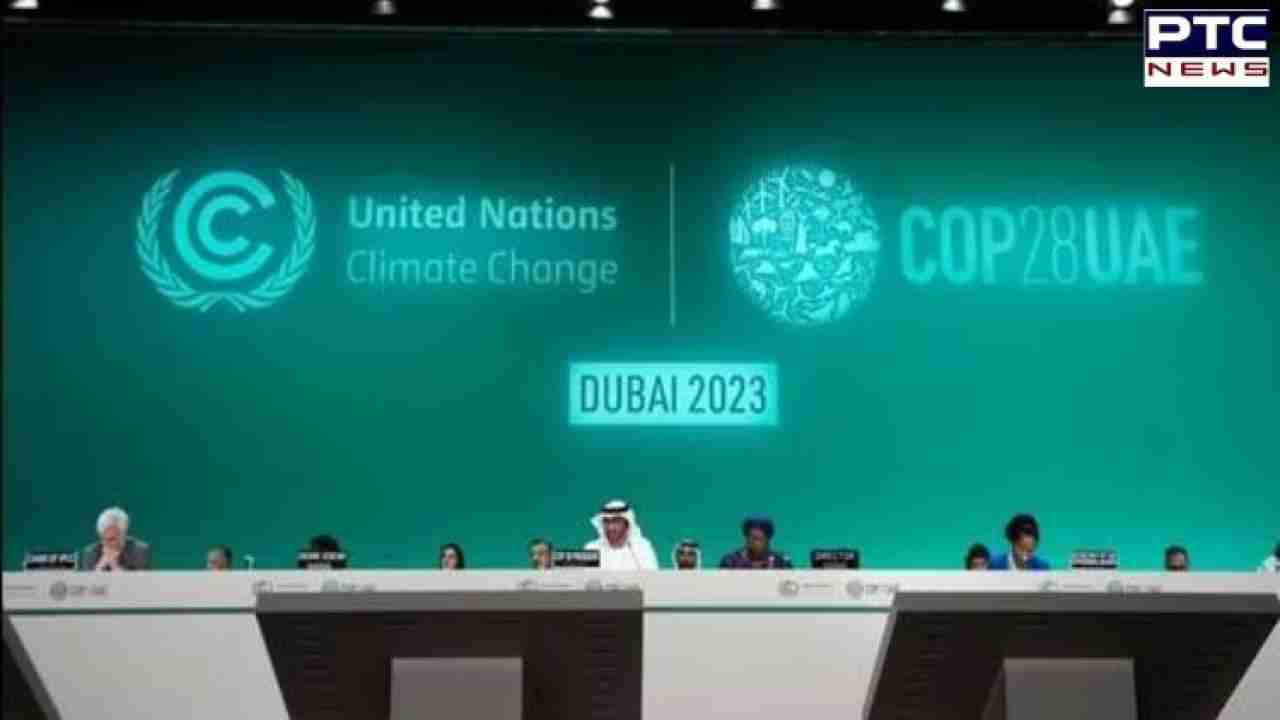
COP28 unveils draft outlining 2030 adaptation targets for countries





COP28: The upcoming COP28 has unveiled the preliminary text outlining adaptation objectives aimed at reducing vulnerability to extreme climate impacts by 2030. This facet of the COP28 agenda, focused on adaptation, is pivotal, yet progress has been stymied by the lack of consensus among nations regarding the framework and financial provisions essential for implementing these measures, particularly in developing countries.
Released on a Sunday morning, the first draft text outlines the 'Global Goal on Adaptation,' emphasizing the long-term efforts required from nations to mitigate the vulnerability of countries and communities to severe climate impacts. However, experts express concern over the text's inadequate provisions for climate finance, crucial for enabling developing nations to meet the specified adaptation targets.
The Global Goal on Adaptation is of particular significance for India, given its high vulnerability to climate impacts. India, in its third national communication to the United Nations Framework Convention on Climate Change (UNFCCC), highlighted that public finance predominantly covers adaptation activities through flagship programs and schemes. Approximately 40 ministries in India allocate budgetary provisions for adaptation, with the total expenditure accounting for 5.6% of the GDP in 2021-2022, a notable increase from 3.7% in 2015-16. India acknowledges, however, that the significant gap in meeting adaptation needs cannot be filled solely through government resources.
The draft text specifies seven adaptation targets countries are expected to achieve by 2030. These include establishing climate-resilient food and agricultural production, enhancing resilience against climate-related health impacts, ensuring climate-resilient health services, and reducing climate-related morbidity. Other targets involve bolstering infrastructure and human settlements against climate change impacts, reducing poverty and livelihood vulnerability in high climate-risk areas, and safeguarding cultural heritage from climate-related risks.
Despite the importance of this adaptation work at COP28, progress has been impeded by the absence of agreement on the framework and financial provisions for implementation in developing countries.
The draft text emphasizes that the framework for the global adaptation goal should guide both long-term transformational and incremental adaptation efforts. It aims to reduce vulnerability, enhance adaptive capacity and resilience, and protect livelihoods, economies, and nature for current and future generations. The text asserts that implementation will align with equity and national circumstances, emphasizing a country-driven, voluntary approach that avoids constituting a basis for comparison between parties.
The draft text urges countries to accelerate action at all levels, from local to global, on the specified targets by 2030. These include addressing climate-induced water scarcity, achieving climate-resilient food production, strengthening health services, reducing climate impacts on ecosystems, enhancing resilience in infrastructure and human settlements, reducing poverty in climate-risk areas, and protecting cultural heritage from climate-related risks.
Additionally, the text outlines a review process, requiring countries to conduct up-to-date assessments of climate hazards and exposure to risks and vulnerabilities by 2025. By 2027, nations must establish multi-hazard early warning systems and climate information services for risk reduction.
Expressing concern over the widening adaptation finance gap, the text calls on developed countries to double their collective provision of climate finance for adaptation to developing countries from 2019 levels by 2025.
However, issues remain unresolved, with no consensus on the text regarding equity and Common But Differentiated Responsibilities (CBDR). Developed countries have inserted a 'no text' option, and overall targets are criticized for lacking measurable metrics to assess progress. Harjeet Singh, head of global political strategy at Climate Action Network International, suggests a potential delay in progress, proposing a two-year work program to develop metrics and review the framework.
- With inputs from agencies