Supreme Court rejects plea to replace hanging for death row convicts with lethal injection





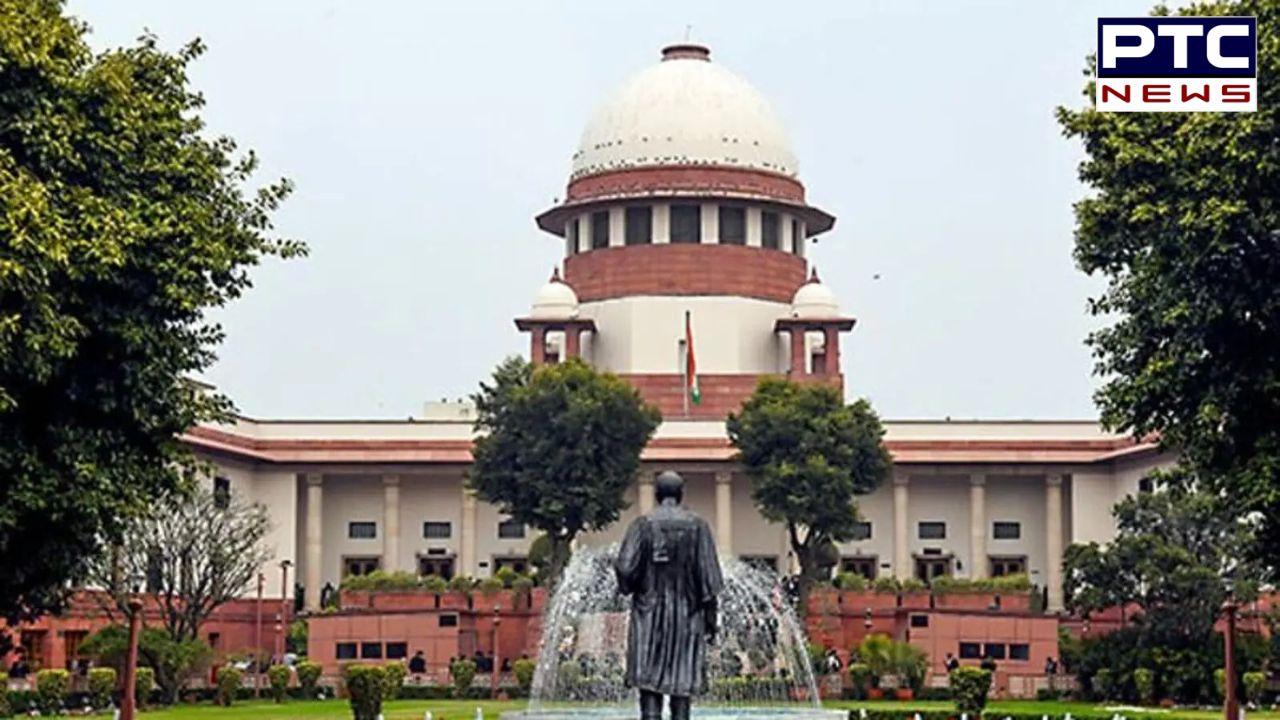
PTC Web Desk: The Supreme Court on Tuesday refused to entertain a PIL seeking an end to hanging as the method of executing death row convicts in India. The petition had sought alternative methods, including lethal injection, shooting, electrocution and gas chamber.
A bench of Justice Vikram Nath and Justice Sandeep Mehta said there was no sufficient ground to refer the issue to a larger bench for reconsideration of the constitutional validity of the provision that prescribes hanging till death.
The court was hearing a PIL filed in 2017 by senior advocate Rishi Malhotra, who had challenged Section 354(5) of the Code of Criminal Procedure. The provision has now been replaced by Section 393(5) of the Bharatiya Nagarik Suraksha Sanhita (BNSS).
The bench said it was not persuaded that the earlier ruling by a three-judge bench in the Dina case needed to be reconsidered by a larger bench. The court, however, made it clear that Tuesday's decision does not permanently close the door on the issue.
It said the question of the method used to execute death sentences could be examined again if "compelling scientific, medical or empirical evidence" emerges in favour of another method.
While dismissing the PIL, the Supreme Court said the Union government could undertake a detailed review of the existing execution procedure. The court suggested that such a review could be carried out by an expert panel comprising specialists in areas including, law, forensic medicine, neuroscience and criminology.
The purpose, it said, would be to determine whether another method could better meet the constitutional objective of reducing unnecessary pain while maintaining the dignity of prisoners sentenced to death.
Also Read | Delhi Police reject allegations of excessive force during CJP protest, say crowd turned violent
Also Read | Bengaluru woman confesses to killing husband, five-year-old son with lover's help
Malhotra's petition relied, among other things, on the 187th Report of the Law Commission, which had recommended removing the existing method of execution from the statute. He argued that lethal injection would be a more appropriate method and pointed to the practice in the United States, where he contended that 49 of 50 states had adopted lethal injection.
The petitioner also argued that hanging could involve prolonged pain and suffering when compared with alternative methods.
Malhotra had sought recognition of a right to die through a dignified procedure as a fundamental right under Article 21 of the Constitution.
The Centre has consistently opposed the plea to remove hanging from the statute. During earlier proceedings, the Supreme Court had questioned the government's status-quo position on the issue. On October 15, 2025, the court had raised questions about the Centre's approach to the existing method of execution.
In an affidavit filed in April 2018, the Centre defended "hanging by the neck till death", describing it as a quick and safer way of carrying out a death sentence.
The government also argued that alternative methods, including lethal injection and firing squad, could become extremely cruel or inhuman if the execution did not go as intended.
According to the Centre, electrocution, lethal injection and firing squad could also result in barbaric outcomes depending on how the execution was carried out. It maintained that advances in hanging procedures made the method comparatively safer.
The government further argued that hanging was compatible with the State's responsibility to ensure that executions were carried out with decency and dignity, without unnecessary degradation or brutality.
For now, the Supreme Court has declined to alter the existing legal position, while leaving open the possibility of a future review if stronger scientific or medical evidence emerges.
- With inputs from agencies