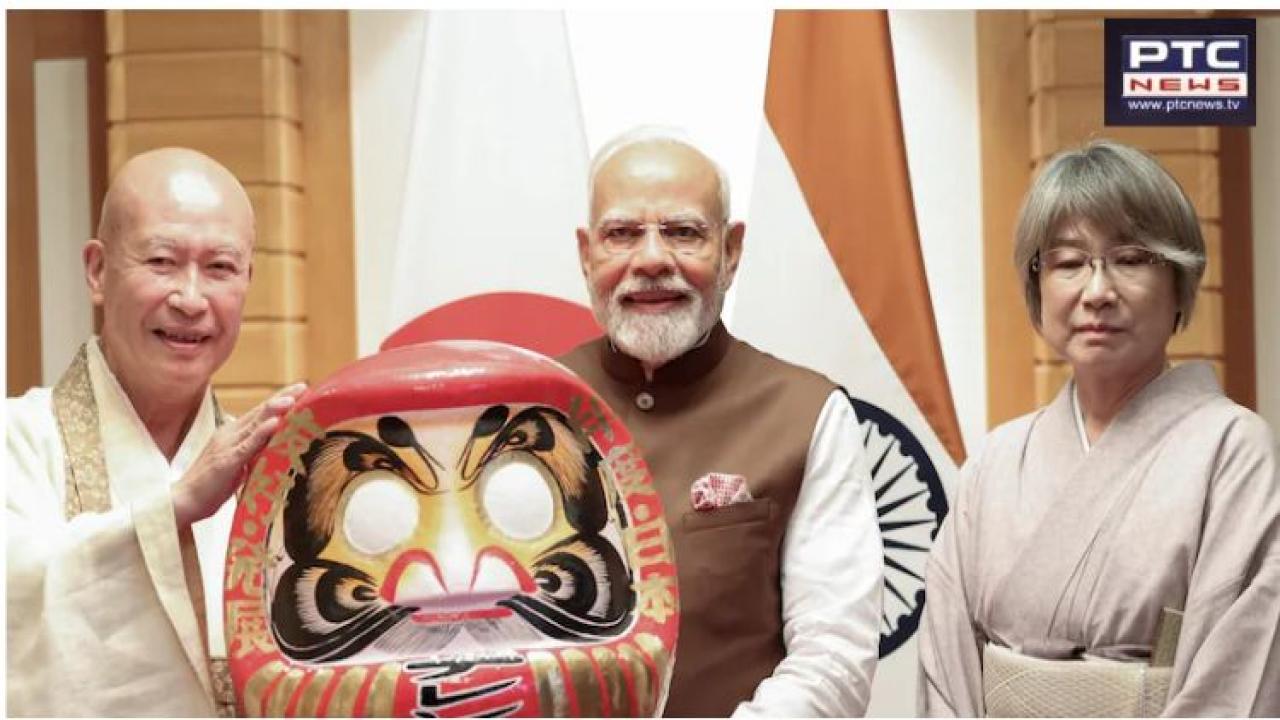
PM Modi receives traditional Daruma doll during Japan visit: Know its importance





PTC Web Desk: Prime Minister Narendra Modi, who is on a two-day official visit to Japan on August 29 and 30 to attend the 15th India-Japan Annual Summit, was presented with a traditional Daruma doll as part of a ceremonial exchange.
What is a Daruma Doll?
A Daruma doll is a well-known Japanese talisman, usually round, red, and hollow, with a face but no arms or legs. The design represents Bodhidharma, a 5th-century monk who introduced Zen Buddhism to Japan. Legend says he meditated for so long that he lost the use of his limbs.
The doll is weighted at the base, allowing it to return upright if tipped over—symbolising persistence, recovery from setbacks, and resilience. It is cherished across Japan as a token of good luck and determination.
#WATCH | Tokyo | Chief Priest of Shorinzan Daruma-Ji Temple presents Daruma Doll to PM Modi
(Video source: ANI/DD) pic.twitter.com/m4alaRQBMZ — ANI (@ANI) August 29, 2025
How is it Used?
Traditionally, when someone sets a goal or makes a wish, they purchase a Daruma doll and fill in one of its blank eyes. Once the goal is achieved, the second eye is painted to mark success. This practice has made Daruma dolls a popular symbol of motivation in homes, shops, and temples across Japan.
Colours and Symbolism
While Daruma dolls are available in multiple colours, red remains the most iconic, as it is associated with good fortune, success, and prosperity in East Asian culture.
The doll embodies the Japanese proverb “Nanakorobi yaoki”—meaning “fall down seven times, get up eight”—a reminder of perseverance in the face of challenges.
- With inputs from agencies