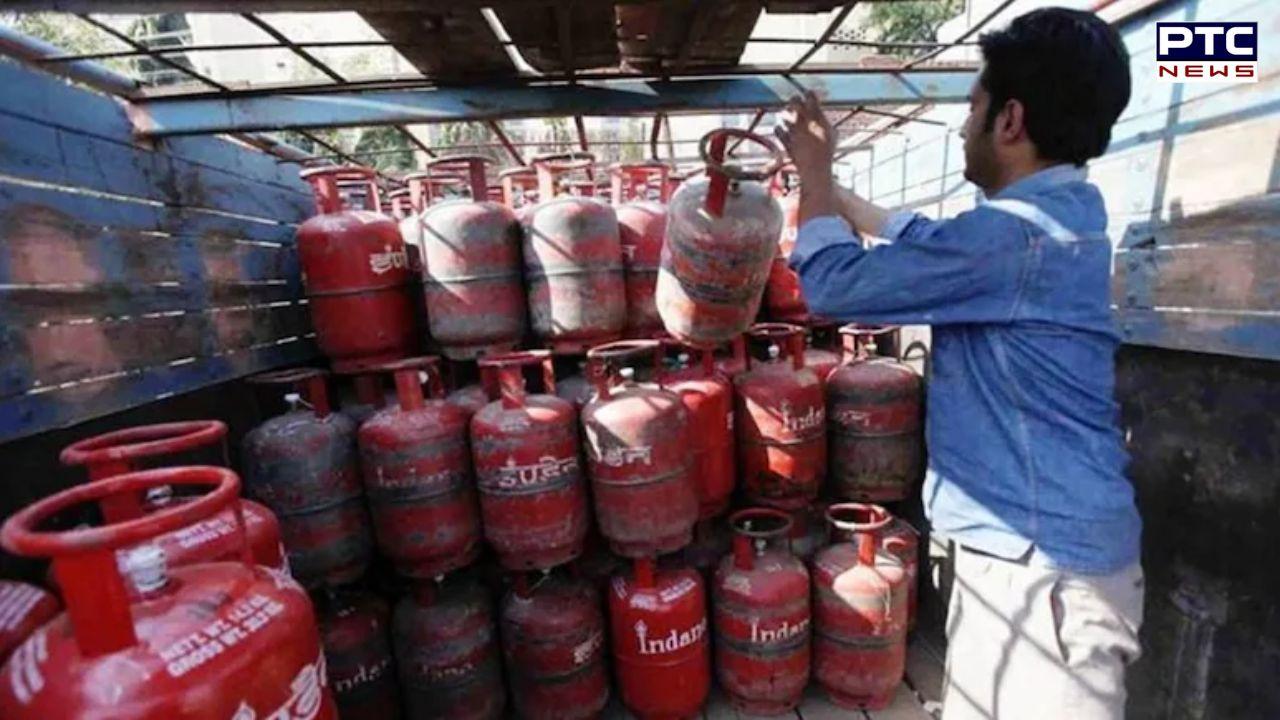
Commercial gas cylinder supply halted in many states, Essential Commodities Act invoked





PTC Web Desk: The Central Government has invoked the Essential Commodities Act, 1955 across the country after disruptions in gas supply triggered by the ongoing conflict in the Middle East and instability around the Strait of Hormuz. The move aims to regulate distribution and prevent hoarding as fears of an energy shortage grow.
Following the decision, several states, including Delhi, Madhya Pradesh, Maharashtra, Uttar Pradesh, Rajasthan and Chhattisgarh have temporarily restricted the supply of commercial LPG cylinders. The disruption has severely affected hotels, restaurants and small food businesses, many of which say they are on the verge of shutting down due to lack of fuel.
Small hotel owners and eatery operators have appealed to the government to restore supply, stating that thousands of livelihoods depend on commercial gas availability.
Four categories for gas distribution
After the implementation of the Essential Commodities Act, the government has divided gas distribution into four categories:
Full Supply Category
Domestic cooking gas (PNG/LPG) and CNG used in vehicles will continue to receive full supply without restrictions.
Fertiliser Industry
Fertiliser manufacturing plants will receive around 70% of their gas requirement, provided they prove that the gas is used specifically for fertiliser production.
Large Industries
Tea factories and other large industries connected to the national gas grid will receive around 80% of their normal gas allocation.
Small Businesses and Hospitality Sector
Small factories, hotels and restaurants connected to city gas networks will receive about 80% of their previous consumption, although many regions are currently experiencing temporary supply suspensions.
What is the Essential Commodities Act?
The Essential Commodities Act, 1955 allows the government to regulate the supply, distribution and prices of essential goods such as food grains, edible oils, medicines and fuels.
The law is typically invoked during shortages or sharp price rises. It also empowers authorities to impose stock limits on traders in order to prevent hoarding and black marketing.
States facing severe supply disruptions
Uttar Pradesh
An unofficial halt in commercial cylinder supply has created difficulties for restaurants and roadside eateries. Gas companies have instructed distributors to prioritise domestic LPG supply. In cities like Lucknow, Kanpur and Varanasi, deliveries are reportedly taking four to five days after booking.
Madhya Pradesh
Hotel and restaurant owners say commercial cylinder prices have already risen from Rs 1,773 to Rs 1,888, and they are willing to pay the increased cost. However, the sudden halt in supply during the wedding season has created major operational challenges.
Rajasthan
Hospitality associations warn that the crisis could impact nearly 300,000 people employed in hotels, restaurants and marriage gardens, as LPG remains the primary fuel source for the sector.
Chhattisgarh
Dealers have been instructed to supply commercial cylinders only to hospitals and educational institutions, leaving restaurants and food outlets facing an acute gas shortage.
Maharashtra
Major cities, including Mumbai, Pune and Nagpur have witnessed heavy cuts in commercial gas supply. Pune’s municipal corporation has even temporarily shut down gas-based crematoriums due to shortages. Around 9,000 restaurants and bars in the state are feared to be at risk of closure.
Punjab
Dispatch of 19-kg commercial and large industrial cylinders has reportedly been stopped since March 8. Distributors have also been directed not to accept bookings for domestic cylinders within 25 days of the previous delivery.
Andhra Pradesh and Telangana
Commercial cylinder bookings have been frozen in several cities, including Hyderabad. Small hotel operators have urged authorities to restore supply as the crisis threatens thousands of livelihoods.
High-level committee formed
To monitor the situation, the Petroleum Ministry has constituted a high-level committee consisting of executive directors from three state-owned oil marketing companies (OMCs) to review gas supply and distribution.
New domestic LPG booking rules
Earlier, on March 9, the government also revised domestic LPG refill rules. Consumers can now book the next cylinder only after 25 days of delivery, compared to the earlier 21-day gap.
To prevent hoarding, delivery agents are now required to verify deliveries through OTP or biometric authentication.
Measures to increase LPG production
The government has instructed all oil refineries to increase LPG production in order to prevent shortages. Refineries have been directed to prioritise the use of propane and butane for domestic LPG production instead of commercial cylinders.
Private companies must also supply propane and butane to public sector oil companies such as Indian Oil, Hindustan Petroleum and Bharat Petroleum to maintain uninterrupted supply.
Key reasons behind supply crisis
Disruption in the Strait of Hormuz
The 167-km Strait of Hormuz, which connects the Persian Gulf to the Arabian Sea, has become unsafe due to the Iran-related conflict. Oil tankers are avoiding the route.
Nearly 20% of global petroleum supply passes through this route, and countries such as Saudi Arabia, Iraq and Kuwait rely on it for exports. India imports about 50% of its crude oil and 54% of LNG through this corridor.
LNG production halt after drone attacks
Following recent US-Israel strikes on Iran, Tehran reportedly launched drone attacks targeting American installations and ports in countries such as UAE, Qatar, Kuwait and Saudi Arabia.
After these attacks, Qatar — India’s largest LNG supplier — temporarily halted production at one of its LNG plants, further reducing gas availability. India imports around 40% of its LNG (about 27 million tonnes annually) from Qatar.
Recent LPG price hike
Three days ago, the government increased domestic LPG prices by Rs 60. In Delhi, a 14.2-kg LPG cylinder now costs Rs 913, up from Rs 853.
The price of a 19-kg commercial cylinder has increased by Rs 115, taking it to around Rs 1,883. The revised prices came into effect on March 7.
Earlier, domestic LPG prices were increased by Rs 50 on April 8, 2025, while commercial LPG cylinder prices were raised by Rs 31 on March 1, 2026.
Govt urges public not to panic
Indian Oil’s Chief General Manager (LPG), K.M. Thakur, has urged consumers not to panic or engage in panic booking. The government is exploring alternative energy imports, including shipments from the United States.
At the global level, G7 countries are also discussing releasing oil from their emergency reserves to stabilise the energy market. Additional crude oil supplies from Russia and Algeria are also expected to help ease the crisis.
- With inputs from agencies