Punjab Budget 2026 LIVE UPDATES: Govt launches 'Meri Rasoi' scheme, 40 lakh families to get free ration kits every quarter





Punjab Budget 2026-27:
— Sukhbir Singh Badal (@officeofssbadal) March 8, 2026
Nothing but a pack of lies !
The last budget of the @AamAadmiParty has betrayed the farmers, youth, poor, trade & industry, govt employees & even Women on #InternationalWomensDay !
????Finance minister @HarpalCheemaMLA has lied by claiming that speedy… pic.twitter.com/isLLKkXyOe
For FY 2026–27, total revenue receipts of Punjab are estimated at ₹1,26,190 crore.
Out of this:
Own tax revenue: ₹70,851 crore
Non-tax revenue: ₹15,687 crore
The 16th Finance Commission increased Punjab’s share in the horizontal devolution from 1.807% to 1.996%.
Due to this increase, Punjab’s share in central taxes is expected to reach ₹30,464 crore in 2026–27, compared to ₹25,171 crore in 2025–26 (an increase of ₹5,293 crore).
Grants-in-aid from the Centre are estimated at ₹9,188 crore for FY 2026–27.
Excise Revenue
Improved policy and strict implementation increased excise revenue significantly.
During the AAP government’s five-year period, excise revenue is estimated at ₹53,122 crore, compared with:
₹27,934 crore during the previous Congress government
₹20,545 crore during the Akali-BJP government.
Stamp and Registration Revenue
Revenue from stamp duty and registration also improved.
During the AAP government’s five-year tenure, revenue is expected to be ₹30,367 crore, compared with:
₹12,469 crore during the Congress government
₹12,387 crore during the Akali-BJP government.
For FY 2026–27, the government has set a target of ₹9,000 crore from stamp and registration.
Tax Dispute Settlement
In 2024, the government launched a One-Time Settlement Scheme to resolve old tax disputes.
Under this scheme:
70,311 dealers benefited
₹866 crore relief was provided
₹164 crore was recovered for the state.
A new One-Time Settlement Scheme 2025 started from 1 October 2025, offering relief in interest and penalties.
So far:
7,400 applications received
More than ₹100 crore recovered.
GST Administration
The government strengthened GST administration using technology and data analytics.
Automated tools are used to detect tax evasion and defaulting taxpayers.
A dedicated Anti-Evasion Wing is being proposed to strengthen enforcement.
In the last 46 months, GST revenue collected is ₹83,739 crore, compared to ₹61,286 crore in the previous government’s 5 years.
For FY 2026–27, the GST revenue target is ₹32,000 crore.
Fiscal Stability Funds
The state contributed ₹1,000 crore to the Consolidated Sinking Fund (CSF).
It also contributed ₹1,000 crore to the Guarantee Redemption Fund (GRF) for the first time.
Due to these contributions, the combined funds increased from ₹3,027 crore (March 2022) to ₹11,720 crore (December 2025) — a 287% increase.
Capital Expenditure
The government focused on increasing capital investment for long-term development.
In the last four years, total capital expenditure was ₹32,353 crore, more than double the previous government.
For FY 2026–27, capital expenditure is proposed at ₹18,381 crore.
Employee and Pension Payments
The government honored its commitment to pay ₹14,191 crore arrears arising from the 6th Pay Commission.
Payments to employees and pensioners will continue according to the schedule in 2026–27.
Debt Position
The Debt-to-GSDP ratio inherited in March 2022 was 48.25%.
By January 2026, it has reduced to 44.47%, indicating improvement in the state’s financial position.
Besides the free bus travel scheme for women, the government is working to increase access to public transport across the state.
Special focus is being given to areas with fewer services or overcrowded routes.
Currently, 2,267 buses are operating in the state.
The government will add 1,279 new buses through purchase and leasing.
Some of these buses are already operational, and the rest will be introduced by November 2026.
This will be the largest expansion of public transport in Punjab’s history.
Bus Distribution
670 new buses will be added to strengthen PRTC (Punjab Roadways Transport Corporation).
The remaining 609 buses will be added to PUNBUS.
Modern Safety and Passenger Facilities
The new buses will meet modern safety and accessibility standards.
Features include:
Better entry systems for passengers with reduced mobility and wheelchair users
Fire detection systems
Night lamps
LED lighting
GPS tracking
CCTV cameras
These improvements aim to provide high-quality, safe, and accessible transport services to citizens.
Punjab has achieved a major success in the mining sector.
Punjab ranked 1st in the “State Mining Readiness Index” announced by the Ministry of Mines, Government of India.
Policy and Regulatory Reforms
The government strengthened the regulatory framework of the mining sector through legal and policy reforms.
A clear and strong system for registration and operation of crusher units and mineral dealers has been established.
The entire process—from mineral extraction to consumption—is now digitally monitored.
New Mining Categories
Amendments in the Punjab Minor Mineral Rules introduced new categories of mining sites:
Crusher mining sites
Landowner mining sites
These changes promote transparent and time-bound agreements, especially helping landowners who want to mine minerals on their own land.
Revenue Growth
Due to continuous reforms such as:
Establishing check posts in border areas,
Strict enforcement,
auction processes,
Punjab’s mining revenue increased from ₹260 crore to over ₹500 crore in one year, more than doubling.
The government prioritises safe drinking water and improved sanitation.
In FY 2026–27, 11 major surface water projects will be completed to provide safe drinking water to 1,230 water-scarce and quality-affected villages.
Drinking water improvement works will be carried out in 125 settlements.
New projects will start in 88 uranium-affected areas.
A budget of ₹1,487 crore is proposed for water supply and sanitation programs.
The “Nal Jal Mitra” campaign will start to strengthen community-level water services, with one trained person in every Gram Panchayat.
Water Resources and Irrigation
The government has doubled canal irrigation capacity in the last three years.
Irrigation coverage increased from 2.23 million acres in 2022 to about 5.3 million acres by April 2026.
Better canal cleaning, lining, and renovation increased water use to 6.6 MAF (million acre-feet), a 13% rise.
Canal water has reached 1,365 locations, including villages that had not received water for 20–50 years.
Flood Management
After the 2025 floods, a scientific assessment of major rivers identified 371 flood protection works costing over ₹1,500 crore.
142 projects worth ₹489 crore will be completed by 31 March 2026, and the rest in FY 2026–27.
A river desilting program has also started to restore natural river flow and improve flood protection.
Drainage and Maintenance
₹65 crore spent on flood protection and drain cleaning this year.
Around 3,000 km of drains have been cleaned, improving drainage capacity.
Work done with departmental machinery saved about 60% cost.
Canal Rehabilitation
A large program for canal rehabilitation and lining is underway to expand irrigation coverage by 4 lakh hectares.
₹1,153 crore has already been spent on these works.
Ferozepur Feeder Project
Work started to strengthen the Ferozepur Feeder canal system (built in 1952–53).
It benefits over 1,000 villages in Ferozepur, Fazilka, Sri Muktsar Sahib, and Faridkot districts.
Canal capacity will increase from 2,600 cusecs to 13,845 cusecs.
17 km canal lining completed in FY 2025–26 at a cost of ₹195 crore.
Kandi Area Irrigation
Kathgarh Lift Scheme Stage-II will bring canal water for the first time to semi-hilly areas of Shaheed Bhagat Singh Nagar (Nawanshahr).
The ₹107 crore project will irrigate 5,500 acres across 24 villages.
Malerkotla Irrigation Project
₹288 crore project started to rebuild Mahorana Rajbaha and Malerkotla Minor canals.
It will provide canal water to 55 villages, covering about 44,000 acres.
₹190 crore allocated in FY 2026–27 for this project.
Future Irrigation Plans
Focus on increasing surface water use and saving groundwater.
Construction of pipelines and brick-lined channels to ensure water reaches the last point (tail end).
Irrigation facilities expected to be restored on about 5 lakh hectares.
₹2,971 crore budget proposed for FY 2026–27 for this sector.
By the end of the year, total canal irrigation area is expected to reach about 7 million acres (70 lakh acres), around 90% of the designed irrigation potential.
For FY 2026–27, a budget of ₹11,577 crore is proposed for the departments of Home Affairs, Justice, and Jails to strengthen institutional capacity and technology.
Internal security is the foundation of development; without law and order, progress cannot happen.
The government has moved from reactive policing to organized, intelligence-based security systems to eliminate organized crime networks.
Border Security
Punjab has a 553 km international border, requiring continuous monitoring.
2,367 CCTV cameras are being installed at 636 strategic border locations to create a second security line.
1,719 cameras are already installed, with control rooms operational for 24/7 monitoring to prevent drug smuggling and anti-national activities.
Emergency Response & Road Safety
The ERSS Dial 112 system has handled over 2.62 crore calls since its launch.
The Road Safety Force (SSF) has reduced highway emergency response time to 6–7 minutes, improving road safety and reducing accident deaths.
508 four-wheeler vehicles are being purchased to strengthen the Dial-112 response system.
Jail Administration
Modernization of prisons is underway.
“V-Kavach 2.0” jammer systems are being installed in sensitive jails to stop unauthorized communication.
AI-based CCTV surveillance is being expanded for better monitoring and internal security.
₹535 crore budget proposed in FY 2026–27 for modernization, infrastructure, and capacity building.
Infrastructure – Roads and Bridges
The government is committed to expanding and maintaining road and bridge infrastructure across the state.
₹5,440 crore budget allocated in FY 2026–27 for construction, renovation, and maintenance of roads, bridges, and public buildings—double the FY 2025–26 budget estimate.
Road Development
₹1,500 crore proposed to upgrade 2,570 km of planned roads to improve district and inter-district connectivity.
₹130 crore allocated to complete 31 ongoing bridges and construct new ones.
Rural Roads
Under Pradhan Mantri Gram Sadak Yojana (PMGSY-III):
About 500 km of rural roads expected to be completed in FY 2025–26 at a cost of ₹290 crore.
400 km of roads proposed for upgrading in FY 2026–27 with ₹400 crore.
Central Road and Infrastructure Fund (CRIF)
₹300 crore proposed to:
Upgrade 100 km of roads
Construct 6 railway underbridges/overbridges
These projects will improve road connectivity and safety across the state.
Administrative Complex at Sri Anandpur Sahib
To mark the 350th martyrdom anniversary of Guru Tegh Bahadur Ji, the government has proposed the construction of a new administrative complex at Sri Anandpur Sahib.
The complex will be designed in heritage architectural style, reflecting the spiritual and historical significance of the holy city.
Important government offices will be brought under one roof to improve administrative efficiency and public service delivery.
The initiative will also help preserve the traditional character and sacred identity of Sri Anandpur Sahib.
Digital Reforms in Land and Property Services
The government has introduced technology-driven reforms in land and property-related services.
Punjab has become the first state in India to introduce “Easy Jamabandi”.
Through this system, citizens can:
Access land records online or via WhatsApp
Apply for mutations (Intkaal)
Request report entries
Receive various land-related services from home with assistance from service agents.
The “Easy Registry” project has simplified property registration by:
Standardising deed formats
Allowing registration anywhere within the district
Providing real-time updates to citizens.
Under the initiative, 6.17 lakh property registrations have been successfully completed, reducing procedural complexity and helping curb corruption in sub-registrar offices.
Flood Relief and Disaster Response
During the devastating floods last year, the government responded with swift and organised relief measures.
In FY 2025–26, the government released ₹1,010 crore for relief and rehabilitation efforts.
Compensation was provided for loss of crops, houses and livestock.
Investments were also made under the State Mitigation Fund.
Punjab introduced India’s first fully digital flood relief system, replacing traditional paper-based processes.
The system uses geo-tagged surveys and real-time monitoring to ensure transparency.
It eliminates intermediaries and allows direct online transfer of compensation to beneficiaries.
As a result, flood-affected families received assistance within months, compared to earlier delays of six months to a year.
Strengthening Administrative Structure
To improve administrative efficiency, the government has created and upgraded new subdivisions and sub-tehsils.
New SDM and Tehsil complexes have been made operational across several districts.
These reforms aim to create a more responsive and accessible governance system for citizens.
Punjab has introduced major digital reforms in public service delivery, making government services more accessible to citizens.
A State Pendency Dashboard has been implemented for real-time monitoring of applications across departments.
Due to this system, the pendency rate has reduced from 14% to 0.33% within a year.
For 13 key services, including income, residence, and caste certificates, the requirement for paper forms has been removed, allowing fully online applications and reducing the need for office visits.
Punjab has also launched India’s first fully digital flood relief system, enabling:
Online damage assessment
Direct transfer of compensation to affected families without delays or intermediaries.
“Bhagwant Mann Sarkar Tuhade Dwar” Initiative
The “Bhagwant Mann Sarkar Tuhade Dwar” programme has emerged as a citizen-centric governance initiative, delivering government services directly to people’s homes.
In 2025, the number of doorstep services increased significantly from 43 to 412 services.
Citizens across Punjab can now access a wide range of government services without visiting government offices, saving time, cost and effort.
Strengthening Sewa Kendras
To further strengthen service delivery, all 56 transport-related services have been made available through Sewa Kendras.
As a result, traditional public counters at RTA and DTO offices have been removed.
This reform ensures uniform, transparent and citizen-friendly service delivery across the state.
The initiative reflects the government’s commitment to accessibility, efficiency and dignity in public service delivery.
The year marks the 350th martyrdom anniversary of Guru Tegh Bahadur Ji.
To honour his sacrifice, the Punjab government organised a three-day commemorative event at Sri Anandpur Sahib.
In November 2025, a special session of the Punjab Legislative Assembly was also held at Sri Anandpur Sahib to pay tribute and reaffirm commitment to Punjab’s historic values and legacy.
Celebration of Guru Ravidas Ji’s 650th Birth Anniversary
The government has decided to celebrate the 650th birth anniversary (Prakash Purb) of Guru Ravidas Ji at the state level during FY 2026–27.
Guru Ravidas Ji’s teachings emphasised:
Equality among people
Faith in one God
Rejection of caste discrimination
His vision of “Begumpura”, a society free from suffering and injustice, continues to inspire millions.
The main state-level event is proposed at Guru Ravidas Memorial in Khuralgarh village, Hoshiarpur, considered a sacred site associated with the saint.
Memorial programmes will also be organised throughout Punjab during the year to honour his spiritual legacy and promote social harmony and justice.
The government has allocated ?100 crore for FY 2026–27 for these commemorative events.
Chief Minister Teerth Yatra Scheme
The government has launched the Chief Minister Teerth Yatra Scheme to fulfil the spiritual aspirations of citizens, especially senior citizens and economically weaker families.
Under the scheme, free and fully assisted pilgrimages are being provided to major religious sites including:
Sri Harmandir Sahib (Golden Temple), Amritsar
Sri Anandpur Sahib
In FY 2026–27, around 7.15 lakh citizens are expected to benefit from the scheme.
A budget allocation of Rs 312 crore has been proposed for the programme.
Budget Allocation
For FY 2026–27, the government has proposed a budget allocation of ₹1,791 crore for sports development.
This increased allocation reflects the government’s policy commitment to institutionalising sports development, from grassroots participation to national and international level excellence.
The “Khedda Punjab, Badalda Punjab” initiative aims to fight drug abuse by engaging youth in sports, creative and disciplined activities.
The government committed to reviving Punjab’s sports culture by developing sports infrastructure at the village level, including model playgrounds and gyms.
Sports Infrastructure Development
During the current financial year, a strong foundation for sports infrastructure across the state has been laid.
More than 3,000 modern rural sports grounds are being developed at a cost of ₹1,100 crore.
These grounds are expected to be completed by June 2026.
Facilities at these sports grounds will include:
Laser-levelled playgrounds
Jogging tracks
Football and volleyball courts
Children’s play areas
Separate changing rooms for men and women
High-mast lighting
In addition, 1,000 indoor rural gyms are being constructed and are expected to be completed by April 2026.
This is described as the largest investment ever made by any Punjab government in the sports sector.
The initiative has boosted enthusiasm among youth and transformed village playgrounds into active community centres.
Future Expansion Plans
In the next financial year, the government plans to further expand sports infrastructure.
Plans include:
Construction of 6,000 additional rural sports grounds across the state.
Establishment of 5,000 more indoor gyms.
Each completed rural sports ground will provide sports kits to local youth clubs, including equipment for cricket, volleyball and football.
To promote adventure sports, Adventure Sports Camps will also be developed in sub-mountainous areas under the PPP (Public-Private Partnership) model.
Budget Allocation
The government has allocated ₹100 crore for FY 2026–27 to implement the Caste and Drug Census initiative and strengthen the anti-drug campaign.
The “War Against Drugs” campaign has been continued as a long-term movement against drug abuse and trafficking, as promised in the previous budget.
Over the past year, under the NDPS Act,
36,686 cases were registered against 52,331 drug traffickers.
More than 33,000 kg of narcotic substances were seized through intelligence-based operations.
The government has strengthened financial investigation systems to confiscate properties and assets created from illegal drug trafficking money.
Around 12,000 Village Defence Committees with 1.25 lakh members and thousands of “Pind De Pehredar” volunteers have been activated to strengthen community-level monitoring.
In the last two months alone, more than 350 FIRs were registered and 510 individuals were arrested based on inputs from Village Defence Committees.
Anti-Gangster Action
The Anti-Gangster Task Force (AGTF) has played a major role in restoring public confidence.
Since its formation:
2,762 gangsters and criminals have been arrested.
34 criminals were neutralised in encounters.
1,062 criminal modules were busted.
2,203 weapons were recovered.
The government launched “Operation Prahar” to break the nexus between organised crime and drug trafficking by targeting gangster networks, financiers and supply chains.
The operation has significantly weakened the infrastructure supporting drug trade and violent crime.
In FY 2026–27, the government plans to further strengthen the system through:
Better cyber and forensic capabilities
Stronger anti-narcotics task force operations
Digital surveillance systems
Targeting the financial networks of criminal organisations
Caste and Drug Census Initiative
The state has taken steps to conduct a Caste and Drug Census.
Preparatory work has been completed, including:
Development of a specialised software platform
Training of field staff to ensure accuracy, transparency and data integrity.
The survey will begin in April, enabling the government to gather reliable data for targeted welfare policies and anti-drug strategies.
Budget Allocation
The government has proposed ₹287 crore for FY 2026–27 to continue and strengthen these initiatives.
Employment generation and youth empowerment remain key priorities of the Punjab government.
Since 2022, the government has provided 63,943 government jobs to youth across different departments.
During FY 2025–26, more than 1,356 placement camps and job fairs were organised across the state.
Through these camps, over 70,000 candidates received assistance in securing jobs.
Additionally, 261 self-employment camps helped more than 15,000 youth become eligible to receive financial assistance to start their own ventures.
Over 2.95 lakh candidates received career counselling and vocational guidance.
Punjab is emerging as a major centre for defence and strategic skills.
In January 2026, a historic Defence Skill Summit was organised to align training systems with industrial and defence sector requirements.
The summit resulted in important partnerships with leading national industrial units.
Under the Punjab Skill Development Mission, thousands of youth have been trained in the service and manufacturing sectors, and their placement process is ongoing.
Training for Armed Forces
C-PYTE (Centre for Training and Employment of Punjab Youth) centres continue to prepare youth for recruitment in the armed forces.
Armed Forces Preparatory Institutes have achieved excellent success in officer-level selections, with increasing participation of women cadets.
A new Sardar Bahadur Amin Chand Soni Armed Forces Preparatory Institute in Bajwara, Hoshiarpur is nearly complete.
The institute will begin training for entrance exams and SSB preparation in FY 2026–27.
It will further expand opportunities for Punjab youth to join defence services.
For FY 2026–27, the government has allocated ₹2,805 crore for the Industry and Commerce sector.
This includes continued subsidised power for industries and ₹500 crore for financial incentives to promote investment and employment generation.
The Punjab government stated that its reform-oriented policies have revived confidence in the state’s economic potential.
Since March 2022, Punjab has received 8,049 investment proposals worth ₹1,45,371 crore, which are expected to generate over 5.21 lakh jobs.
In 2025 alone, investments worth ₹55,000 crore were recorded, the highest ever investment in a single year in Punjab’s history.
Foreign Direct Investment (FDI) in the state has doubled between 2022 and 2025, according to Government of India data.
As a result, Punjab’s FDI ranking improved from 15th to 11th position nationally.
Industrial Incentives
Since March 2022, around 1,198 industrial units have been granted financial incentives worth ₹14,734 crore.
The government has also spent ₹9,275 crore on subsidised electricity for industries to maintain industrial competitiveness.
One Time Settlement (OTS) Scheme
The government launched One Time Settlement (OTS) schemes to resolve long-pending industrial dues and support revival of industrial units.
Around 3,100 industrial units are expected to benefit from the scheme.
A separate OTS policy has also been introduced to settle pending dues related to industrial plot costs and enhanced land prices.
Industrial Policy 2026
The government has approved a new Industrial Policy 2026 to strengthen ease of doing business and promote investment-led growth.
The policy aims to:
Expand incentives for priority sectors
Attract new investments
Promote job-oriented industrial growth
Address operational challenges faced by businesses
The policy was prepared through a comprehensive consultative process under the “Punjab Industrial Revolution Initiative”, involving 24 sectoral committees and consultations with industry stakeholders.
Ease of Doing Business Reforms
Several reforms have been introduced to increase transparency and investor confidence.
The Fast Track Punjab Portal provides time-bound single-window clearances through a deemed approval system.
Amendments to the Punjab Right to Business Act allow entrepreneurs to start businesses through self-certification based on in-principle approvals.
Additional reforms include:
Industrial land management improvements
Flexible land-use policies
One-time settlement provisions
Dispute resolution mechanisms
Cluster development initiatives
Logistics improvements
Digital platforms for services
Special support is being provided to MSMEs (Micro, Small and Medium Enterprises) to ensure inclusive, employment-driven and regionally balanced industrial growth.
Total Budget for Housing and Urban Development
For FY 2026–27, the government has proposed ₹7,257 crore for the Housing and Urban Development sector.
The government emphasised that infrastructure is the foundation for economic growth, family welfare and Punjab’s secure future.
The budget presents a vision to develop cities as centres of opportunity, competitiveness, innovation and social equality.
Municipal Development Fund (MDF)
Financial assistance to Urban Local Bodies (ULBs) has been significantly increased.
Allocation under the Municipal Development Fund has been increased four times, from ₹225 crore in FY 2025–26 to ₹1,000 crore in FY 2026–27.
The fund will support essential urban infrastructure, including:
Roads
Street lights
Water supply
Sewerage
Drainage
Solid waste management
Sanitation
Public amenities
Public safety systems
Environmentally sustainable infrastructure
Up to 20% of the fund can be used for operation and maintenance of water supply and sewerage projects, ensuring continuous services.
Punjab Municipal Services Improvement Project
With support from the World Bank and AIIB, the government is implementing the Punjab Municipal Services Improvement Project.
The project focuses on canal water supply systems to address water scarcity in Ludhiana and Amritsar.
It includes construction of:
Large-capacity water treatment plants
Water storage tanks
Pipeline networks
The project is expected to be completed by 2028.
₹500 crore has been proposed for FY 2026–27 to continue this programme.
AMRUT 2.0 Projects
Projects under AMRUT 2.0 are being implemented in two phases.
Key components include:
New water treatment plants
Strengthening water supply networks
New household water connections
Sewerage works
Reuse of treated water
Development of parks and green spaces
Restoration of water bodies
214 projects have been approved with an estimated cost of ₹3,504 crore.
For FY 2026–27, ₹665 crore expenditure has been proposed across 149 Urban Local Bodies.
GIS-based Urban Mapping
The state has made major progress in GIS-based urban mapping.
Digital maps of wards and municipal boundaries have been prepared in 163 Urban Local Bodies.
The “One Map Punjab” GIS portal has been launched for centralised data integration and real-time monitoring.
₹15,377 crore allocated for agriculture and allied sectors in the Punjab Budget 2026–27.
Punjab contributes about 40% of wheat and 31% of rice to the national food pool despite having around 3% of India’s agricultural land.
BT Cotton Seed Subsidy:
33% subsidy provided on certified BT cotton hybrid seeds through Punjab Agricultural University.
52,000 farmers benefited with ₹11 crore assistance.
Cotton cultivation area increased by 19%.
Direct Seeded Rice (DSR) Scheme:
Farmers receive ₹1,500 per acre incentive for adopting DSR.
₹35 crore distributed in 2025–26.
₹40 crore proposed for 2026–27.
Crop Diversification Pilot Project:
Encouraging farmers to shift from paddy to kharif maize.
Implemented in six districts: Pathankot, Gurdaspur, Bathinda, Sangrur, Jalandhar and Kapurthala.
₹17,500 per hectare incentive for farmers.
₹15 crore allocated for FY 2026–27.
Stubble Management Subsidy:
80% subsidy for panchayats and 50% subsidy for individual farmers on crop residue management machinery.
₹402 crore spent in 2025–26.
₹600 crore proposed for 2026–27.
Free Electricity for Farmers:
₹7,715 crore allocated for power subsidy to the agriculture sector.
Horticulture Development
₹1,300 crore horticulture project with support from Japan International Cooperation Agency (JICA) for the next 10 years.
Aim to increase horticulture area from 4.59 lakh hectares to 17.34 lakh hectares by 2035.
Focus on fruits, vegetables, flowers, medicinal crops, nurseries, cold storage, processing and marketing infrastructure.
Promotion of high-value crops such as dragon fruit.
Dairy and Fisheries
2,000 new dairy units established.
6,500 youth trained under dairy entrepreneurship programmes.
₹100 crore allocated to support milk procurement and pricing.
Fisheries sector expansion with quality fish seed production exceeding 1,500 lakh.
Around 3,000 acres brought under fish farming.
Promotion of shrimp farming, bio-floc units and aquaculture training.
Sugarcane Sector
State Agreed Price (SAP) increased to ₹416 per quintal, among the highest in India.
₹270 crore allocated to ensure timely payment of sugarcane farmers’ dues.
Environment and Forestry
“Sri Guru Tegh Bahadur Hariyaval Sankalp” campaign launched.
1.11 crore saplings planted across Punjab.
Plan to plant trees on 4,150 hectares under the PUNCAMPA scheme in FY 2026–27.
₹760 crore forestry project with JICA to expand tree cover and improve climate resilience.
Total Health Sector Budget: The government has proposed Rs 6,879 crore for the health sector in FY 2026–27.
Chief Minister Health Insurance Scheme:
The Punjab government has introduced the Chief Minister Health Insurance Scheme, providing universal health insurance coverage to residents of the state.
Cashless Treatment for Families:
Under the scheme, every family in Punjab is entitled to cashless treatment up to ₹10 lakh per year in over 900 government and empanelled private hospitals.
Budget Allocation for Health Insurance:
For FY 2026–27, the government has proposed ₹2,000 crore for the scheme, which is expected to benefit around 65 lakh families and significantly reduce the financial burden of medical treatment.
Expansion of Aam Aadmi Clinics:
To strengthen primary healthcare, 881 Aam Aadmi Clinics are currently operational across Punjab:
565 in rural areas
316 in urban areas
Free Medicines and Tests:
These clinics provide 107 types of essential medicines and 47 diagnostic tests free of cost.
Public Utilisation:
So far, over 5 crore patient visits have been recorded at these clinics, including 1.55 crore patients suffering from serious illnesses. Notably, 55% of beneficiaries are women.
Further Expansion of Clinics:
100 additional clinics are being opened this year.
143 more clinics will be established in FY 2026–27.
308 sub-health centres will be upgraded into Aam Aadmi Clinics.
The government aims to set up 1,432 clinics within five years.
Budget for Primary Healthcare Network:
A total of ₹351 crore has been proposed to strengthen the community-based primary healthcare network.
Strengthening Public Hospitals:
Major improvements have been carried out in 23 district hospitals and 42 sub-divisional hospitals, focusing on sanitation, patient comfort, and service efficiency.
Mother and Child Health Facilities:
Dedicated Mother and Child Health Wings are being established in government hospitals to improve maternal and infant healthcare services.
Medical Equipment Upgrade:
The government is investing ₹300 crore to procure advanced medical equipment and machinery for diagnostic, emergency, and critical care services in government hospitals.
New Trauma Centre in Sri Anandpur Sahib:
A proposal has been made to establish a modern trauma centre along with a specialised mother-and-child care hospital in Sri Anandpur Sahib on the occasion of 350th martyrdom anniversary of Sri Guru Tegh Bahadur Ji.
Large Recruitment Drive in Healthcare:
The government has launched the largest recruitment drive in the public health sector:
934 doctors recruited since 2022
Around 400 specialist doctors being recruited
400 nursing staff already recruited
500 more nursing posts under recruitment
24×7 Emergency Services:
An on-call incentive scheme has been approved to ensure round-the-clock emergency services in secondary hospitals.
Improvement in School Infrastructure:
Around 20,000 government schools have seen significant infrastructure improvements.
99% schools now have boundary walls.
10,095 toilets have been constructed.
More than one lakh new desks have been provided to ensure no child sits on the floor.
8,286 sanitation workers and over 3,000 security staff are deployed in schools.
6,200 classrooms constructed and 4,700 renovated.
₹690 crore allocated this year to further strengthen school infrastructure.
Schools of Eminence Initiative:
A total of 118 Schools of Eminence are transforming public education with improved infrastructure, technology and facilities supported by ₹193 crore funding.
Improved Competitive Exam Results:
In 2025, 267 students from government schools cleared JEE Mains and 847 students qualified NEET, representing nearly a fivefold increase since 2022.
Career Guidance for Students:
A statewide Career Counselling Framework has been implemented for around 7.35 lakh students from Class 9 to 12, along with the launch of a career support portal.
Digital Transformation in Schools:
₹395 crore invested in digital infrastructure.
38,649 desktop computers distributed in government schools.
Computer labs ensured in all secondary and senior secondary schools.
8,268 interactive flat panels installed in 3,694 schools to enhance digital learning.
Higher Education Development:
Infrastructure upgrades and modernization projects are being carried out in government colleges to improve academic facilities and student support systems.
New University Proposal:
The government has approved, in principle, the establishment of a world-class university in Sri Anandpur Sahib in the name of Sri Guru Tegh Bahadur Ji.
Technical Education and Skill Development:
Seats in government ITIs increased from 35,000 to 52,000.
ITI centres launched in 11 prisons to provide vocational skills to inmates.
New labs are being set up in collaboration with institutions such as IIT Ropar to teach emerging technologies including Artificial Intelligence, Internet of Things and Cyber-Physical Systems.
₹569 crore proposed for technical education initiatives in FY 2026–27.
Support to State Universities:
The government will continue strengthening state universities including Punjab University, Punjabi University, Guru Nanak Dev University, PAU and GADVASU through financial support.
Grant-in-Aid Allocation:
A total of ₹1,760 crore has been proposed for grant-in-aid to universities and constituent colleges in FY 2026–27 to promote academic excellence, research and infrastructure expansion.
Focus on Infrastructure and Quality Education:
Over the past four years, the government has focused on upgrading educational infrastructure, strengthening foundational learning, and establishing “Schools of Excellence” across the state.
Punjab Leads in National Learning Outcomes:
Punjab has secured the top position in learning outcomes in the national survey 2024, surpassing several leading states including Kerala, highlighting improvements in government school performance.
Launch of ‘Education Revolution 2.0’:
The government plans to launch ‘Sikhya Kranti 2.0’, with an investment of ₹3,500 crore over the next six years to further transform the school education system.
Collaboration with the World Bank:
Punjab has initiated a historic collaboration with the World Bank to strengthen the school education ecosystem, focusing on literacy, numeracy, science education, career guidance and administrative reforms.
Major Budget Allocation:
The Punjab government has proposed a budget allocation of ₹19,279 crore for the education sector in FY 2026–27, representing a 7% increase compared to FY 2025–26. The aim is to move from promises to structural reforms in education.
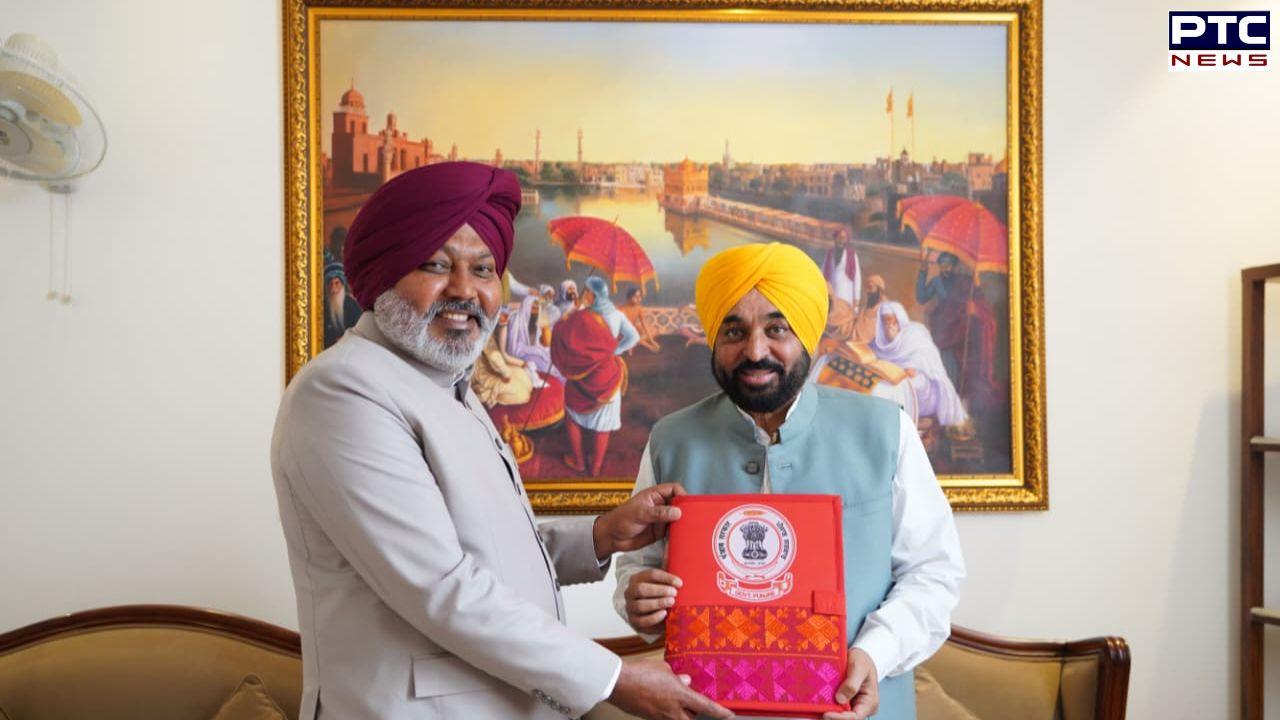
Harpal Singh Cheema said the Budget is dedicated to the women of Punjab. It introduces the Mukh Mantri Mawan Dhiyan Satikar Yojana, under which every woman will receive ₹1,000 per month, while Dalit women will get ₹1,500 per month as financial assistance. Nearly 97% of women are expected to benefit under the current eligibility rules. The government has set aside ₹9,300 crore for this scheme.
In addition, the free bus travel service for women will continue with an allocation of ₹600 crore. A total of ₹932 crore has been earmarked for the Integrated Child Development Services (ICDS). Under the Navi Disha Scheme, free sanitary pads will be provided to adolescent girls, for which ₹65 crore has been allocated for 2026–27.
Overall, the government has proposed a total budget of ₹18,304 crore for women’s empowerment and social welfare. This is the highest allocation in the history of Punjab and represents a 96% increase compared to last year.
Monthly aid for woman caped at Rs 1,000
Women under SC category to get Rs 1500
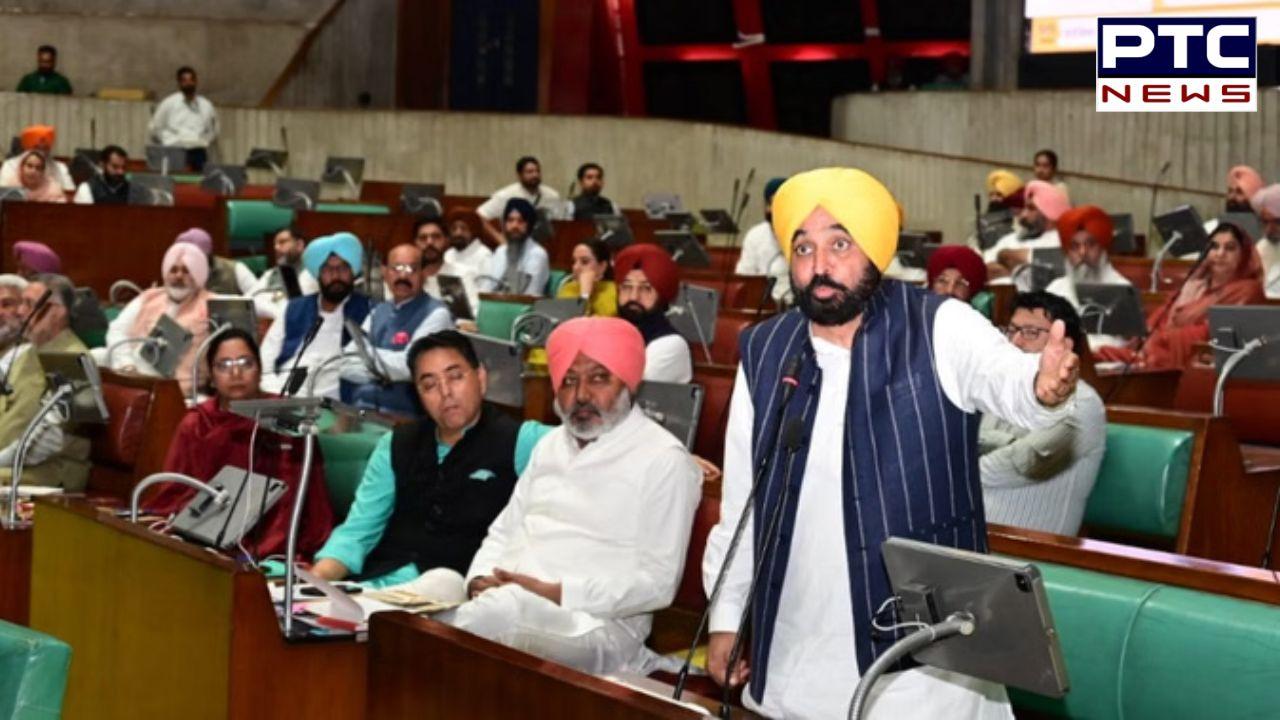
Finance Minister Harpal Singh Cheema said that he is presenting the budget at a time when the government’s work is visible, not just announcements. He added that the way people worked during the floods was commendable and deserves appreciation.
Punjab govt's Budget so far
2022-23 1,96,462 crore
2023-24 2,02,918 crore
2024-25 2,15,500 crore
2025-26 2,36,080 crore
ਤਿਆਰ ਰਹੋ, ਜਲਦ ਖੁਸ਼ਖਬਰੀ ਆ ਰਹੀ ਹੈ।
— Bhagwant Mann (@BhagwantMann) March 8, 2026
Stay tuned, good news on the way.???? pic.twitter.com/3wlzNuJUMX
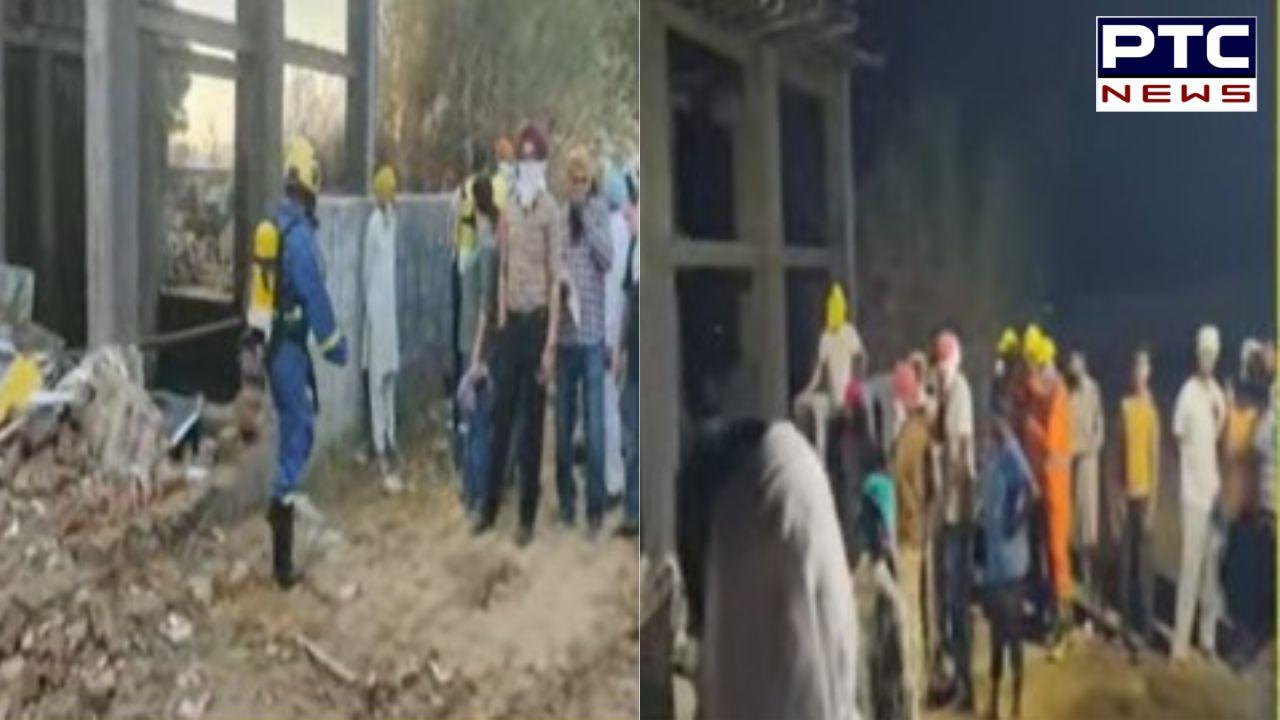
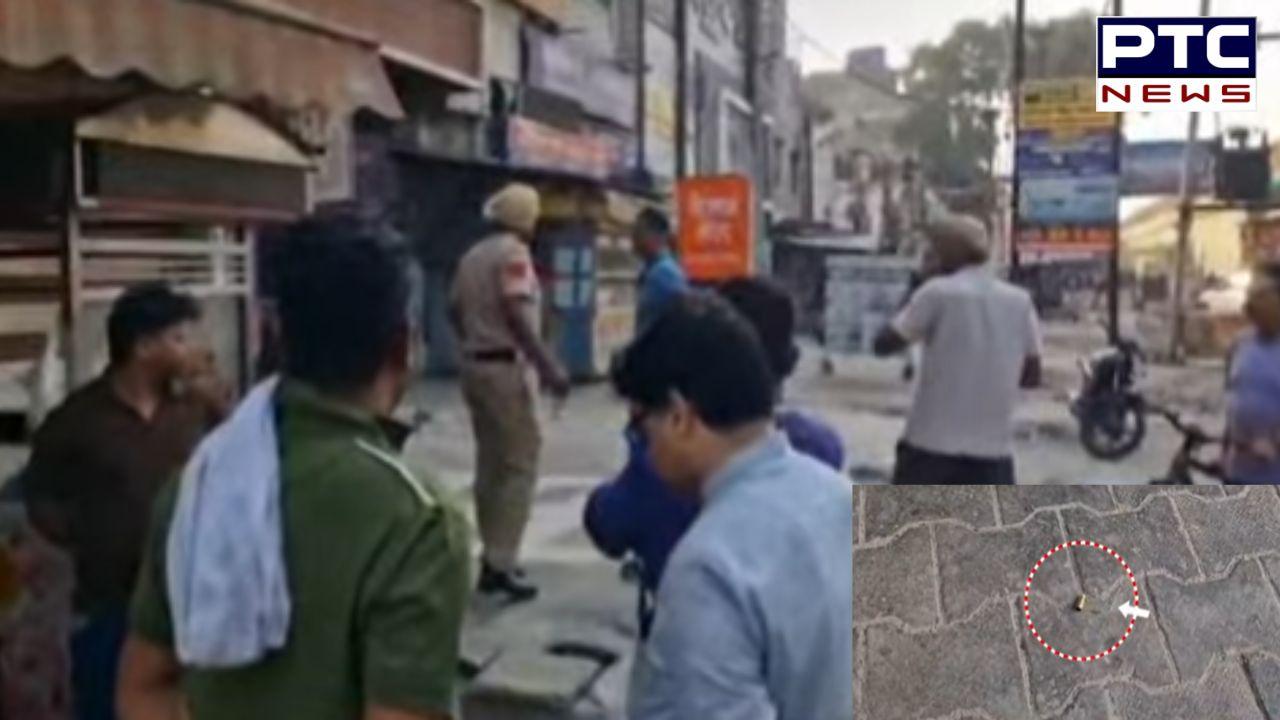
Hours before presentation of the budget, the Punjab Assembly received a bomb threat email on Sunday morning. Following the threatening email, several teams of police officials and bomb disposal squad rushed to the spot and began thorough search of the premises.
PTC News Desk: The state’s Aam Aadmi Party (AAP) government is preparing to attract two important groups of voters — women and Dalits — as it presents its last Budget on Sunday.
In this Budget, the government is expected to finally fulfil its long-pending promise of giving ₹1,000 per month to all women. To further gain support from Dalits, the government is also considering giving extra financial assistance to Dalit women.
The scheme may be funded using ₹4,500 crore saved from the power subsidy after the recent cut in electricity tariffs. In addition, around ₹3,000 crore earned from the sale of properties by urban development authorities, especially in Mohali, may also be used for this purpose.
AAP’s political planners believe that these steps will help the party secure support from a large number of voters. Dalits make up nearly 33% of the electorate, so offering additional benefits to Dalit women before the next Assembly elections could help the ruling party gain more Dalit votes.
In the 2022 elections, AAP had already received a large share of Dalit votes after many Dalit voters moved away from their traditional support for the Congress and the Shiromani Akali Dal.
Follow for LIVE UPDATES
- PTC NEWS