Trump slaps 100% tariffs on branded drugs; how India could be affected?





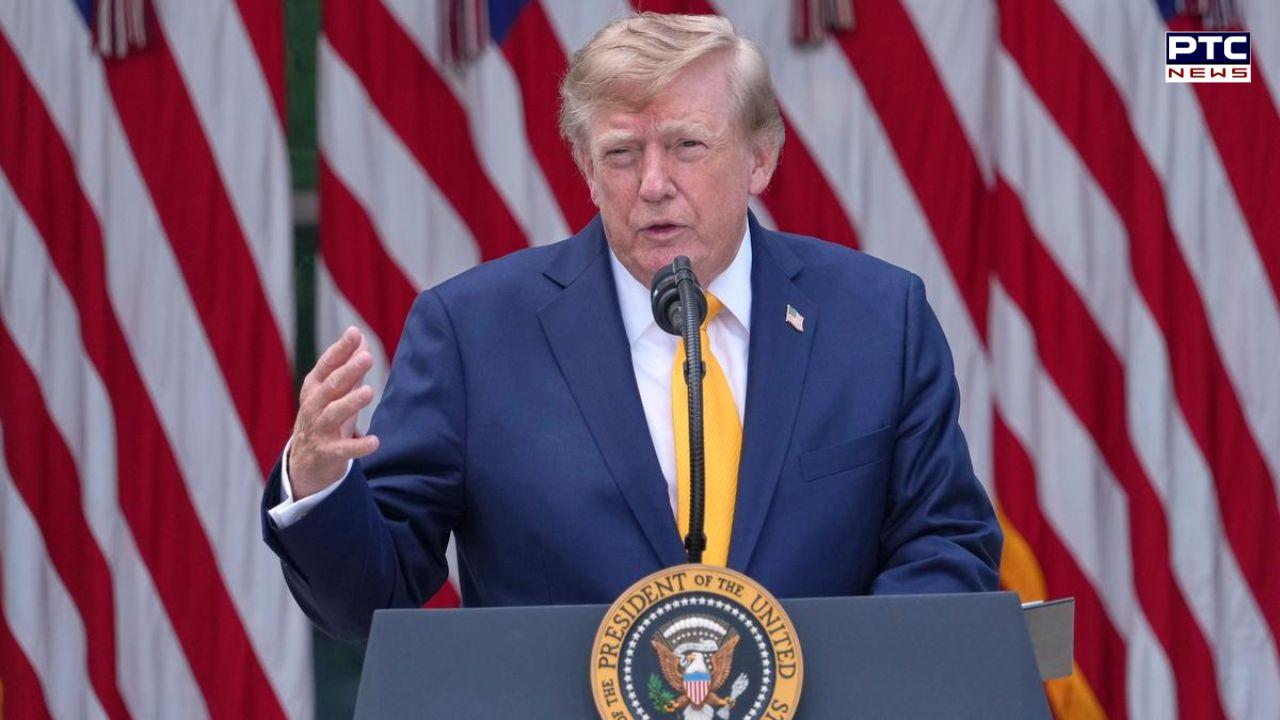
PTC Web Desk: US President Donald Trump on Thursday announced steep new tariffs on pharmaceutical imports, declaring that branded and patented drugs entering America will face duties of up to 100 per cent starting October 1, 2025.
In a post on Truth Social, Donald Trump said the tariffs would not apply to companies that had begun building or were in the process of constructing manufacturing plants in the United States. “IS BUILDING will be defined as ‘breaking ground’ and/or ‘under construction.’ There will, therefore, be no tariff on these pharmaceutical products if construction has started,” he wrote.
The decision extends US President Trump’s tariff drive beyond earlier measures announced in August, which focused on trade frameworks and consumer goods. He defended the move by linking it to domestic manufacturing goals and the need to address the federal budget deficit.
Alongside the pharmaceutical duties, Donald Trump unveiled additional tariffs, 50 per cent on kitchen cabinets and bathroom vanities, 30 per cent on upholstered furniture, and 25 per cent on heavy trucks. He also cited “national security and other reasons” as justification, though without specifying a legal basis.
How India could be affected
The United States is India’s largest export market for pharmaceutical goods. According to the Pharmaceuticals Export Promotion Council of India, out of India’s $27.9 billion pharma exports in FY24, about 31 per cent—or $8.7 billion
(Rs 77,138 crore)—went to the US. In the first half of 2025 alone, India shipped another $3.7 billion (Rs 32,505 crore) worth of pharma products to American markets.
India supplies nearly 45 per cent of generic drugs and 15 per cent of biosimilars used in the US. Major firms such as Dr Reddy’s, Aurobindo Pharma, Zydus Lifesciences, Sun Pharma, and Gland Pharma earn 30–50 per cent of their revenues from the American market.
While the new tariffs are directed primarily at branded and patented drugs, uncertainty remains over whether complex generics and speciality medicines exported from India will also fall under scrutiny. Many Indian pharmaceutical companies already operate manufacturing units in the US, which could provide partial relief.
Analysts warn that higher tariffs could fuel drug shortages, raise healthcare costs, and trigger inflationary pressures in the US, given the country’s reliance on affordable Indian generics. For Indian drugmakers—already operating with thin profit margins in the American generics space—the impact could be severe if duties extend to their products. Companies may ultimately pass on the higher costs to US consumers or insurers.
Trump has earlier announced tariffs on several categories of Indian imports, including a 25 per cent penalty related to India’s continued oil purchases from Russia.
- With inputs from agencies