Aditya L1 mission: 'Spacecraft to reach Lagrange Point 1 on Jan 6,’ ISRO chief





Aditya L1 mission: After the successful landing of a remarkable chapter in the nation's history, with the Chandrayaan-3 Vikram Lander accomplishing a successful touchdown on the Moon, now Indian Space Research Organisation’s the Aditya-L1 Solar Mission is all set to reach its cosmic destination, Lagrange Point 1 (L1), on January 6, 2024.
Also Read: New Year 2024: Top New Year’s resolution worth making it for upcoming year
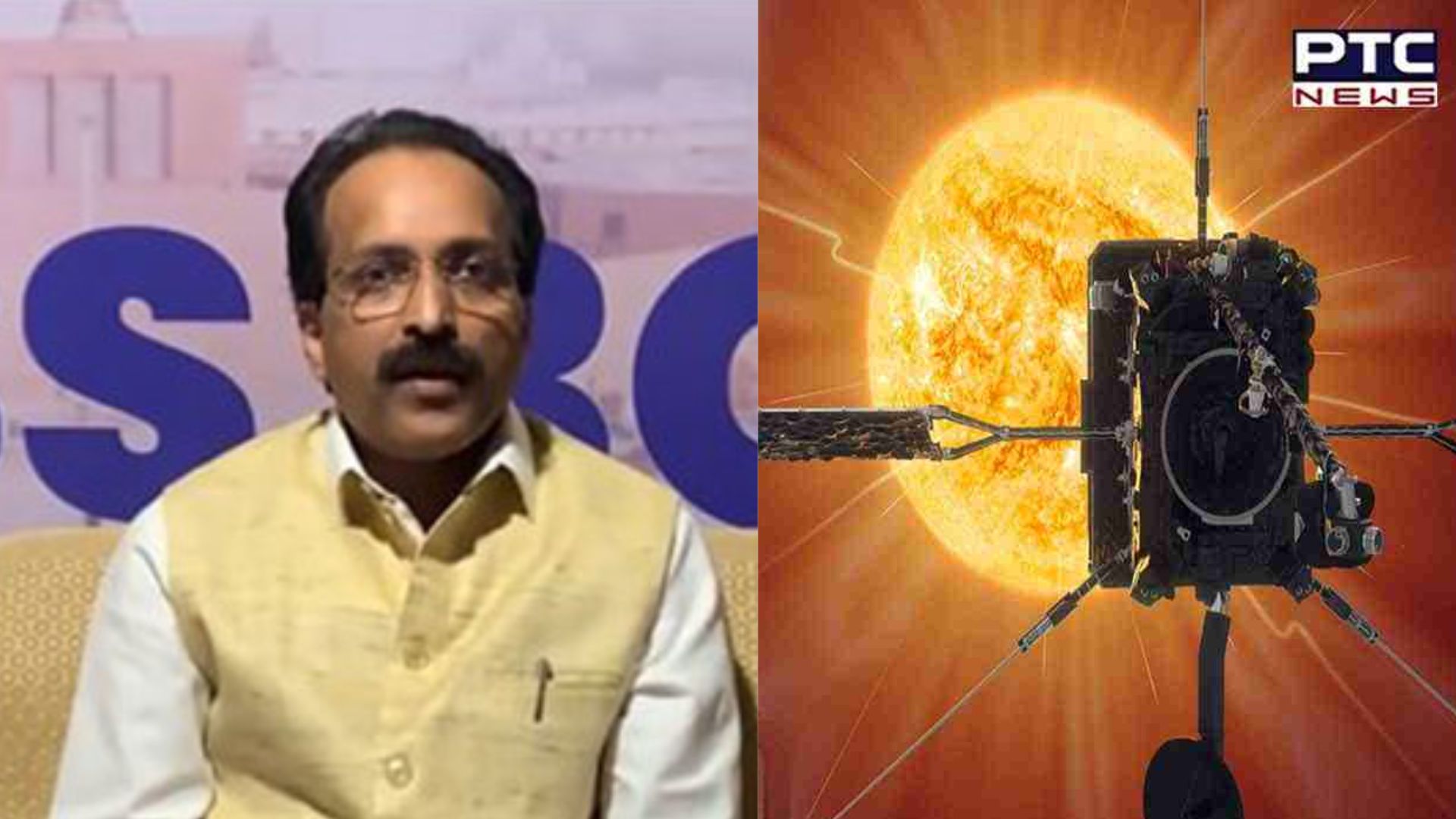
Speaking at the three-day annual Science and Technology Fest, Chairman of The Indian Space Research Organisation (ISRO) S. Somanath said, "Aditya-L1 is going to reach Lagrange Point on January 6 at 4 pm."
/ptc-news/media/post_banners/31c36511bd116df97ad0d53c2e19a80ed250ec762a3e9d9d31f974e01bdcd6cb.webp)
"The Chandrayaan-3 has been a great success. This gives us lots of confidence to us and to the team to work on the programmes. After 14 days of its contribution of collecting data, it is now sleeping very well there so I advise our IT not to wake it up again so it's sleeping forever, but unfortunately we were hoping it would wake up through its ability but it couldn't happen," he said.
#WATCH | Mumbai: Addressing the TechFest at IIT Bombay, ISRO Chairman S Somnath says, "...After the success of Chandrayan-3, there is a huge demand about what is next for ISRO in the coming 25 years. We have a roadmap for what we have planned till 2047... We can build a space… pic.twitter.com/vw520gPFyL — ANI (@ANI) December 28, 2023
"We hope that whatever data we have collected in 14 days is going to give us a fantastic scientific outcome in the coming days. Our scientists are working on it now," the ISRO chief added.
Indian Space Research Organisation (ISRO) launched its much-anticipated and much-awaited country's maiden solar mission Aditya-L1 from the launch pad at the Satish Dhawan Space Centre (SDSC-SHAR) in Andhra Pradesh’s Sriharikota on September 2, 2023.
Also Read: 2024 Bank Holidays: Banks to remain shut for 16 days in January, check full list
Aditya-L1 represents India's inaugural solar space observatory and propelled into space by the PSLV-C57. It will transport seven distinct payloads, enabling an extensive examination of the sun. Among these instruments, four will focus on observing solar light, while the remaining three will measure in-situ parameters related to plasma and magnetic fields.
/ptc-news/media/post_banners/7517a6d4de611520ff5020222e0226bad28851feca68420fb106845c78bc34bb.webp)
The spacecraft carries seven payloads to observe the photosphere, chromosphere and the outermost layers of the Sun (the corona) using electromagnetic particle and magnetic field detectors.
Also Read: Welcome 2024: 10 Unique, Fun and Amazing New Year Eve Party Ideas
-