Delhi chokes again: AQI crosses 760 as winter temperature inversion turns Capital into ‘gas chamber’





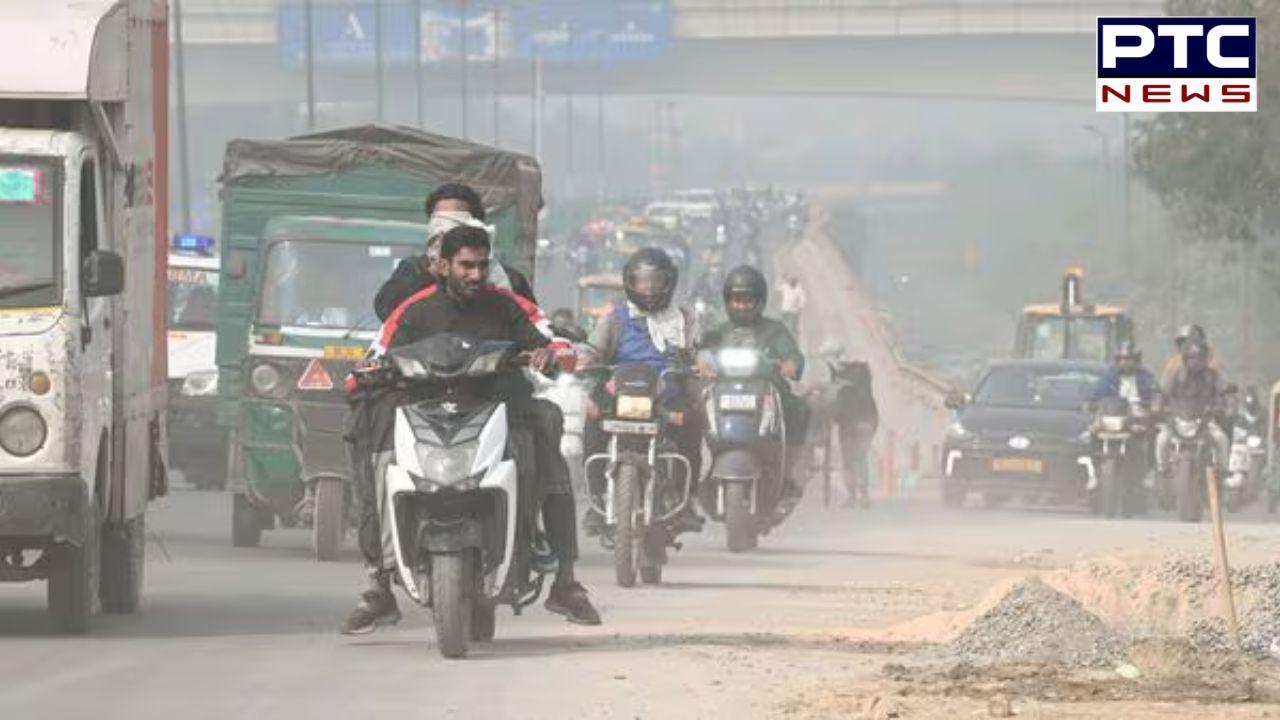
PTC Web Desk: Delhi has once again turned into a “gas chamber”, with the Air Quality Index (AQI) soaring beyond 764 in some parts of the city as of November 13. The toxic haze has blanketed the national capital, prompting doctors to advise residents to avoid morning walks and other outdoor activities.
Experts say the alarming rise in pollution levels, especially during early morning hours, is not merely due to emissions but a meteorological phenomenon known as temperature inversion, which traps pollutants close to the ground.
Why air quality is worst in the morning
Under normal conditions, warm air rises and helps disperse pollutants. But during Delhi’s cold winter months (October to February), cloudless nights cause the ground to lose heat rapidly. As the surface cools to around 10–12°C, the layer of air above it remains warmer, around 18–20°C. This creates a “lid” of warm air that prevents the cold, pollutant-heavy air below from rising. With wind speeds dropping below 8 km/h, pollutants like PM2.5 and PM10 remain trapped near the surface.
Experts say low temperatures and high humidity slow the dispersion of particulate matter, worsening the air quality in the morning. As the day progresses and sunlight breaks through, the trapped layer begins to disperse, slightly improving AQI levels.
Multiple pollution sources across Delhi-NCR
While traffic emissions reduce at night, pollution does not disappear. Heavy trucks and carriers passing through Delhi and NCR continue to emit smoke, while stubble burning in Punjab and Haryana contributes up to 30–40% of PM2.5 levels during November. Industrial emissions and construction dust add to the toxic mix.
On Thursday morning, the CRRI Mathura Road station recorded an AQI of 430 (severe), while several other monitoring stations across the city reported “very poor” to “severe” levels.
Doctors have compared breathing Delhi’s winter air to smoking 25–30 cigarettes a day. A senior consultant at Sir Ganga Ram Hospital warned that morning walkers face the highest risk. Prolonged exposure can lead to respiratory inflammation, aggravated asthma, heart disease and even cognitive issues.
Environmental experts believe that only policy-driven action and favourable weather conditions can break this cycle. Until temperatures rise and wind speeds increase, Delhi-NCR residents are likely to continue breathing toxic air for the next few months.
- With inputs from agencies