Ali Khamenei killed in US–Israel strikes: Who are Khamenei's potential successors as Supreme Leader?





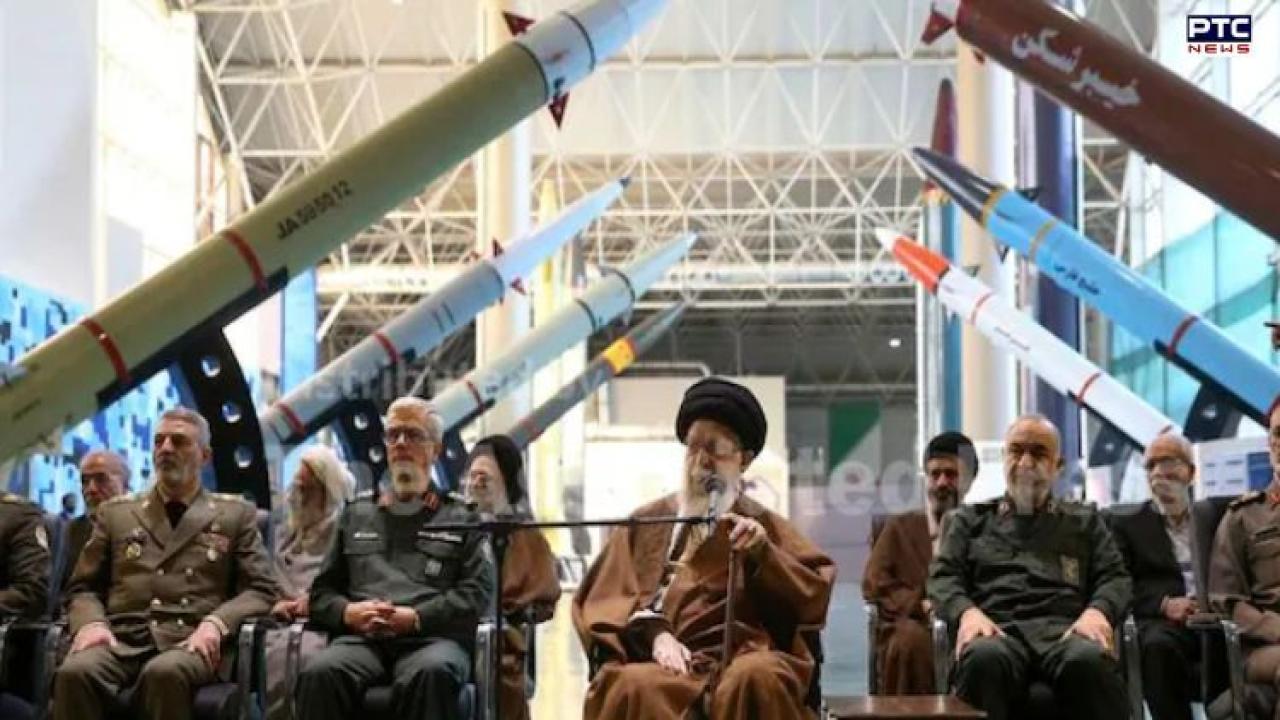
PTC Web Desk: Iran’s Supreme leader Ayatollah Ali Khamenei was killed in coordinated strikes launched by the United States and Israel on Saturday, a development that could fundamentally alter the structure of power in the Islamic Republic.
For more than three decades, Khamenei stood at the centre of Iran’s clerical establishment. The political system he led was structured around his authority and was never tested by the sudden loss of a supreme leader during active military confrontation. While constitutional provisions outline a succession mechanism, it remains uncertain whether those procedures can function smoothly amid crisis and external pressure.
Under Iran’s constitution, the supreme leader must be a senior cleric guided by the doctrine of vilayat-e faqih or guardianship of the Islamic jurist. The concept maintains that, until the reappearance of the 12th Imam revered in Shi’ite Islam, ultimate political and religious authority rests with a qualified Islamic scholar.
Khamenei, like his predecessor and the Islamic Republic’s founder Ayatollah Ruhollah Khomeini, exercised final authority over state matters, including the military, judiciary and key policy decisions. However, the current situation presents a challenge the system has never previously encountered.
Much of Khamenei’s influence operated through a close inner circle of advisers and commanders. Following the weekend strikes, it remains unclear how many senior officials within that network survived.
Among the names earlier discussed in succession debates are Mojtaba Khamenei, the late leader’s son, and Hassan Khomeini, grandson of the republic’s founding figure. Other senior clerics have also been mentioned. Yet analysts caution that none currently possess the religious standing or political weight Khamenei commanded. Any successor could face difficulty asserting authority over powerful institutions such as the Revolutionary Guards and influential clerical bodies.
Iran’s clerical structure still holds firm control over the country’s key levers of power. Central to the succession process is the Assembly of Experts, a council of senior ayatollahs elected every eight years. The body is constitutionally empowered to appoint and, in theory, dismiss the supreme leader, though it has never removed one from office.
In practice, major decisions are often shaped behind closed doors by dominant political and military figures before receiving formal approval. With reports suggesting that several high-ranking Revolutionary Guards commanders were killed in the strikes, questions remain over who will steer this transition.
Another influential body, the Guardian Council, wields authority to vet election candidates and reject parliamentary legislation. Half of its members are appointed directly by the supreme leader, while the other half are nominated by the judiciary. Over the years, the council has frequently disqualified reformist or critical voices from elections.
Iran’s judiciary, guided by Shi’ite Islamic law, is also closely linked to the supreme leader’s office. The chief justice , appointed by the leader, oversees the legal system. Other senior clerics and political figures, including members of the Assembly of Experts, are expected to play critical roles in any power shift.
The Islamic Revolutionary Guards Corps (IRGC) occupies a unique and powerful position in Iran’s political and security framework. Unlike the regular army, which answers to the Defence Ministry, the IRGC reports directly to the supreme leader.
Reports indicate that senior IRGC commander Mohammad Pakpour may have been among those killed in Saturday’s strikes, a potential blow to the organisation’s command structure.
Since its formation after the 1979 revolution, the IRGC has expanded far beyond a conventional military force. It consolidated influence during the Iran–Iraq war and later entrenched itself in politics, intelligence and major sectors of the economy. Its elite Quds Force directed Iran’s regional strategy, supporting allied groups across the Middle East. That network had already faced setbacks in recent years, including the 2020 US killing of Quds Force chief Qassem Soleimani and Israel’s intensified operations against Hezbollah in 2024.
The Basij militia, which operates under IRGC authority, has repeatedly been deployed to quell domestic unrest. Despite speculation about internal vulnerabilities following targeted strikes, the Guards are widely expected to play a central role in determining Iran’s next phase.
Although Iran holds presidential and parliamentary elections every four years, ultimate authority has always rested with the supreme leader. The president oversees day-to-day governance but operates within boundaries defined by the unelected clerical leadership.
Voter participation was high in the years immediately following the 1979 revolution. Over time, however, public confidence declined. Disputed election results in 2009, strict candidate vetting by the Guardian Council and the overriding power of unelected institutions weakened faith in the electoral system.
President Masoud Pezeshkian, considered a relative moderate, won the 2024 election after defeating a hardline challenger. Israeli officials claimed he was also targeted in Saturday’s strikes, though there was no confirmed update on his condition later in the day.
With the sudden loss of its supreme leader, Iran now stands at a pivotal moment. Whether its clerical system can navigate succession during heightened regional conflict may determine the country’s political trajectory for years to come.
- With inputs from agencies