MDR row: Govt defers 0.4 % UPI fee on transactions above Rs 2,000 until after Diwali





PTC News Desk: The implementation of Merchant Discount Rate (MDR) charges on certain Unified Payments Interface (UPI) transactions has been postponed until after Diwali, the National Payments Corporation of India (NPCI) announced on Tuesday. The move is aimed at avoiding disruptions during the busy festive shopping season.
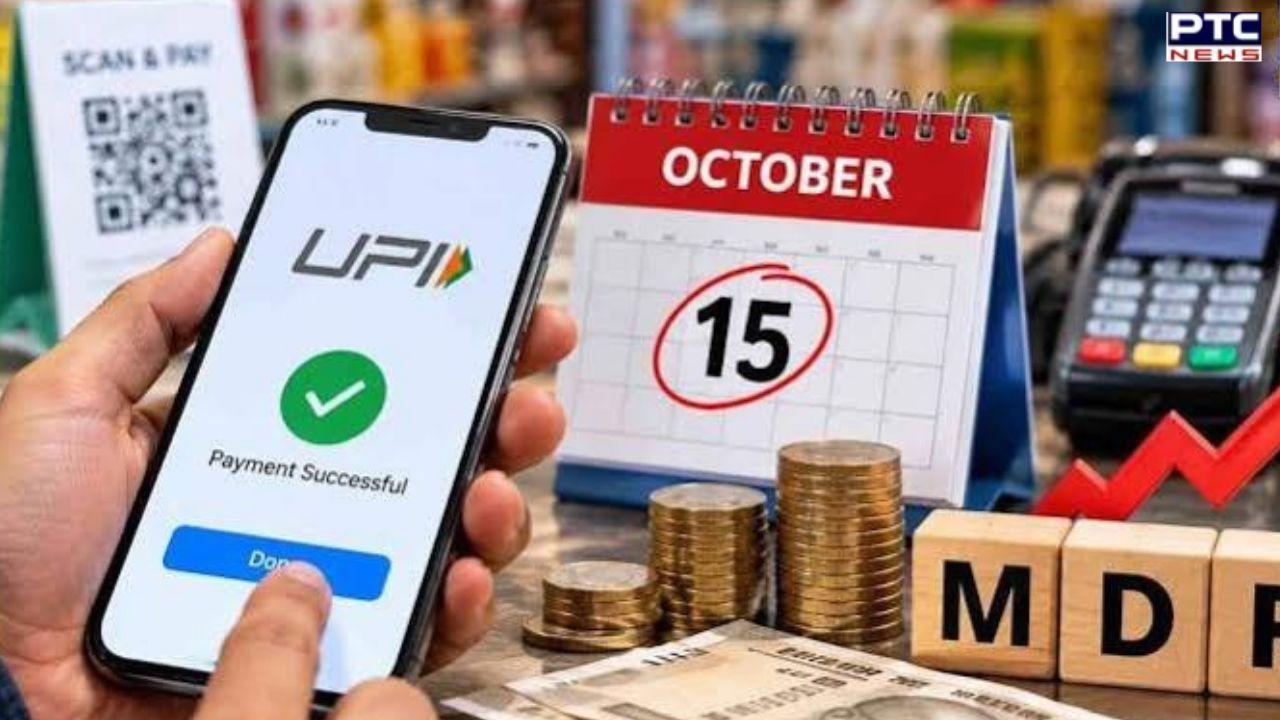
According to an NPCI statement dated October 13, the UPI and Services Steering Committee decided that MDR charges on selected person-to-merchant (P2M) transactions would be introduced immediately after Diwali. The exact date will be announced separately.
"UPI and Services Steering Committee today decided that, keeping in mind the festive season, Merchant Discount Rate (MDR) on select Person-to-Merchant (P2M) UPI transactions, shall be implemented immediately post Diwali at a date to be notified separately," said NPCI in its release.
The charges were earlier scheduled to take effect from October 15. However, merchant groups, fintech firms and payment companies had reportedly requested a delay, citing concerns about the impact on businesses and consumers. Earlier reports suggested that NPCI was also considering postponing the rollout until January 2027.
Industry representatives have raised concerns about confusion over which transactions would attract the charges and whether different rates would apply to different categories.
Under the proposed framework, a 0.4% MDR charge would apply to certain UPI transactions above Rs 2,000. For example, a transaction worth Rs 10,000 would attract a fee of Rs 40. MDR is a fee that merchants pay for accepting digital payments. Depending on the applicable rules, it can increase the cost of accepting payments for businesses.
The delay gives retailers and online sellers more time to prepare, as digital payments typically rise during the festive season when people spend more on shopping, electronics, travel and other purchases. NPCI has not yet announced the revised implementation date or provided further details about the transactions that will be covered. More clarity is expected when the final date is officially notified.
What is MDR?
MDR stands for Merchant Discount Rate. It is a small processing fee charged to a merchant when a customer makes a digital payment. In simple terms, when you pay a shopkeeper digitally, the payment system may charge the shopkeeper a small amount for processing the transaction.
Customers usually do not pay MDR directly. However, in some payment systems, merchants may pass the cost on to customers.
UPI had no MDR since 2020
UPI payments have been free of MDR since 2020. The policy was introduced to encourage people and businesses to move away from cash and use digital payments. The latest decision changes that arrangement for larger merchant transactions, while keeping smaller UPI merchant payments free.
Special MDR for some sectors
The government has also introduced different charges for certain categories.
Payments above Rs 2,000 in sectors such as railways, telecom, insurance and fuel will attract a flat MDR of Rs 5 per transaction. For payments related to mutual funds, securities, stock brokers and dealers, the MDR will be much lower at 0.02%, with a maximum charge of Rs 300.
Small vendors will continue to get relief
Small businesses and street vendors have been given special protection under the new rules. UPI QR-code transactions of up to Rs 1 lakh per month under the Person-to-Person-Merchant (P2PM) category will continue to have zero MDR. The move is aimed at helping small and informal businesses adopt digital payments without facing additional costs.
- PTC NEWS