FSSAI bans sale of Everest, Laljee Godhoo hing after tests find products substandard





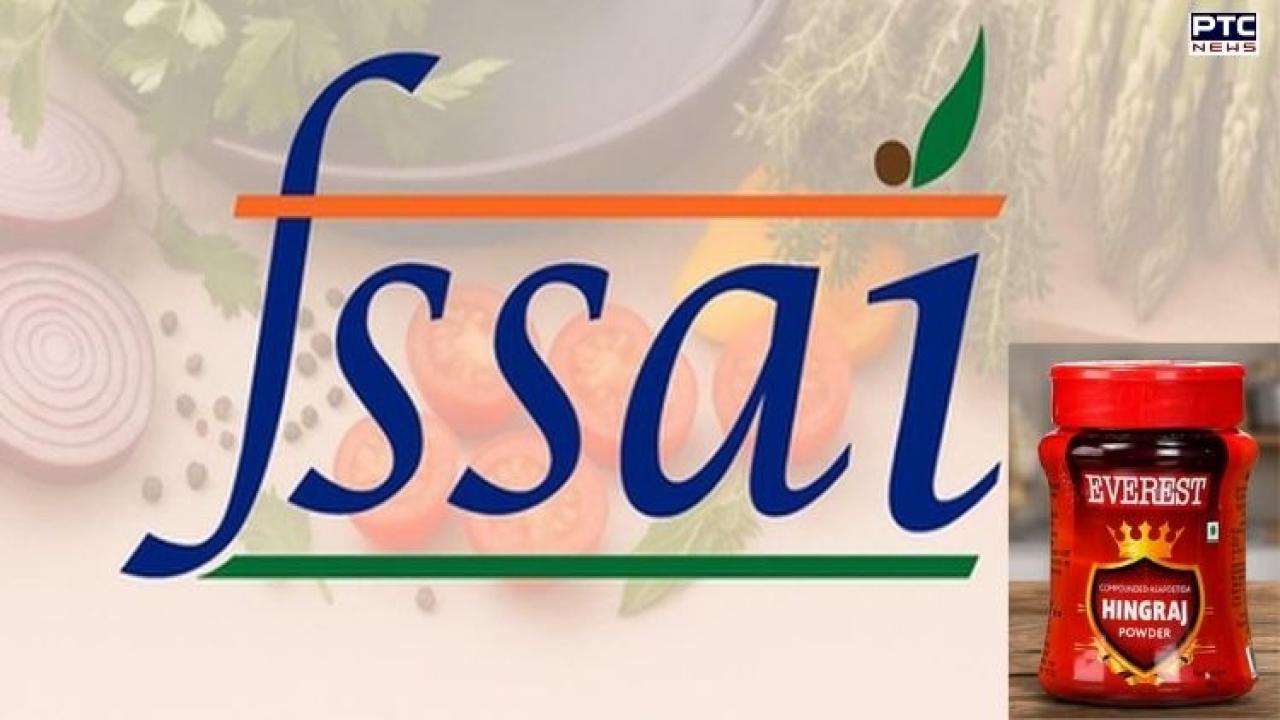
PTC Web Desk: The Food Safety and Standards Authority of India (FSSAI) has temporarily stopped the sale of hing (asafoetida) made by Everest Food Products and Laljee Godhoo after laboratory tests found that the products did not meet the required food safety standards.
The food regulator has asked both companies to explain the violations and submit action plans showing how they plan to meet the prescribed standards. They have also been advised to voluntarily recall the substandard hing products already available in the market.
The ban will continue until the companies comply with the required regulations.
FSSAI also found violations in three other Everest products, egg curry masala, chicken masala and garam masala. However, the regulator has not imposed a ban on the sale of these three products.
According to FSSAI, the inspection followed a consumer complaint about major hing brands. Samples were collected from the manufacturing facilities of the companies in Mumbai, along with samples from Everest's plant in Umbergaon, Gujarat.
Laboratory tests showed that the compounded hing samples did not meet the required standards.
Under the existing rules, compounded hing must contain at least 5 per cent alcohol-soluble extract. However, the samples tested by FSSAI contained only 0 to 3 per cent.
The regulator said this indicated that the products contained significantly less raw hing than the prescribed requirement.
The tests also found serious concerns in six varieties of raw hing collected from the Laljee Godhoo facility. These samples contained between 15 per cent and 32 per cent starch, while the permitted limit is only 1 per cent.
The action against the hing manufacturers comes at a time when FSSAI has proposed stronger warning labels for packaged food products.
FSSAI has told the Supreme Court that it has proposed a bright red, hexagonal warning label on the front of packaged foods that contain high amounts of sugar, salt or saturated fat.
The proposal came after the Supreme Court questioned FSSAI and the government over delays in bringing front-of-pack warning labels.
The proposed labels are aimed at making it easier for consumers to identify packaged foods that contain excessive amounts of sugar, salt or saturated fat.
The move has also renewed the discussion around how clearly food companies should inform consumers about the nutritional risks linked to their products.
Also Read | BJP chief Nitin Nabin reprimands 3 Delhi MPs over visit to Sajjan Kumars home
Also Read | Big blow for India: Neeraj Chopra out of Asian Games 2026; season comes to early end
- With inputs from agencies