Union Budget 2026 Highlights: No change in income tax slabs; customs duty waived on 17 cancer drugs, 3 new ayurvedic AIIMS, 7 high-speed rail corridors to be built





Union Budget 2026 Highlights: Key Proposals and Measures
Income Tax & Returns
Extended deadlines for filing returns: ITR-1 and ITR-2 forms can be submitted until July 31, while non-audit business cases and trusts have time till August 31.
Returns can be revised even after reassessment proceedings, with payment of a nominal fee.
Proposal to rationalise the prosecution framework under the Income Tax Act.
TDS on sale of immovable property by NRIs to be deducted by resident buyers.
Dividend income from inter-cooperative societies allowed as deduction under the new tax regime.
Corporate & Companies
“Corporate Mitras” to support MSMEs with regulatory compliance.
Power Finance Corporation (PFC) and REC to be restructured for better efficiency.
Tax holiday till 2047 for foreign firms providing cloud services with data centers in India.
Buyback tax on shares to be treated as capital gains for all shareholder types.
Banking & Finance
High-level committee to strengthen banking for a “Viksit Bharat”.
Rs 2,000 crore top-up allocated to the Self-Reliant India Fund.
Safe harbour limit for IT services raised from Rs 300 crore to Rs 2,000 crore, with a uniform margin of 15.5%.
Social Welfare & Poverty
Over 25 crore people lifted from multi-dimensional poverty in the past 10 years.
Fish catch by Indian vessels on the high seas to be duty-free.
Revenue & Expenditure
Rs 1.4 lakh crore allocated to states as Finance Commission grants.
Debt-to-GDP ratio projected at 55.6% in 2026-27 (down from 56.1% in 2025-26).
Fiscal deficit expected at 4.3% of GDP for 2026-27.
Agriculture & Farmers
Targeted initiatives to increase farmer income.
Development of 500 reservoirs for irrigation and farming.
Credit-linked subsidies for animal husbandry.
Dedicated support programs for Indian cashew and cocoa sectors.
Education & Healthcare
Focus on STEM education for girls
Rs 10,000 crore allocated for Biopharma Shakti over 5 years.
Creation of 1,000 accredited trial sites for biopharma research.
Medical hubs for AYUSH centres, diagnostics, and post-care rehabilitation.
Infrastructure & Transport
Seven high-speed rail corridors planned to connect key cities.
Rs 10,000 crore proposed to boost SME growth.
Development of 20 new national waterways over the next five years.
Hi-tech tool rooms to support advanced material manufacturing.
East Coast Development Corridor launched to drive economic growth.
Customs duty exemption extended to inputs for nuclear power projects.
Markets & Economy
Market-making framework to strengthen corporate bonds.
Comprehensive review of foreign exchange management.
Foreign investors allowed to buy Indian stocks directly.
Capital expenditure for FY27 set at Rs 12.2 lakh crore.
Government aims to gradually reduce fiscal deficit while controlling borrowings.
Labour & Employment
Expansion and modernisation of textile clusters to create jobs.
Self-help entrepreneur marts to be set up as community-owned retail outlets.
Women & Rural Development
SHE marts to support women entrepreneurship.
Launch of Mahatma Gandhi Gram Samaj initiative for Khadi and handicrafts.
Make in India & Technology
Scaling up manufacturing in seven strategic sectors.
Rs 10,000 crore allocated for container manufacturing.
Revive 200 legacy industry clusters.
Committee to assess the impact of AI and technology on the services sector.
Rs 40,000 crore earmarked for India Semiconductor Mission 2.0.
Tourism & Skill Development
Training 1.5 lakh caregivers for the hospitality and tourism sector.
Establish medical value tourism hubs.
Tourism initiatives to support employment generation and foreign exchange earnings.
Congress MP Amar Singh says, "... They are already being partial with Punjab... They are misusing the majority... They ended MGNREGA, which was for the labourers...."
Self-Reliance: India has strengthened its manufacturing and energy security, reducing dependence on imports.
Growth Rate: Thanks to previous reforms, India is maintaining a 7% growth rate, contributing to poverty reduction.
12-year Journey: The Finance Minister highlighted that over the past 12 years, India’s economy has remained stable with inflation under control.
Global Challenges: Despite global trade and supply chain disruptions, India continues to move steadily towards becoming a developed nation.

Finance Minister said the fiscal deficit for Budget 2026-27 is estimated at 4.3% of GDP, down slightly from 4.4% in 2025-26, indicating a modest reduction in the deficit.
Finance Minister Nirmala Sitharaman has proposed that 17 cancer drufs and 7 more medicines for rare diseases will be exempt from customs duty.
Cargo Clearance Made Seamless
All approvals for cargo clearance will be processed smoothly through a digital window by the end of the financial year.
Duty-Free Fish Catch for Indian Vessels
Fish caught by Indian fishing vessels in the high seas will now be exempt from customs duty.
No customs duty on raw materials used for manufacturing aviation parts.
Exemption from basic customs duty on specified parts for microwave ovens.
Seafood Processing: Duty-free import limit for specified inputs for seafood exports increased from 1% to 3% of FOB value.
Leather Goods: Duty-free imports allowed for specified inputs used in leather exports.
Battery Energy Storage Systems (BESS): Basic customs duty exemption extended for capital goods used in BESS manufacturing.
Sodium Antimonate: No customs duty on sodium antimonate used for manufacturing solar glass.
Nuclear Power Projects: No customs duty on imports of goods for nuclear power projects till 2035.
Rate of final tax to be reduced to 14% from current Minimum Alternate Tax (MAT) rate of 15%
Buybacks to be taxed as capital gains for all types of shareholders, says Finance Minister Nirmala Sitharaman.
Move aims to disincentivise misuse of tax arbitrage.
Promoters to pay additional buyback tax:
Corporate promoters: Effective tax 22%
Non-corporate promoters: Tax 30% on buybacks
Foreign companies setting up data centres in India to provide cloud services will get a tax holiday until 2047.
The government also proposes a 15% safe harbour on costs if the cloud services in India are provided through a related entity.
Sensex falls 400 points to 81,900
Nifty dips below 25,200
Government banks see sharpest 3.5% drop
Finance Minister Nirmala Sitharaman stated that there are no changes in the income tax slabs
Individuals with ITR1 and ITR2 to continue to file till July 31
Non-audit business cases and trusts will be allowed to file returns till August 31
Buddhist circuits to be developed in Arunachal Pradesh, Assam, Sikkim, Mizoram, and Tripura.
Plan to help states establish five regional hubs to promote India as a medical tourism destination.
Dedicated centres to strengthen healthcare infrastructure.
Purvodaya Scheme: Focused development in the five Northeastern states through sector-specific initiatives.
Acceptance of 16th Finance Commission recommendations; ₹1.4 lakh crore allocated for rural and urban local body development.
Fiscal Management Targets:
Maintain debt-to-GDP ratio around 50% by 2031.
Keep fiscal deficit below 4.5% of GDP.
For better mental health treatment, especially in North India, FM says the government will set up Nimhans 2.0 to cater to mental health troubles
Ecologically sustainable trails to be developed in Himachal Pradesh, Utttarakhand and Jammu and Kashmir: FM
Motor accident claim exemption: Compensation received from motor accident claims will be exempt from income tax.
Tax estimates: Total estimated tax collection is ₹34 lakh crore.
Capital expenditure: ₹11 lakh crore; total budget estimate is ₹36.5 lakh crore.
New Income Tax Act: Will come into effect from 1 April 2026.
Simplified forms: Redesigned for easier filing by the general public.
Reduced tax rates:
Overseas tour programmes: Tax reduced from 5% → 2%.
Education and medical purposes: Tax reduced from 5% → 2%.
Employee hiring services: Tax increased from 1% → 2%.
R&D & Innovation: ₹20,000 cr for private-sector-driven initiatives.
Deep Tech Fund of Funds: Support next-generation startups.
PM Research Fellowship: 10,000 fellowships over 5 years for IIT/IISc technological research.
Gene Bank: Second bank with 10 lakh germplasm lines for food & nutrition security.
National Geospatial Mission: Develop geospatial infrastructure for land records, urban planning, and infrastructure design.
Gyan Bharatam Mission: Survey, document, and conserve 1 cr manuscripts; National Digital Repository of Indian knowledge systems.
PPP in infrastructure: Ministries & states to create 3-year project pipelines; support via IIPDF.
State support: ₹1.5 lakh cr 50-year interest-free loans for capex and reforms.
Asset Monetisation Plan 2025–30: Capital of ₹10 lakh cr to be reinvested in new projects.
Jal Jeevan Mission: Extension to 2028; focus on quality, O&M, citizen-centric water delivery.
Urban reforms: Incentives for governance, municipal services, urban planning; Urban Challenge Fund ₹1 lakh cr (₹10,000 cr allocation for 2025-26).
Power sector: Distribution reforms; extra 0.5% GSDP borrowing allowed for compliant states.
Nuclear energy: Target 100 GW by 2047; SMR R&D Mission with ₹20,000 cr; 5 SMRs by 2033.
Shipbuilding: Financial assistance policy revamped; clusters and HML inclusion.
Maritime Development Fund: ₹25,000 cr corpus, 49% govt share; long-term financing for the maritime sector.
UDAN regional connectivity: Expand to 120 new destinations; 4 cr passengers over 10 years.
Greenfield airports in Bihar: Complement Patna expansion & Bihta brownfield airport.
Western Koshi Canal project: Financial support for 50,000 hectares in Mithilanchal, Bihar.
Mining reforms: State Mining Index; critical mineral recovery from tailings.
SWAMIH Fund 2: ₹15,000 cr to complete 1 lakh affordable housing units.
PM Gati Shakti data access: Private sector PPP planning support.
Tourism & employment: 50 top destinations developed via challenge mode; skill programs, MUDRA loans, connectivity, e-visas; special focus on Lord Buddha sites.
Medical tourism (Heal in India): Private sector partnership, capacity-building, easier visa norms.
A. Investing in People
Saksham Anganwadi & Poshan 2.0: Nutritional support to 8 cr children, 1 cr pregnant/lactating women, 20 lakh adolescent girls; cost norms enhanced.
Atal Tinkering Labs: 50,000 labs in government schools over 5 years for innovation and scientific temper.
Broadband connectivity: All rural government secondary schools and PHCs under BharatNet.
Bharatiya Bhasha Pustak Scheme: Digital Indian language books for schools & higher education.
National Centres of Excellence for Skilling: 5 centres to train youth for “Make for India, Make for the World”.
IIT Expansion: Infrastructure for 6,500 new students; IIT Patna hostels expanded.
AI Centre for Education: ₹500 cr to develop AI solutions in education.
Medical education: 10,000 new UG/PG seats next year; 75,000 in 5 years.
Day Care Cancer Centres: 200 centres in 2025-26 across district hospitals.
Urban livelihoods & PM SVANidhi: Revamped loans, UPI-linked credit cards (₹30,000), capacity-building.
Gig workers’ social security: Identity, e-Shram registration, PM Jan Arogya healthcare for ~1 cr workers.
5.7 crore MSMEs cover manufacturing and services.
Revised classification: Investment and turnover limits doubled to enable growth and employment.
Enhanced credit guarantees:
Micro & Small Enterprises: ₹5 cr → ₹10 cr (additional ₹1.5 lakh cr over 5 years).
Startups: ₹10 cr → ₹20 cr; guarantee fee 1% for 27 focus sectors.
Exporter MSMEs: term loans up to ₹20 cr.
Credit cards for micro enterprises: ₹5 lakh limit; 10 lakh cards in first year.
Fund of Funds for Startups: New ₹10,000 cr fund to expand scope.
First-time entrepreneurs: Scheme for 5 lakh women, SC/ST entrepreneurs; term loans up to ₹2 cr; online capacity-building included.
Labour-intensive sectors: Policy and facilitation measures to boost employment.
Focus Product Scheme (Footwear & Leather): Employment for 22 lakh, turnover ₹4 lakh cr, exports ₹1.1 lakh cr.
Toy sector: National scheme to make India a global hub; focus on clusters, skills, and sustainable manufacturing.
Food processing (Purvodaya): National Institute in Bihar; value addition for farmers, skilling, entrepreneurship.
National Manufacturing Mission: Covering small, medium, and large industries; includes Clean Tech manufacturing (solar PV, EV batteries, wind turbines, grid batteries).
1. Prime Minister Dhan-Dhaanya Krishi Yojana
Targets 100 low-productivity districts with moderate crop intensity and below-average credit parameters.
Focus areas: agricultural productivity, crop diversification, sustainable farming, post-harvest storage, irrigation, and credit access.
Expected to benefit 1.7 crore farmers.
2. Rural Prosperity and Resilience Programme
Multi-sectoral initiative to address underemployment in agriculture via skilling, investment, and technology.
Focus on women, youth, small/marginal farmers, and landless families.
Incorporates global and domestic best practices, supported by multilateral development banks.
3. Mission for Aatmanirbharta in Pulses
6-year mission with focus on Tur, Urad, and Masoor.
Central agencies NAFED and NCCF to procure pulses from registered farmers.
4. Comprehensive Programme for Vegetables & Fruits
Promote production, supply efficiency, processing, and remunerative prices.
Farmer producer organizations and cooperatives to be actively involved.
5. Makhana Board in Bihar
Enhance production, processing, value addition, and marketing of Makhana.
Farmers organized into FPOs; training and scheme support provided.
6. National Mission on High Yielding Seeds
Strengthen research ecosystem, develop high-yield, pest-resistant, climate-resilient seeds.
Ensure commercial availability of 100 new seed varieties since July 2024.
7. Fisheries Development
Enable sustainable harnessing of marine resources, focusing on Andaman & Nicobar and Lakshadweep.
Seafood exports currently valued at ₹60,000 crore.
8. Mission for Cotton Productivity
5-year mission to enhance cotton productivity and sustainability, promoting extra-long staple varieties.
Supports textile sector growth and increases farmer incomes.
9. Enhanced Credit via Kisan Credit Cards (KCC)
Short-term loan limit increased from ₹3 lakh to ₹5 lakh under the Modified Interest Subvention Scheme.
Benefits 7.7 crore farmers, fishermen, and dairy farmers.
10. Urea Production in Assam
New urea plant at Namrup with 12.7 lakh MT annual capacity to boost domestic production.
Three dormant urea plants in the Eastern region have been reopened.
11. India Post as Rural Economy Catalyst
1.5 lakh rural post offices, 2.4 lakh Dak Sevaks, and India Post Payment Bank to drive rural economic activity.
Will be transformed into a large public logistics organization supporting MSMEs, women, entrepreneurs, and SHGs.
12. Support to NCDC
Government to provide financial backing for NCDC lending operations.
Finance Minister Nirmala Sitharaman announced a multilingual AI tool aimed at enhancing farmers’ productivity and activities.
As an added boost for poll-bound Tamil Nadu, Finance Minister Nirmala Sitharaman proposed special trains for bird-watching along the Andhra Pradesh–Tamil Nadu border
The government plans to establish a high-powered Education-to-Employment Standing Committee.
The committee will identify priority areas to maximise growth potential in the services sector.
It will also review the impact of emerging technologies, such as AI
Individuals resident outside India will be permitted to invest directly in Indian equities through the Portfolio Investment Scheme.
The individual investment limit will be raised from 5% to 10%, while the aggregate cap for all such investors will increase from 10% to 24%.
The move is expected to enable foreign individual investors to take meaningful stakes in Indian companies, improve price discovery, deepen shareholding, and support long-term capital formation.
A new scheme will be introduced to provide clear career pathways for youth in the healthcare sector.
Over the next five years, one lakh specialist healthcare professionals will be developed, along with training for 1.5 lakh caregivers.
To promote Indian yoga and ayurveda globally, the government will encourage the export of high-quality ayurvedic products.
Three new AIIMS-like institutes for Ayurveda will be established.
National testing laboratories will be set up for Ayurvedic medicines to ensure quality standards.
A WHO Centre for Traditional Medicine will be established in Jamnagar.
Finance Minister Nirmala Sitharaman proposed the formation of a high-level committee on banking to support the vision of Viksit Bharat.
The committee will undertake a comprehensive review of the banking sector.
The government has also proposed the restructuring of Power Finance Corporation (PFC) and REC Limited, two leading state-owned NBFCs under the Ministry of Power.
Strategic Manufacturing: Expanding production capacity in new and critical sectors.
Legacy Industries: Reviving and modernising ageing industrial sectors.
MSMEs: Nurturing small and medium enterprises to emerge as global champions.
Infrastructure: Strengthening roads, railways, and other core infrastructure.
Security and Stability: Ensuring long-term economic security and stability.
Urban Development: Developing cities as hubs of trade and economic activity.
New Freight Corridor: A new freight corridor has been announced for Dankuni in West Bengal to strengthen cargo movement.
Major Infra Push: Capital expenditure for FY 2026–27 has been set at Rs 12.2 lakh crore, up from Rs 11.2 lakh crore last year.
Rare Earth Corridor: Special corridors for rare earth minerals will be developed across Kerala, Tamil Nadu, Odisha, with Andhra Pradesh also included to benefit mineral-rich states.
Textile Sector Boost: Large-scale textile parks will be set up across the country.
‘Bio-Pharma Shakti’ Scheme: A Rs 10,000 crore investment-backed Bio-Pharma Shakti initiative will be launched, including the establishment of three new institutions.
Chip Manufacturing Push: India will roll out ISM 2.0 (India Semiconductor Mission) to strengthen domestic chip manufacturing.
Focus on Electronics: Budgetary support for manufacturing mobile phones and electronic components has been increased to Rs 40,000 crore.
The government plans to operationalise 20 new National Waterways over the next five years.
Training institutes will be developed as regional centres of excellence in the waterways sector.
A ship repair ecosystem for inland waterways will be set up in Varanasi and Patna.
A coastal cargo scheme will be launched to boost the share of coastal shipping and inland waterways.
To improve last-mile and remote connectivity, support will be provided for the manufacturing of seaplanes.
Union Finance Minister Nirmala Sitharaman proposed the creation of an Infrastructure Risk Guarantee Fund and also announced plans to establish dedicated Real Estate Investment Trusts (REITs) to recycle assets of Central Public Sector Enterprises (CPSEs).
To strengthen connectivity:
The government will continue to prioritise infrastructure development in tier-2 and tier-3 cities.
The government plans to introduce modular training courses to create ‘Corporate Mitras’, who will assist MSMEs in ensuring regulatory compliance.
Nirmala Sitharaman proposed linking the Government e-Marketplace (GeM) with the Trade Receivables Electronic Discounting System (TReDS) to enable seamless information sharing. She also announced plans to introduce TReDS receivables as asset-backed securities.
Self-reliant India fund gets Rs 2000 crore to continue support to micro enterprises.
Finance Minister Nirmala Sitharaman proposed the launch of a Rs 10,000 crore SME Growth Fund, aimed at incentivising small and medium enterprises based on select performance criteria.
Shares of BEL and Power Grid rose up to 2% as the Sensex bounced back 500 points from its intraday lows, while the Nifty recovered 150 points to reach the 25,400 level.
Finance Minister Nirmala Sitharaman announced an increased capital expenditure outlay for FY27 to further the government’s reforms agenda.
Finance Minister Nirmala Sitharaman said India had the potential to emerge as a global hub for sports goods while presenting Union Budget 2026. She proposed a dedicated initiative to promote globally competitive sports goods manufacturing.
Textile Expansion & Employment Scheme to modernise textile clusters
Samarth 2.0 to promote skilling in the textile sector
Mega Textile Parks to be set up under a challenge-mode approach
Mahatma Gandhi Gram Samaj Initiative to support Khadi and handicrafts
Finance Minister Nirmala Sitharaman announced a National Fibre Scheme aimed at achieving self-sufficiency in fibre production
The government proposes a container manufacturing scheme with a budgetary allocation of ₹10,000 crore over five years to boost domestic production and meet growing logistics demands.
A scheme will be launched to enhance the construction and infrastructure equipment sector.
Finance Minister has proposed a Rs 10,000-crore SME growth fund
Finance Minister Nirmala Sitharaman says semiconductor mission 2.0 will be launched. Focus will be on industry-led research and training centres to develop tech and skilled workforce.
Finance Minister Nirmala Sitharaman proposed initiatives across six areas:
Scale up manufacturing in seven strategic and frontier sectors
Revive legacy industrial sectors
Create champion MSMEs
Boost infrastructure development
Ensure long-term security and stability
Develop city economic regions
India's disease burden is observed to be shifting to non-communicable diseases, says Nirmala Sitharaman
Finance Minister Nirmala Sitharaman announced a Rs 10,000 crore allocation for the biopharma sector in her budget speech. She highlighted that the government has implemented over 350 reforms to accelerate growth and boost productivity, adding that the “reform express is well on its way.”
Finance Minister Sitharaman announced the development of a rare earth minerals corridor spanning Tamil Nadu, Odisha, Andhra Pradesh, and Kerala
Budget focused on three ‘Kartavyas,’ says Nirmala Sitharaman
Boost and sustain economic growth by enhancing competitiveness
Fulfil the aspirations of the people
Ensure equitable access to resources and opportunities for all families, communities, and regions
She called it a youth-driven, ecosystem-backed budget
Nirmala Sitharaman outlined three kartavyas aimed at driving the nation’s growth. She said they include economic growth, fulfilling people’s aspirations and the principle of 'Sabka Saath, Sabka Vikas'.
Finance Minister Nirmala Sitharaman stated in her budget speech that this year’s budget is structured around three kartavyas, or key responsibilities.
Nirmala Sitharaman praised Prime Minister Modi, highlighting his preference for action over ambivalence and reforms over rhetoric. She added that Atmanirbharta (self-reliance) remains India’s guiding principle.
Finance Minister Nirmala Sitharaman opened her Budget speech by emphasising the government’s focus on implementing reforms rather than just rhetoric. She credited this approach for achieving a GDP growth rate of 7.2% despite ongoing geopolitical challenges.
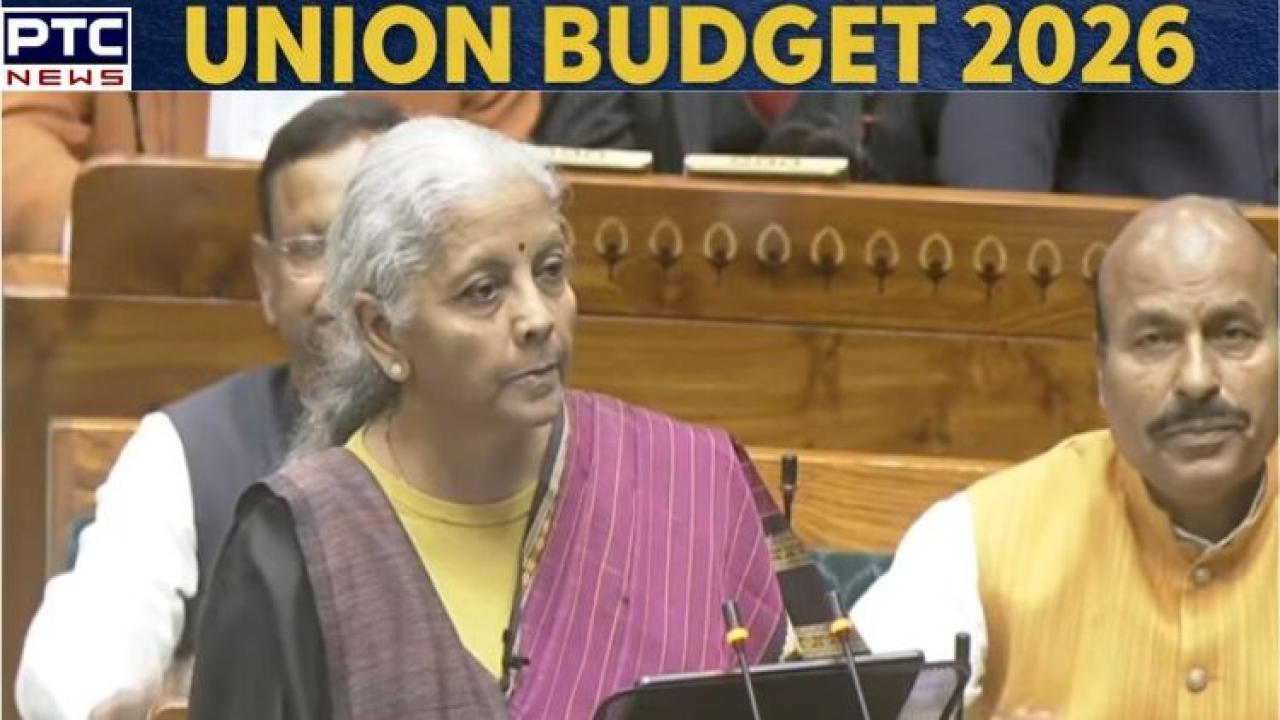
Finance Minister Nirmala Sitharaman has begun presenting her ninth consecutive budget speech in Parliament
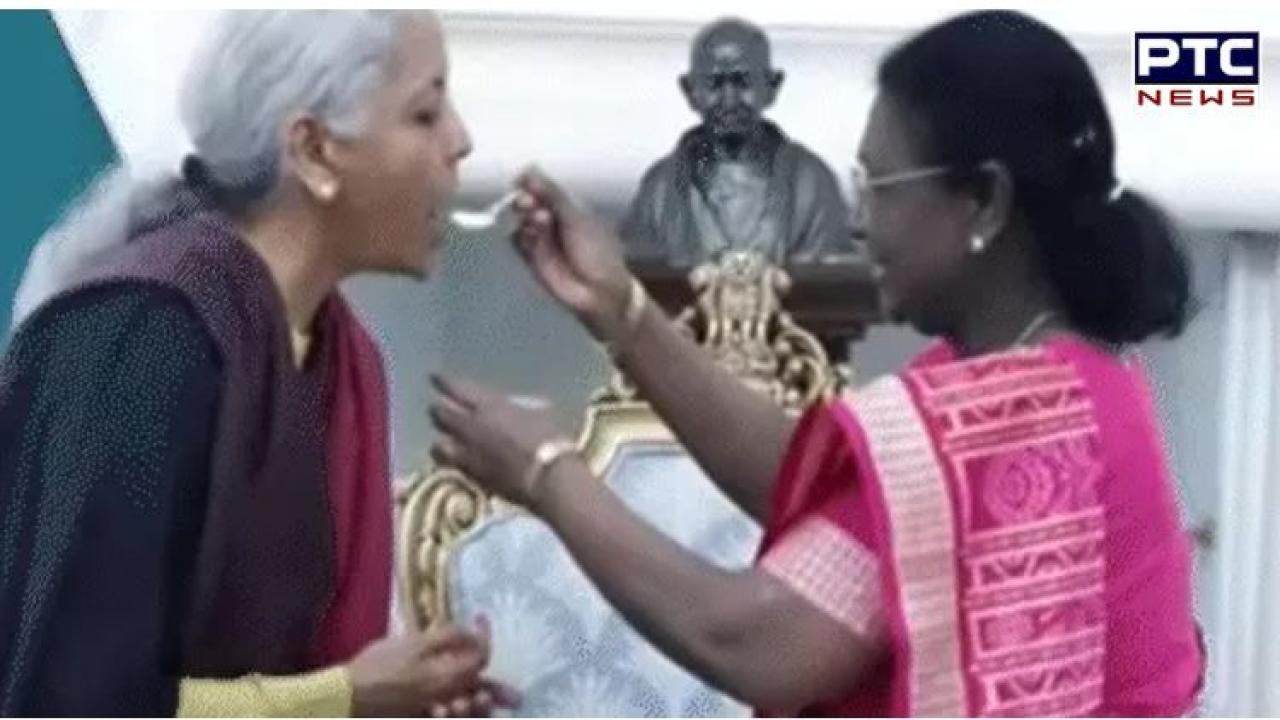
President Droupadi Murmu fed Finance Minister Nirmala Sitharaman dahi cheeni as a customary ritual
#WATCH | Delhi: On #UnionBudget2026, Congress MP Shashi Tharoor says, "We are all looking forward to hearing what the Finance Minister has to tell us. The Economic Survey projects good economic growth...Whether that growth is going to be accompanied by jobs? Jobless growth… pic.twitter.com/u44ZtgUj6K
— ANI (@ANI) February 1, 2026
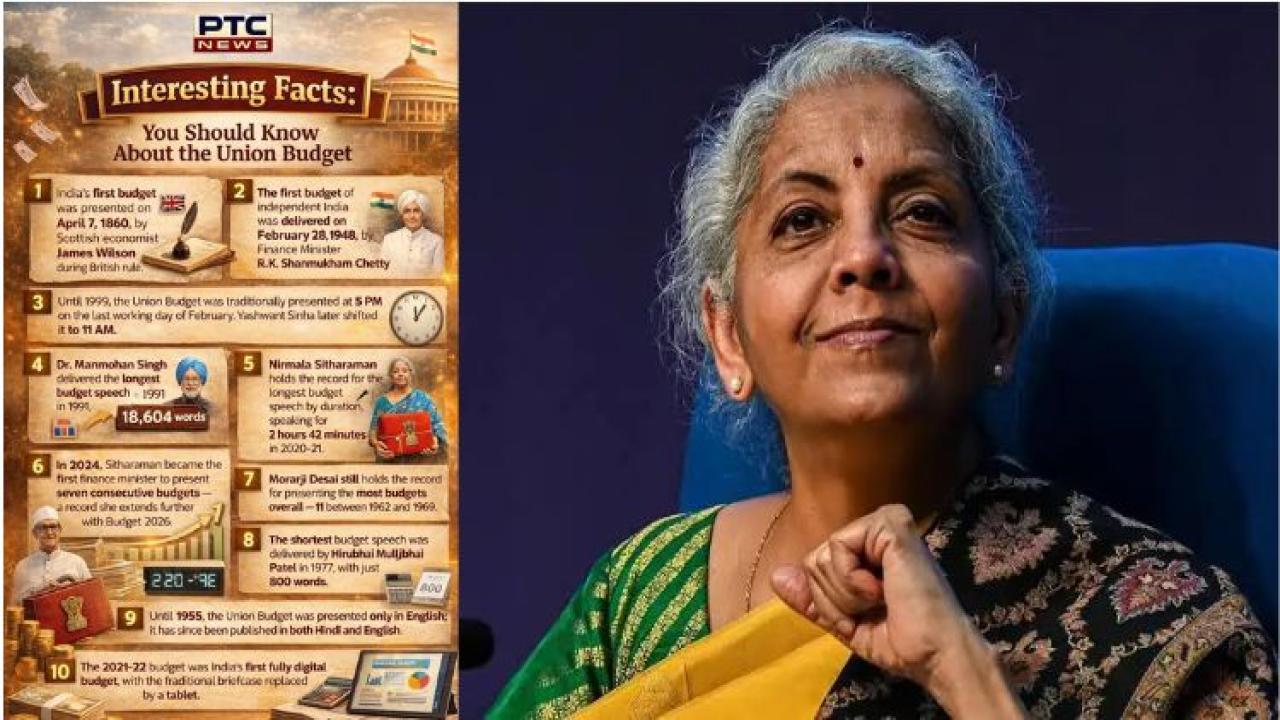
Nirmala Sitharaman holds the distinction of delivering the longest Union Budget speech in India’s parliamentary history. Her 2020 Budget address stretched for 2 hours and 42 minutes, setting a record that remains unmatched.
The Union Budget 2026 is being presented amid global uncertainty, with trade and growth facing pressure due to higher US tariffs under President Donald Trump.
Here are the key areas to track in Finance Minister Nirmala Sitharaman’s address:
Fiscal consolidation:
The government is expected to focus on lowering public debt to 49–51% of GDP. The fiscal deficit for 2026–27 may be set at around 4.2% of GDP, with gross borrowing estimated between ₹16 trillion and ₹16.8 trillion.
Tax relief measures:
Investors and taxpayers will look for changes in long-term capital gains (LTCG) tax limits and a possible expansion of the Section 87A rebate. Currently, residents earning up to Rs 12 lakh get a rebate of up to Rs 60,000, though capital gains tax still applies under the new regime.
Foreign investment in defence:
The Budget may ease FDI norms in defence manufacturing, as the government considers a push for higher military spending, with defence outlay expected to rise by about 20%.
Standard deduction hike:
There is speculation that the standard deduction under the new tax regime could be increased from Rs 75,000 to Rs 1 lakh, offering relief to salaried employees.
Support for exporters:
Exporters are seeking lower import duties on raw materials, especially for sectors such as electronics and textiles, to strengthen manufacturing and offset the impact of steep US tariffs on Indian goods
The Union Budget 2026, to be presented today by Finance Minister Nirmala Sitharaman, is expected to place strong emphasis on regulatory reforms aimed at easing compliance and reducing bureaucratic hurdles, according to sources aware of the developments.
The proposed focus is in line with Prime Minister Narendra Modi’s “Reform Express” approach outlined in recent policy directions. Officials see the measures as a key step toward improving the ease of doing business and steering the country closer to the long-term goal of Viksit Bharat 2047.
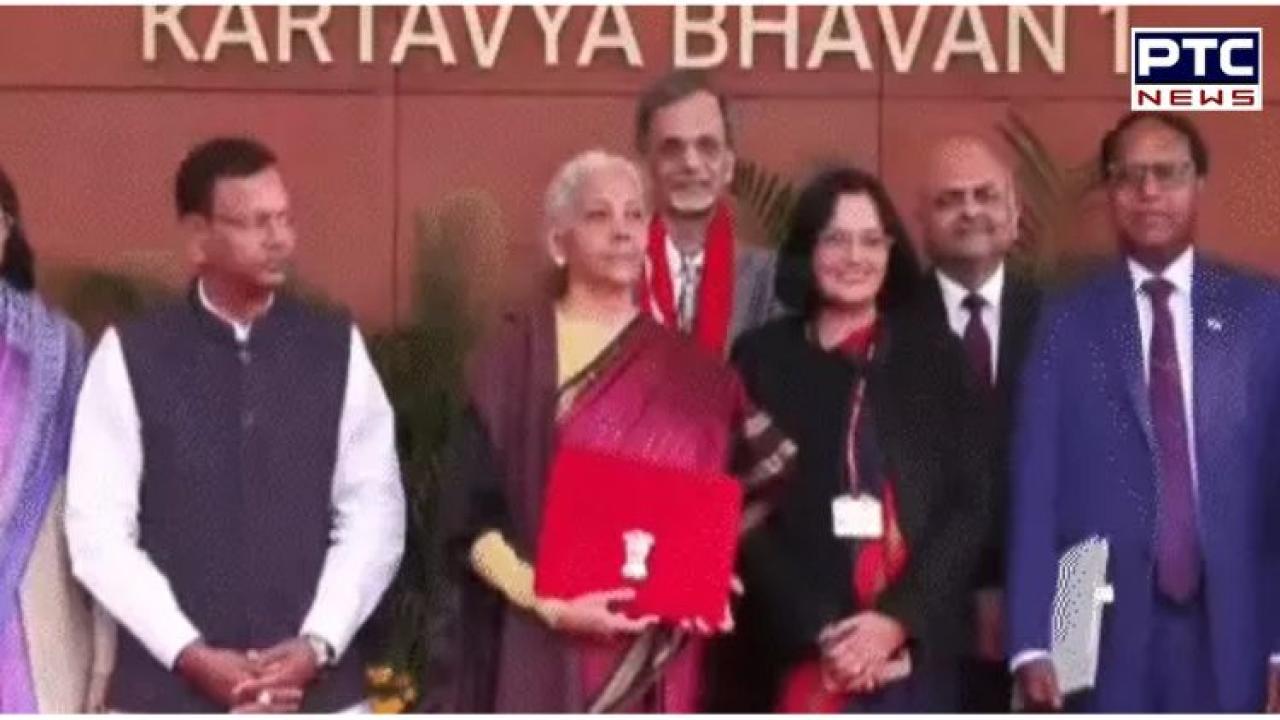
Nirmala Sitharaman, MoS Pankaj Chaudhary depart for Kartavya Bhavan ahead of Union Budget 2026 presentation
Earlier, these topics were covered in Part A, but shifting them to Part B shows a stronger focus on reforms.
The government wants to present a clear and direct reform roadmap.
The budget will showcase India’s current strengths and future potential in manufacturing, trade and technology.
‘Reform Express’ theme
Key areas include:
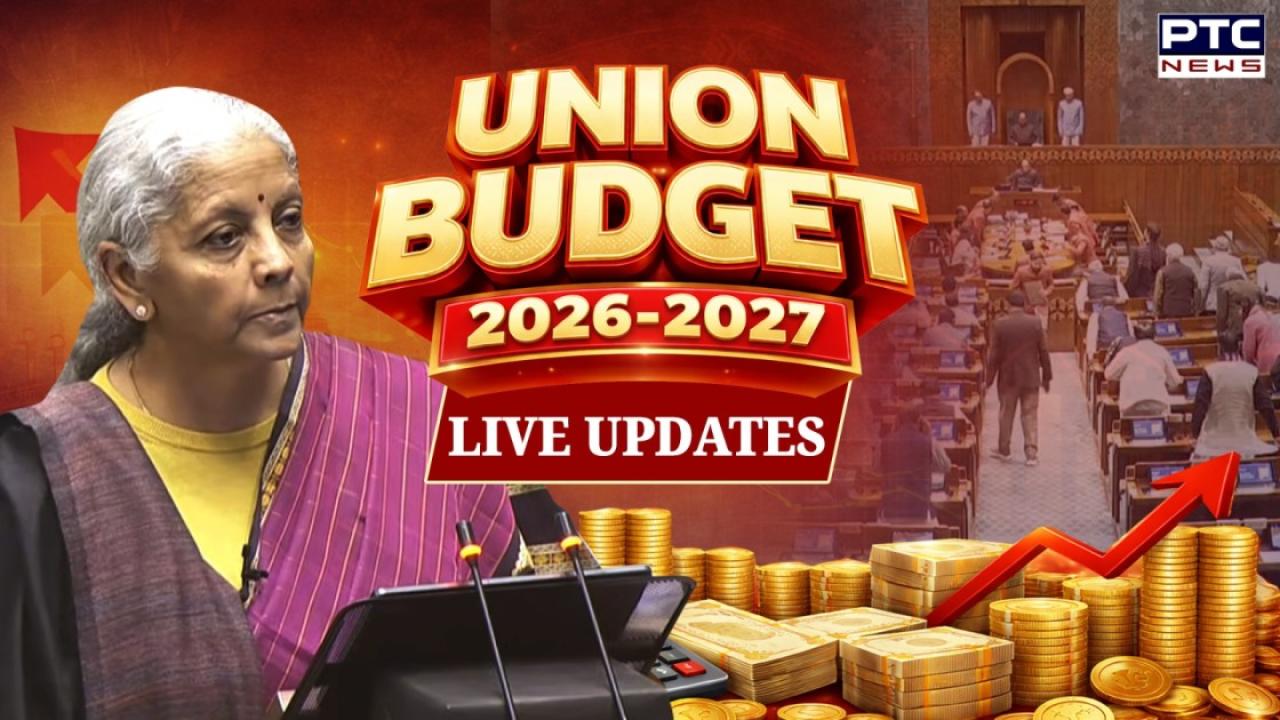
Union Budget 2026 LIVE: Finance Minister Nirmala Sitharaman is set to present the Union Budget 2026-27 today, marking her ninth consecutive budget, a rare milestone in India’s economic history. As the budget speech begins, expectations are running high across sectors, with the middle class and salaried taxpayers keenly watching for further relief on the income tax front.
Income tax has traditionally remained one of the most closely tracked announcements in every Union Budget, and Budget 2026 is no exception. After delivering substantial tax relief last year, taxpayers are hopeful that the government may extend additional concessions amid rising living costs and inflationary pressures.
In the Union Budget 2025, Nirmala Sitharaman had announced a major overhaul of personal taxation, exempting income up to Rs 12 lakh annually, a threshold that effectively rose to Rs 12.75 lakh for salaried individuals after accounting for a standard deduction of Rs 75,000. The move was widely seen as a significant boost for the middle class and had a positive impact on disposable incomes.
Interesting facts you should know about Union Budget
As India prepares for the Union Budget 2026-27, here are some lesser-known but fascinating facts about the budget’s journey over the years:
India’s first-ever budget was presented on April 7, 1860, by Scottish economist James Wilson, during British rule.
After Independence, the first Union Budget of free India was delivered on February 28, 1948, by Finance Minister R. K. Shanmukham Chetty.
Until 1999, budgets were presented at 5 pm on the last working day of February. This tradition changed when Yashwant Sinha, under the Atal Bihari Vajpayee government, shifted the timing to 11 am.
The longest budget speech by word count was delivered by Dr. Manmohan Singh in 1991, spanning 18,604 words.
Nirmala Sitharaman holds the record for the longest budget speech by duration, speaking for 2 hours and 42 minutes during the 2020-21 budget.
In 2024, Sitharaman became the first finance minister to present seven consecutive budgets, breaking a record set by Morarji Desai. With Budget 2026, she extends this record even further.
Morarji Desai, however, still holds the record for presenting the most budgets overall — 11 budgets between 1962 and 1969.
The shortest budget speech was delivered by Hirubhai Mulljibhai Patel in 1977, consisting of just 800 words.
Until 1955, the Union Budget was presented only in English. From that year onwards, budget documents began being published in both Hindi and English.
During the COVID-19 pandemic, the 2021-22 budget became the first fully digital budget, with Sitharaman replacing the traditional briefcase with a tablet — a practice that continues today.
- PTC NEWS