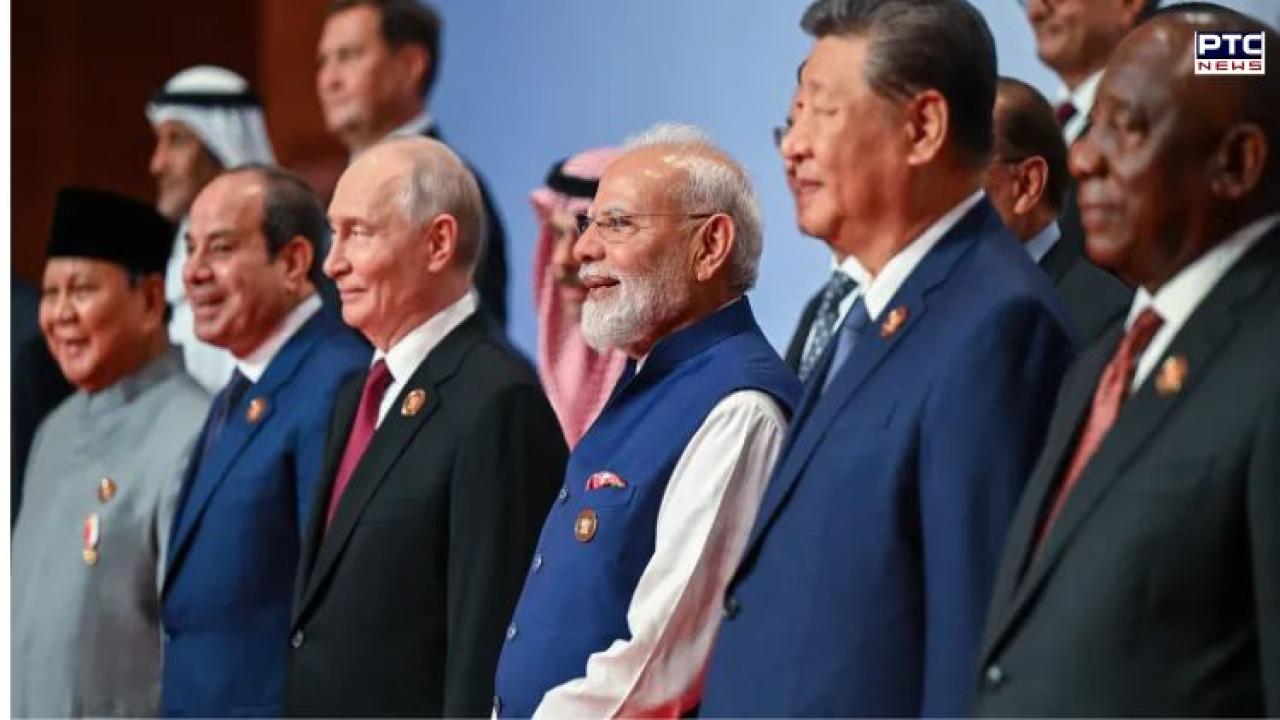
BRICS Summit: Five diplomatic wins for India as New Delhi keeps a divided Bloc together





PTC Web Desk: The real test for India at the 18th BRICS Summit was never simply whether leaders could issue another declaration. The harder question was whether New Delhi could hold together an increasingly divided grouping, shaped by wars, competing interests in West Asia and growing rivalry between China, Russia and the United States.
On that count, India appears to have done reasonably well.
The summit came just months after BRICS foreign ministers failed to agree on a joint statement in Rio de Janeiro over differences on the Middle East. The problem was compounded by the group's expansion from five members to 11, bringing far more divergent strategic interests into the room.
Yet, on September 12, leaders adopted the New Delhi Declaration by consensus. More importantly for India, the document condemned the Pahalgam Terror Attack while the broader BRICS agenda remained centred on development and Global South concerns rather than becoming an overtly anti-Western platform.
Columbia University economist Jeffrey Sachs called the outcome a success, arguing that BRICS was asserting a larger role in global affairs. He also compared India's handling of the summit with its G20 presidency, saying New Delhi had once again managed to build consensus in difficult circumstances.
There were also intensive bilateral efforts. Prime Minister Narendra Modi held 15 formal meetings with foreign leaders over the eve and two days of the summit.
1. India created space for Iran-UAE diplomacy
Perhaps the most immediate diplomatic challenge was West Asia. Iran and the UAE entered the summit with sharply different positions after the US-Israel-Iran conflict and attacks involving American military assets in the UAE.
Those differences had already contributed to the failure of the earlier foreign ministers' meeting.
But in Delhi, both countries supported the BRICS call for restraint. More significantly, Iranian President Masoud Pezeshkian met Abu Dhabi Crown Prince Sheikh Khaled bin Mohamed bin Zayed Al Nahyan on the summit sidelines, the highest-level Iran-UAE meeting since the conflict began, according to Reuters.
India therefore succeeded in ensuring that a bilateral fault line did not become a BRICS fault line.
2. Consensus was restored
The adoption of the New Delhi Declaration was an institutional victory in itself. After the Rio failure, questions had emerged over whether an enlarged BRICS could still function through consensus. Delhi provided an answer.
The declaration covered global governance reform, development finance, trade, digital public infrastructure, AI and supply-chain cooperation, while also acknowledging India's role in steering the grouping.
3. Pahalgam gave India a diplomatic opening
The declaration's strongest reference to the April 22, 2025, Pahalgam terror attack was another significant gain for New Delhi.
BRICS leaders condemned the attack, which killed 26 persons and reiterated opposition to terrorism, terror financing, safe havens and cross-border movement of terrorists. Although Pakistan was not named, the specific reference to Pahalgam and the call to hold those responsible and their supporters accountable carried considerable diplomatic weight.
Given China's close ties with Pakistan, getting such language into a consensus document was particularly notable.
4. BRICS was kept “non-West” not “anti-West”
India also resisted pressure to turn BRICS into an anti-US grouping. The declaration criticised unilateral sanctions and protectionist policies while advocating reform of institutions such as the UN, IMF and World Bank and greater representation for developing economies.
The distinction is important. Russia and China have obvious reasons to push BRICS towards confrontation with the West. India, however, has broader interests.
5. India demonstrated that BRICS can still function
Ultimately, India's biggest achievement was keeping the organisation operational during an exceptionally turbulent year.
Russia remains at war with Ukraine, while Iran has been caught in a widening confrontation involving the US and Israel. The consequences extend into energy, shipping, food security, inflation and global supply chains.
The Delhi declaration did not erase these disagreements. Instead, it acknowledged differing national positions while emphasising restraint, diplomacy and dialogue.
That may be the most realistic measure of India's success. New Delhi did not make BRICS united. It made a divided BRICS workable.
The bigger question now shifts to Beijing. China will take over the BRICS presidency in 2027. Whether it can preserve the consensus India painstakingly built --- without allowing the grouping to drift towards an anti-Western posture --- will be the next major test.
Also Read | PM Modi in Jinping's presence, warns against 'weaponization of critical minerals' at BRICS Summit
- With inputs from agencies