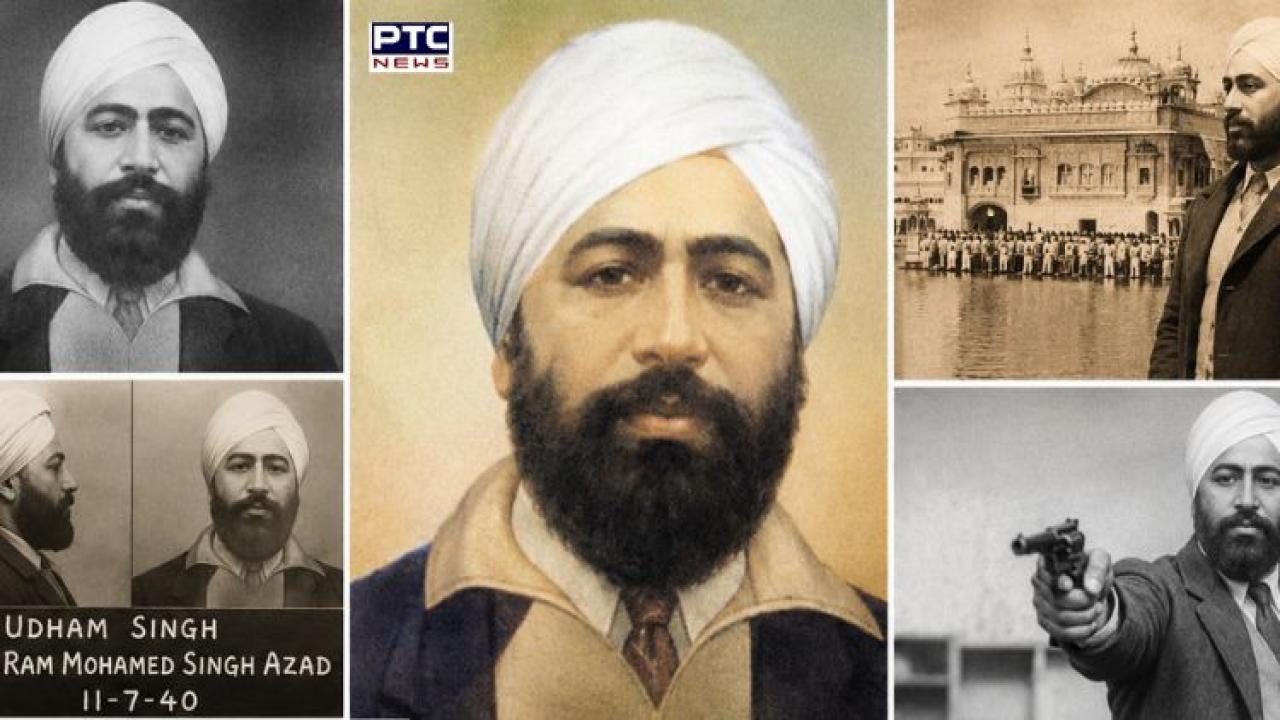
Shaheed Udham Singh: The freedom fighter who waited 21 years to avenge Jallianwala Bagh





Shaheed Udham Singh Special: Long before hashtags and viral tributes kept his memory alive, Udham Singh had already become a symbol of quiet, relentless defiance against the British Empire. For India's young generation, scrolling past his name on Independence Day posts or Martyrdom Day reminders, his story deserves more than a passing glance. It it is one of the most striking examples of how a single traumatic day can reshape a person's entire life.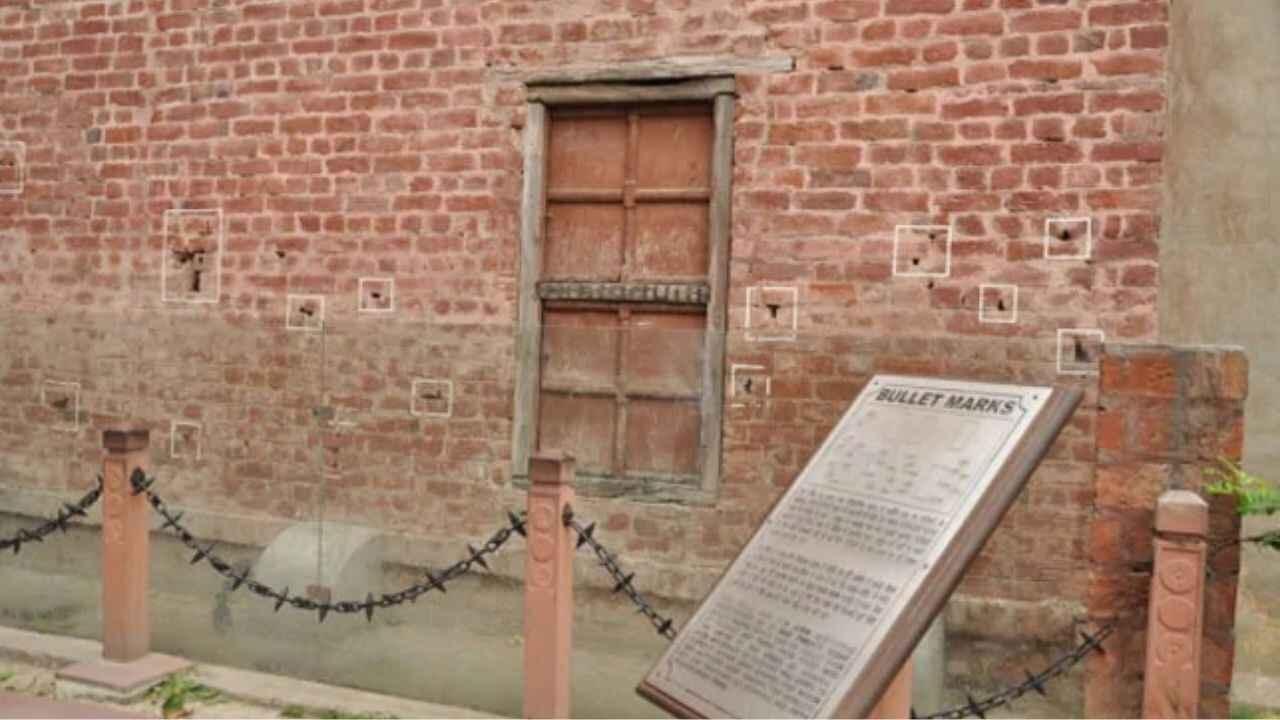
Udham Singh was born Sher Singh on December 26, 1899, in the village of Sunam, in Punjab's Sangrur district, to a farming family. His father, Tehal Singh, worked as a railway crossing watchman. Tragedy struck early. Udham Singh lost both parents while still a child and he and his elder brother were placed in the Central Khalsa Orphanage in Amritsar.
It was there that he received his early education and, according to most historical accounts, was given the name Udham Singh when he and his brother were baptised into the Sikh faith as part of orphanage tradition.
By the time he stepped out of the orphanage as a young man, Udham Singh had already lost his entire immediate family. What happened next, on a spring afternoon in Amritsar, would define the rest of his short life.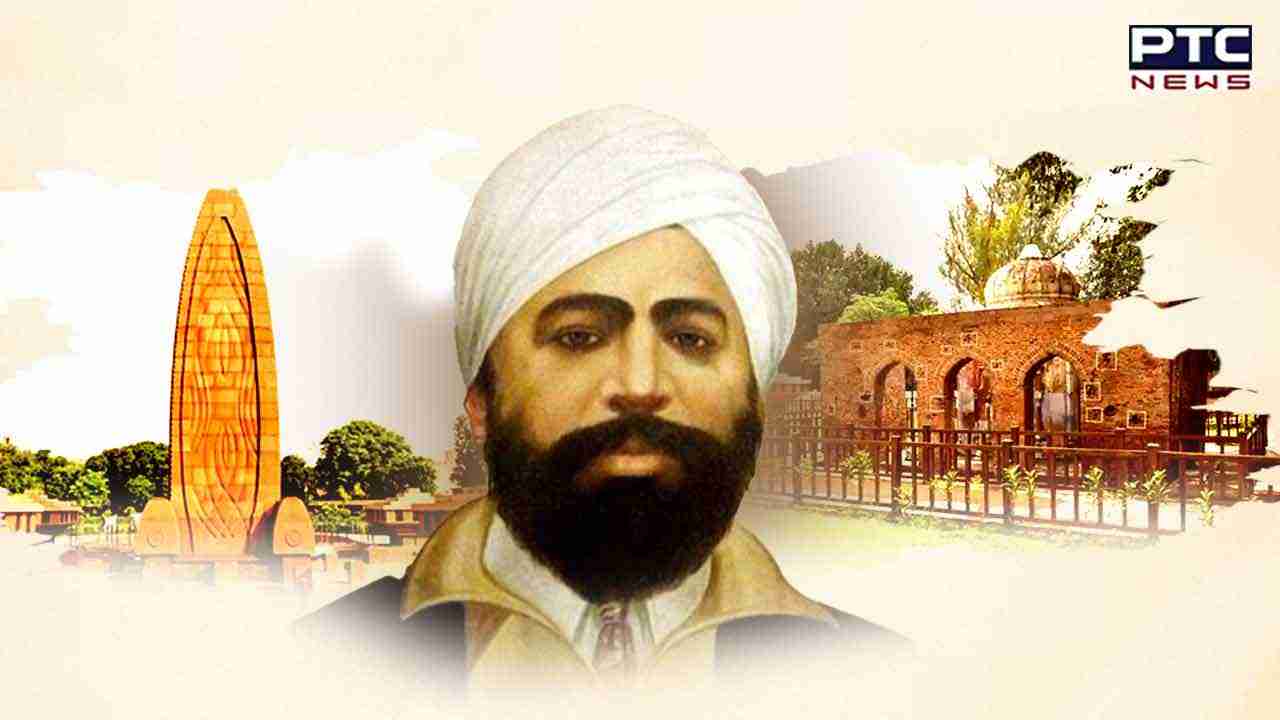
On April 13, 1919, thousands of unarmed men, women and children gathered at Jallianwala Bagh, a walled public garden in Amritsar, to mark Baisakhi and to protest peacefully against repressive colonial laws. Brigadier-General Reginald Dyer marched his troops to the only exit of the enclosed ground and, without any warning to disperse, ordered continuous firing into the trapped crowd.
Official British figures placed the death toll at just under 400, though most independent estimates suggest well over a thousand people were killed, with many more wounded.
Udham Singh, then still a teenager, is widely believed to have been present at the Bagh that day, either as a witness or while assisting the wounded. The massacre, and the political silence that followed it, left a wound that never healed.
He would later hold Michael O'Dwyer, the Lieutenant Governor of Punjab at the time, directly responsible, since it was O'Dwyer who had endorsed Dyer's actions and defended them even after the scale of the killing became public knowledge.
In the years that followed, Udham Singh travelled across East Africa, US and other countries, working various jobs while coming into contact with the Ghadar Party, a network of Indian expatriates committed to overthrowing British rule through armed revolution. He returned to India in 1927 carrying revolvers and copies of Ghadar literature, for which he was arrested and imprisoned for four years under the Arms Act.
After his release in 1931, Udham Singh found himself under constant watch by colonial intelligence. Rather than retreat, he slipped past surveillance, made his way through Kashmir into Germany, and eventually reached London around 1934. There he took up ordinary work, as an engineer and in other trades, while quietly building toward a single, long-held objective: confronting the man he blamed for Jallianwala Bagh.
On March 13, 1940, more than two decades after the massacre, Michael O'Dwyer was scheduled to address a joint meeting of the East India Association and the Royal Central Asian Society at Caxton Hall in London. Udham Singh entered the hall with a revolver concealed inside a book he carried and took a seat among the audience. As the meeting concluded and O'Dwyer moved toward the exit, Singh fired at close range, killing him almost instantly. Two other officials present were also injured in the gunfire.
He made no attempt to flee. Singh was arrested at the scene and did not resist.
During interrogation and trial, Udham Singh gave his name as Ram Mohammad Singh Azad, a name deliberately combining Hindu, Muslim and Sikh identities along with the word for "free," a statement of unity against colonial rule that he wore as a tattoo on his arm. At his trial, he reportedly asked to take his oath not on a religious scripture belonging to a single faith, but on a Punjabi folk classic, "Heer Ranjha," a text he considered sacred to all of Punjab regardless of religion.
Convicted of murder, Udham Singh was sentenced to death and hanged at Pentonville Prison in London on July 31, 1940, at the age of 40. He was buried within the prison grounds, where his remains stayed for over three decades.
It was only in 1974, largely due to sustained efforts by then Punjab Chief Minister Giani Zail Singh, that Udham Singh's remains were finally exhumed and brought back to India. He was given a hero's welcome and cremated with full honours. His ashes were divided and distributed to sites of significance, a portion immersed in the Ganges, another kept at the Jallianwala Bagh memorial itself, and the rest sent to different parts of the country he had given his life for.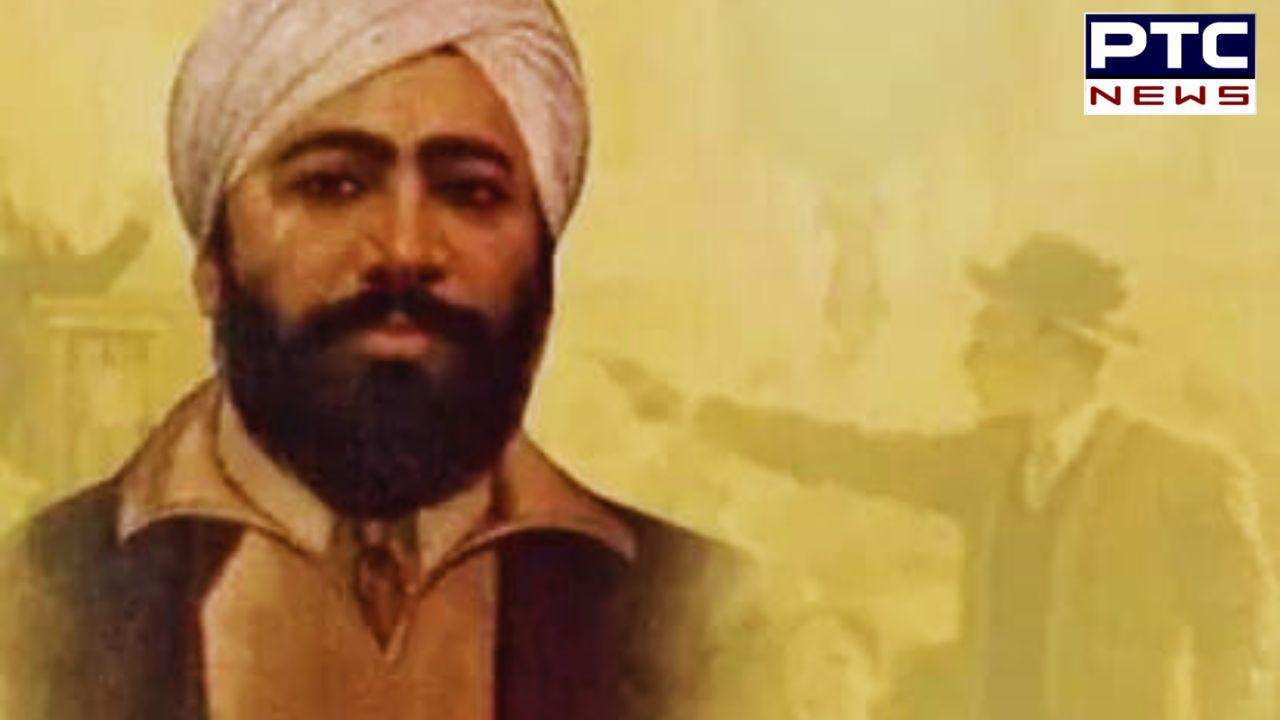
Udham Singh is remembered today with the honorific "Shaheed," meaning martyr, and is sometimes referred to as "Shaheed-i-Azam" — the great martyr. In 1995, a newly formed district in Uttarakhand was named Udham Singh Nagar in his honour. Every year on July 31, his martyrdom anniversary draws tributes from political leaders and citizens alike, particularly in Sunam, his birthplace, where state-level commemorations continue to be held.
For a generation growing up with little direct connection to the freedom struggle, Udham Singh's life offers something rare: proof that conviction, once formed, does not need to be loud to be dangerous to injustice. He waited twenty-one years without wavering, a detail that, more than any single act, explains why his name has endured for over eight decades.
- PTC NEWS