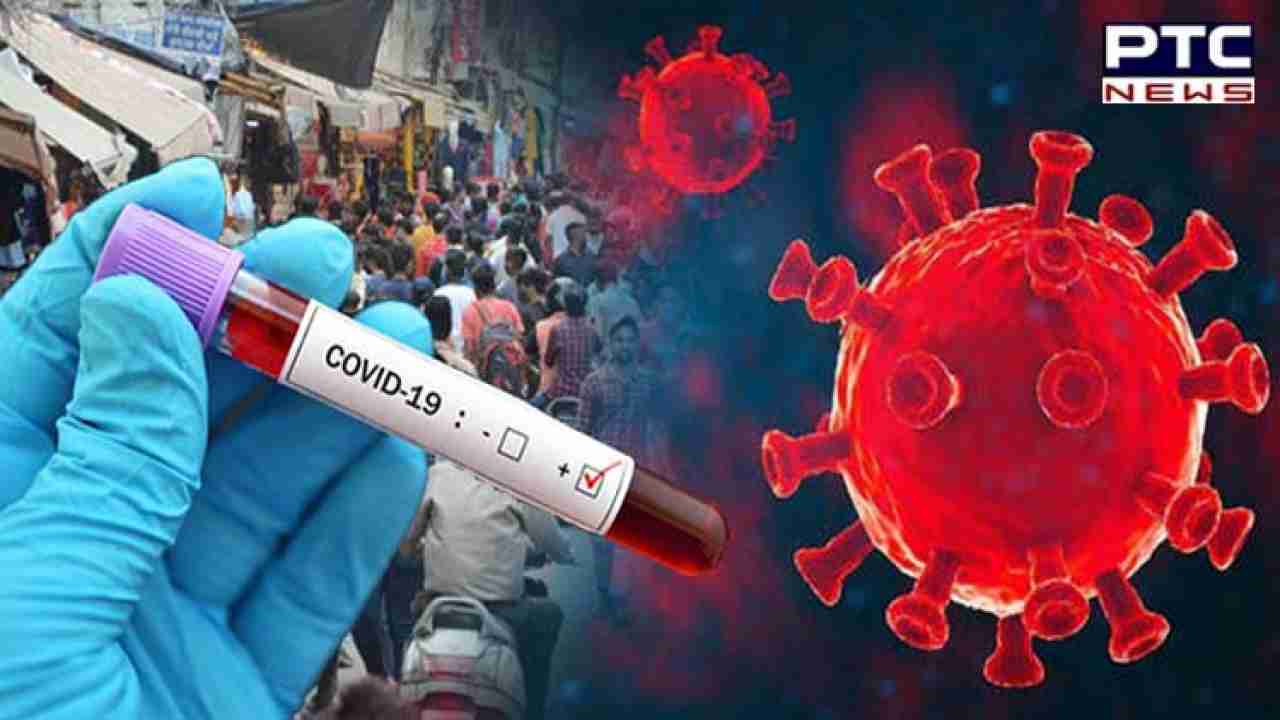
Covid can stay in lungs for up to two years, says study





PTC News Desk: Coronavirus can be found in the lungs of certain people for up to 18 months after infection, a study says. The SARS-CoV-2 virus usually becomes undetectable in the upper respiratory tract one to two weeks after getting COVID.
The study on lung cells in an animal model was carried out by a team from the Institut Pasteur in collaboration with the Alternative Energies and Atomic Energy Commission (CEA), a French public research institute.
The findings, published in the journal Nature Immunology, show that SARS-CoV-2 can be found in the lungs of certain people for up to 18 months after infection and that its persistence appears to be connected to a failure of innate immunity, the body's first line of defence against viruses.
After causing an infection, some viruses remain in the body in a discrete and unnoticed manner. According to the researchers, they remain in what are known as "viral reservoirs."
This is true for HIV, which lies latent in some immune cells and can reactivate at any time. They believe the same is true for the SARS-CoV-2 virus, which causes COVID-19.
"We observed that inflammation persisted for long periods in primates that had been infected by SARS-CoV-2. We, therefore, suspected that it could be due to the presence of the virus in the body," Head of the Institut Pasteur's HIV, Inflammation and Persistence Unit - Michaela Muller-Trutwin stated.
The researchers studied biological samples from virus-infected animal models.
The study's preliminary findings indicate that viruses were detected in the lungs of some people six to 18 months after infection, despite the virus being undetectable in the upper respiratory tract or blood.
The researchers also discovered that the Omicron strain had less residual virus in the lungs than the initial SARS-CoV-2 strain.
"We were really surprised to find viruses in certain immune cells - alveolar macrophages - after such a long period and when regular PCR tests were negative."
"What's more, we cultured these viruses and were able to observe, using the tools we developed to study HIV, that they were still capable of replicating," Nicolas Huot, first author of the study and researcher in the Institut Pasteur's HIV, Inflammation and Persistence Unit, said.
- With inputs from agencies