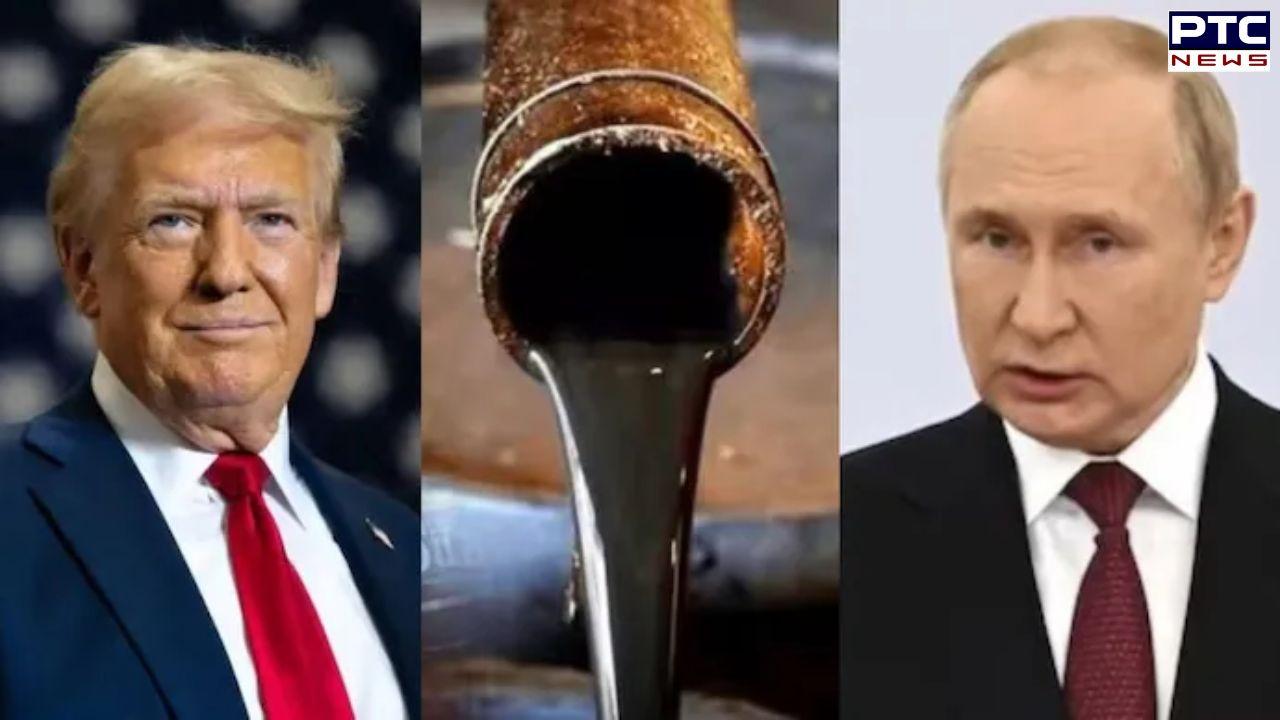
US lifts sanctions on Russia to help oil flow as war with Iran rages on





PTC News Desk: The administration of Donald Trump has announced a 30-day exemption that allows countries to buy Russian oil and petroleum products that are currently stuck at sea due to sanctions. The move is intended to help stabilise global energy markets after crude oil prices rose above 100 dollars per barrel during the ongoing war in the Middle East.
The decision comes as global oil supplies have been badly disrupted by the conflict and by Strait of Hormuz being closed by Iran. A large portion of the world’s oil exports normally passes through this crucial shipping route.
The United States Department of the Treasury said on Thursday that it had issued a temporary licence allowing the delivery and sale of Russian crude oil and petroleum products that were already loaded onto ships by March 12. The licence will remain valid until midnight in Washington on April 11.
The waiver could allow access to about 124–125 million barrels of Russian oil currently stuck at around 30 locations worldwide. This could help ease immediate supply shortages caused by disruptions in shipping routes in the Gulf.
The move follows another 30-day waiver issued on March 5 that allowed countries such as India to buy Russian oil cargoes stranded at sea, giving importers some flexibility to secure supplies during the crisis.
US Treasury Secretary Scott Bessent said the step was limited and temporary, adding that it would not provide major financial benefits to Russia. Earlier this week, Donald Trump had said the administration was considering easing some sanctions to make up for the sudden drop in oil supplies.
“We have sanctions on some countries,” Trump told reporters. “We’re going to take those sanctions off until the strait is open again,” referring to the closure of the Strait of Hormuz.
The announcement also came a day after the United States Department of Energy said the US would release 172 million barrels of crude oil from the Strategic Petroleum Reserve to help control rising fuel prices following the conflict involving Iran.
The release is part of a wider effort coordinated with the International Energy Agency, whose 32 member countries have pledged to release about 400 million barrels of oil. The agency said the conflict has caused the biggest oil supply disruption in history.
- With inputs from agencies