China-linked tanker crosses Strait of Hormuz despite US blockade on Iran





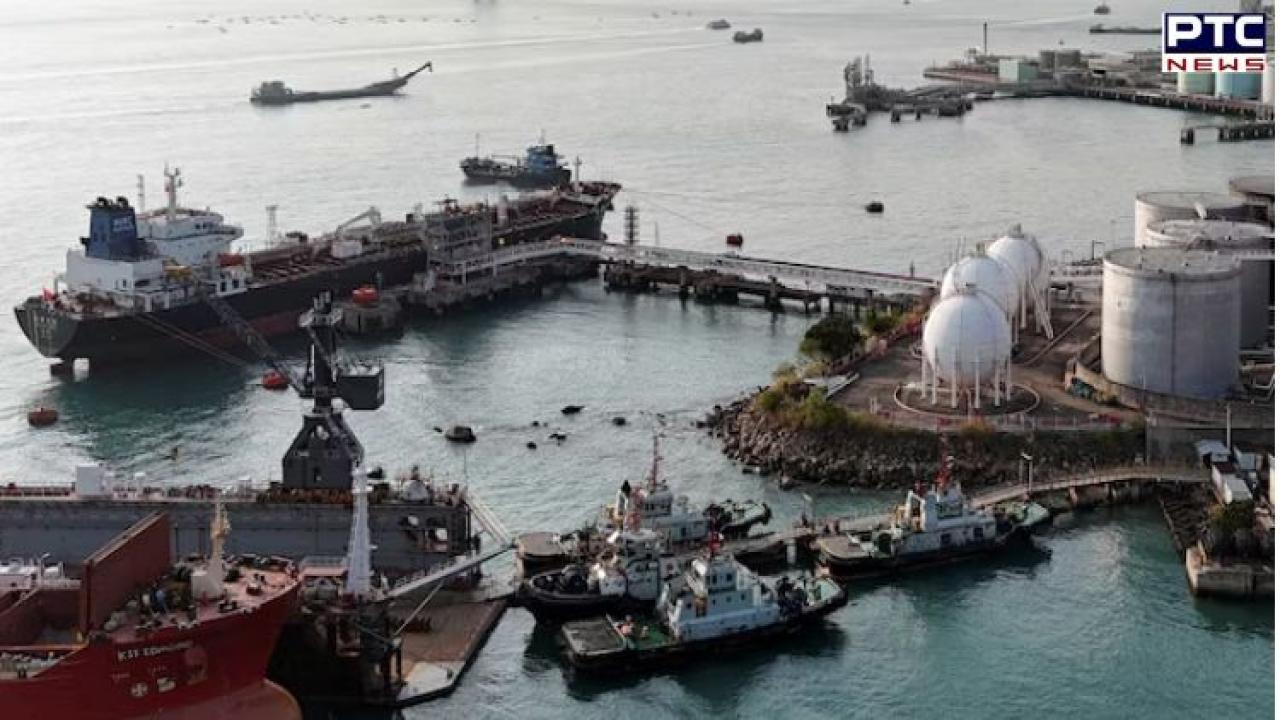
PTC Web Desk: A tanker connected to China managed to pass through the Strait of Hormuz on Tuesday, even as the United States began blocking ships linked to Iran. This is one of the first such crossings since the US Navy announced its move to restrict access to Iranian ports. The ship, named Rich Starry, is now in the Gulf of Oman after completing its journey through the crucial oil route.
According to maritime data, the tanker initially turned back when the blockade started on Monday but later resumed its journey after declaring that it had a Chinese crew onboard.
The vessel was sailing under the flag of Malawi, even though it is owned by Shanghai Xuanrun Shipping Co Ltd. Both the company and the tanker were sanctioned by the US about two years ago for allegedly helping Iran bypass oil restrictions.
Reports suggest that the tanker was carrying nearly 2,50,000 barrels of methanol, which it had loaded from Hamriyah port in the UAE. However, it is still unclear whether the ship had earlier visited any Iranian port.
This development comes after US President Donald Trump announced that American naval forces would block ships entering or leaving Iranian ports, following the collapse of peace talks between Washington and Tehran in Pakistan. The US clarified that ships not dealing with Iranian ports would not be stopped.
Iran reacted strongly to the situation and mocked the US move, suggesting that the blockade was selective and not applied equally to all countries.
Along with Rich Starry, two other ships, Peace Gulf and Murlikishan, also crossed the Strait of Hormuz. One was heading towards the UAE, while the other moved in the direction of Iraq. Both vessels have reportedly been linked to transporting sanctioned oil in the past.
Experts believe that the US decision to tighten control over this key route could increase tensions, especially with major oil-importing nations like China. The Strait of Hormuz is one of the world’s most important energy corridors, and a large share of oil passing through it is meant for China.
Data shows that nearly 38% of oil and 25% of liquefied natural gas transported via this route goes to China, making it highly dependent on the passage.
China has criticised the US move, calling it risky and irresponsible. It warned that such actions could destabilise global trade and lead to serious consequences.
- With inputs from agencies