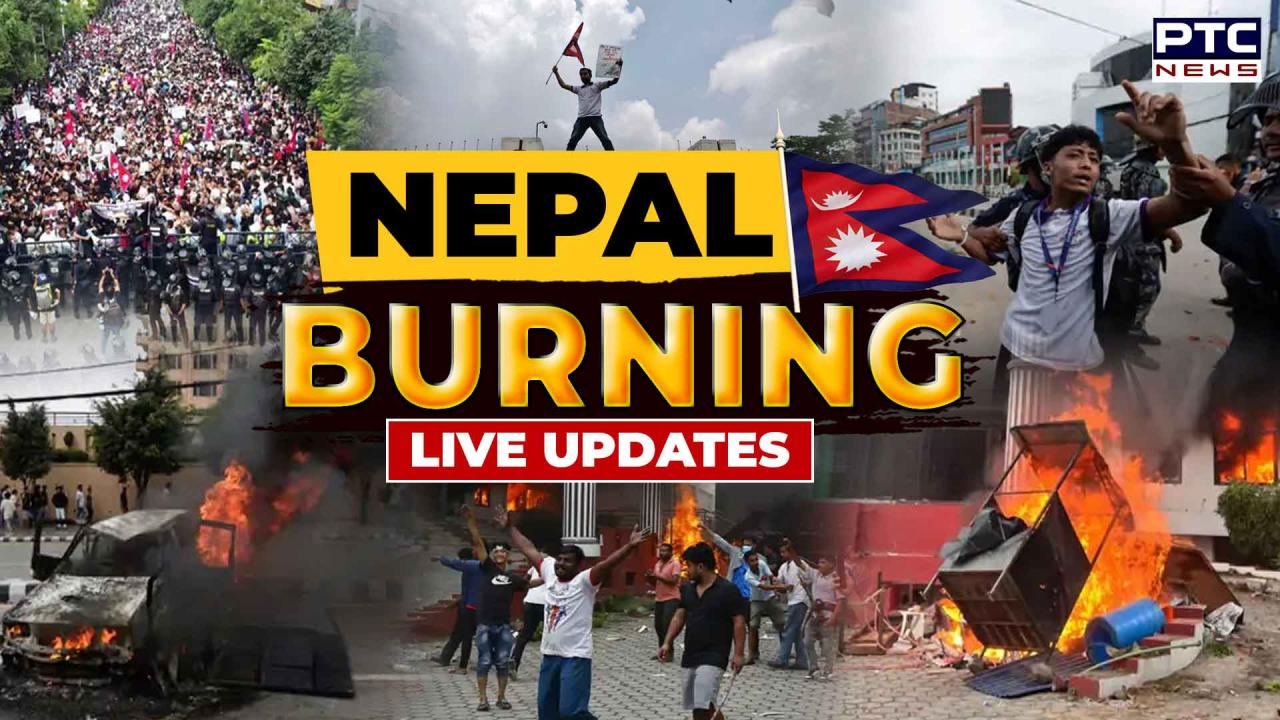
Gen Z protests in Nepal: 5 inmates dead, over 13,000 prisoners escape jail as tensions escalate





The Delhi Transport Corporation (DTC) has suspended its Delhi-Kathmandu bus service due to the ongoing unrest in Nepal.
Nepal's Gen Z has reached consensus to bring in former Chief Justice Sushila Karki as head of government
Authorities in Nepal have imposed a curfew from 5 pm to 6 am, prohibiting people from being present on the streets during these hours.
"We hereby inform that the flights suspended due to adverse circumstances would now be lifted, which has been made in accordance with the decision of the Tribhuvan International Airport Security Committee meeting held today. Passengers traveling to the airport for flights are requested to contact their respective airline companies for flight information and to bring official airline tickets and identification documents with them when traveling.“
Preparations are underway to send special aircraft to evacuate Indian citizens stranded at Kathmandu airport. As the airport remains shut even today, the government of India is making efforts in order to ensure safe evacuation of the citizens. Currently, more than 400 Indian citizens are stuck at Kathmandu airport.
India has tightened security along its border with Nepal amid violent, youth-led protests against a social media ban and corruption in the neighbouring Himalayan country, where Prime Minister KP Sharma Oli has resigned under public pressure.
Several Indians are stuck in Kathmandu amid escalating protests and violence. People have appealed to Prime Minister Modi for safe evacuation.
Tribhuvan International Airport in Kathmandu will remain closed until 6 pm on Wednesday, General Manager Hansa Raj Pandey confirmed. All flights – including domestic, international, and private helicopter services – have been suspended, with both arrivals and departures on hold.
Key demands:
Amid deadly, violent anti-corruption protests in Nepal, former Prime Minister Sher Bahadur Deuba and his wife, Foreign Minister Arzu Rana Deuba, were assaulted by demonstrators on Tuesday. Videos on the internet showed the ex-Prime Minister with blood on his face following the attack. Authorities arrived only after the residence had been ransacked. Rajyalaxmi Chitrakar, the wife of Nepal’s former Prime Minister Jhalanath Khanal, died on Tuesday after protesters, reportedly led by Gen Z, trapped her in their home and set it on fire.
The Nepal Army has reaffirmed its commitment to safeguarding the nation’s independence, unity, and the lives and property of its people, regardless of the challenges faced. The Army stated that it is closely monitoring the developments related to the ongoing Gen-Z protests.
Expressing sorrow over the heavy loss of lives and property during the demonstrations, the Army offered condolences to the families of the deceased and prayed for peace to the departed souls. It also extended wishes for the speedy recovery of the injured.
The Army emphasised that it stands fully prepared to ensure the security and well-being of Nepal and its citizens. Highlighting the importance of preserving the country’s historical, cultural, and national heritage during this difficult time, the Army urged the youth and all citizens to maintain harmony, solidarity, and unity.
Nepal’s Chief of Army Staff, Ashok Raj Sigdel, is set to address the nation soon. His address comes at a critical juncture when the Prime Minister and nearly all top government officials have resigned from their posts.
In light of the violent protests in Nepal over the past two days, security at the Nepal Embassy in New Delhi has been stepped up. The embassy is located on Barakhamba Road in the capital.
Gen-Z youth leading protests in Nepal have issued a letter urging demonstrators to remain peaceful and refrain from damaging public property.
In the letter, they claimed that the government has been brought to its knees, with Prime Minister Oli stepping down. “This country is now under our leadership. Do not harm public property. Together, we can build a safe and secure Nepal. Our unity will lay the foundation for real change,” the statement read.
Nearly 1,500 inmates escaped from Lalitpur’s Nakkhu Jail following the release of Rastriya Swatantra Party (RSP) chairman Rabi Lamichhane, reports said.
According to media sources, after Lamichhane was freed, the police decided to withdraw from security checkpoints around the prison, giving inmates the opportunity to flee.
The mass jailbreak has triggered major security concerns in the area. Authorities are closely monitoring the situation, as the sudden release of so many prisoners poses a significant threat to public safety.
In Kathmandu’s Dallu area, protesters set fire to the residence of former Prime Minister Jhala Nath Khanal, resulting in the tragic death of his wife, Rajyalakshmi Chitrakar.
She was inside the house when the fire broke out and suffered severe burns. She was immediately rushed to Kirtipur Burn Hospital.
According to family sources, her condition was extremely critical, with multiple burn injuries and serious damage to her lungs. Despite efforts, she could not survive.
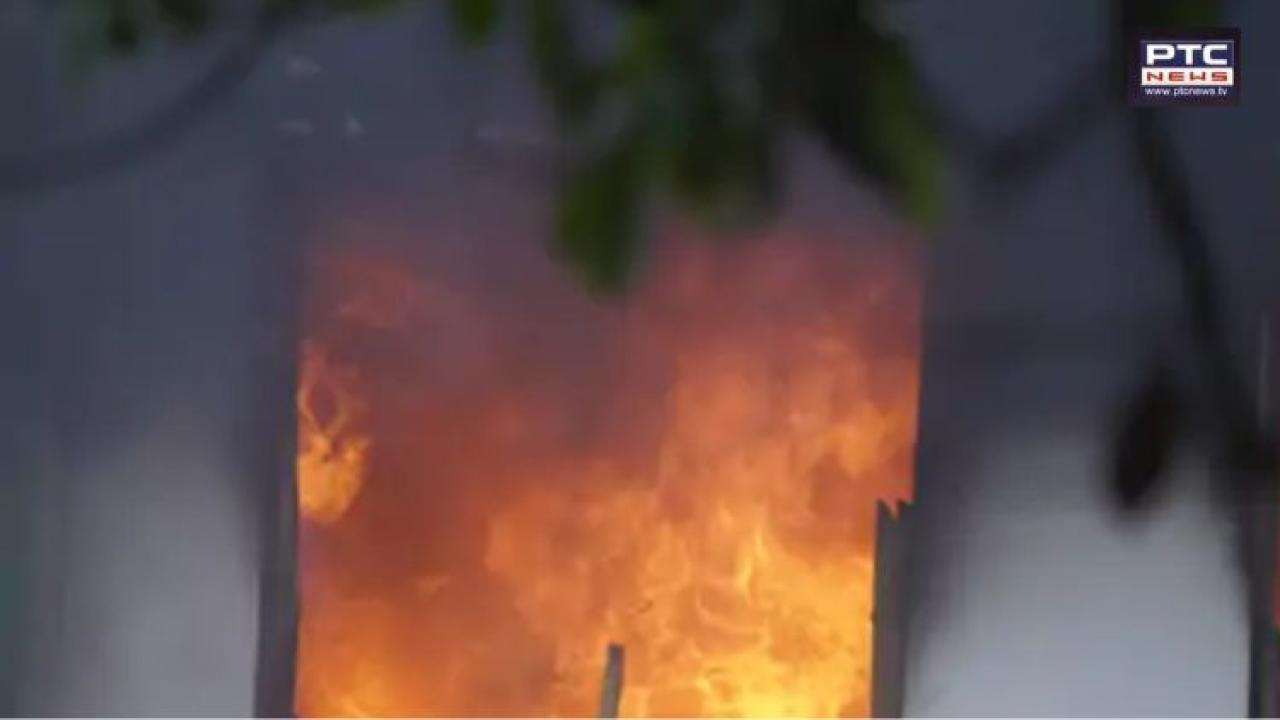
A fire broke out at the residence of former Prime Minister Jhalanath Khanal in the Dallu area of Kathmandu.
At the time of the fire, his wife, Rajyalakshmi Chitrakar, was inside the house. She suffered severe burns and was immediately taken to Kirtipur Burn Hospital.
According to the family, her condition is critical, with extensive burns on several parts of her body and serious damage to her lungs.
Nepotism: Generation Z has grown frustrated with corruption, inflation, and unemployment. Favoritism and placing preferred candidates in positions of power—along with politicians’ children showing off foreign trips, branded goods, and lavish parties—went viral on social media, fueling resentment.
Social Media Ban: People felt their voices were being silenced. Many youths were also earning through social media, so the ban sparked anger and protests.
Three Major Scandals: Over the past four years, three major financial scandals came to light: the Giri Land Swap Scam of ₹54,600 crore in 2021, the Oriental Cooperative Scam of ₹13,600 crore in 2023, and the Cooperative Scam of ₹69,600 crore in 2024. These scandals intensified public anger against the government.
Political Instability: Nepal has seen three governments in five years. Sher Bahadur Deuba became PM in July 2021, Pushpa Kamal Dahal (Prachanda) in December 2022, and KP Sharma Oli took office in July 2024. This frequent change created unrest among youths.
Unemployment & Economic Inequality: The unemployment rate has slightly risen from 10.39% in 2019 to 10.71% now. Inflation has increased from 4.6% in 2019 to 5.2% today. Economic inequality is stark, with 20% of the population holding 56% of the wealth.
Foreign Influence: When Oli came to power, his tilt toward China increased. Previous governments often made decisions under US influence, but under Oli, while social media was banned, only Chinese apps like TikTok continued. Youths felt Nepal was being used as a pawn by powerful nations.
Growing Distance from India: Under PM Oli, Nepal included the Lipulekh Pass in its official maps and strengthened ties with China. Rising tensions with India created economic pressure and added to the anxiety among the youth.
The Ministry of External Affairs has issued a follow-up advisory, urging Indian citizens to postpone all travel to Nepal until the situation stabilises. Those already in Nepal have been advised to remain indoors, avoid venturing onto the streets, and exercise heightened caution.
To support Indian nationals in need, the ministry has provided the following helpline numbers for the Embassy of India in Kathmandu:
977 – 980 860 2881 (WhatsApp calls accepted)
977 – 981 032 6134 (WhatsApp calls accepted)
Citizens requiring assistance are encouraged to contact these numbers for help.
In view of the developing situation in Nepal, Indian citizens are advised to defer travel there until the situation has stabilised. Indian citizens presently in Nepal are advised to shelter in their current places of residence, avoid going out onto the streets and exercise all… pic.twitter.com/VFC7yCQ2wd
— ANI (@ANI) September 9, 2025
In Nepal, Rastriya Swatantra Party (RSP) president Rabi Lamichhane has been released from Nakkhu Jail in Lalitpur. He was arrested on October 18, 2024, in connection with a fraud case and later sent to prison.
According to reports, the jail authorities stated that they could not guarantee his safety. Following this, his wife, Nikita Paudel, personally took responsibility and secured his release.
As soon as news of his release spread, thousands of supporters gathered outside the prison. Wearing white clothes, Rabi Lamichhane greeted the cheering crowd upon stepping out.
Embassy of India Kathmandu says, "All Indian nationals in Nepal are hereby requested to note the following telephone numbers from the Embassy of India, Kathmandu, for contact, in case they are facing any emergency situation or require assistance: 977 – 980 860 2881 , 977 – 981 032 6134."
Security forces have shifted Oli to a safe location by helicopter. The destination where he has been taken remains undisclosed.
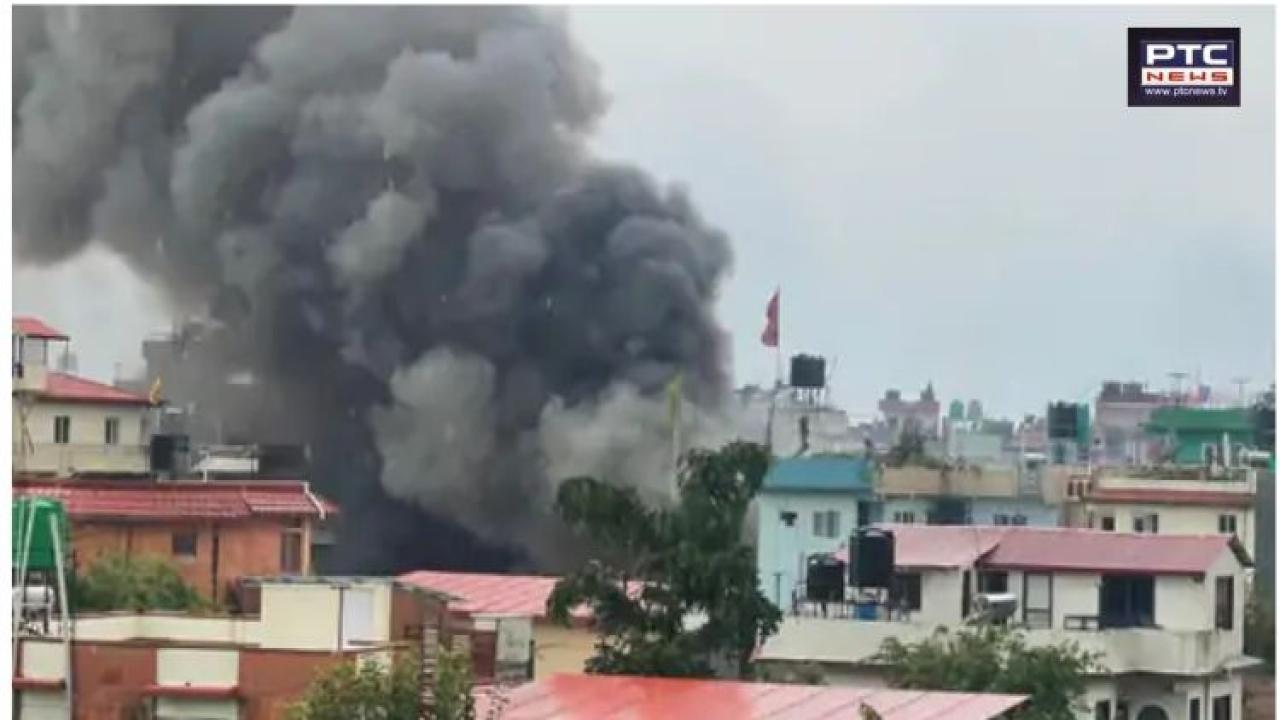
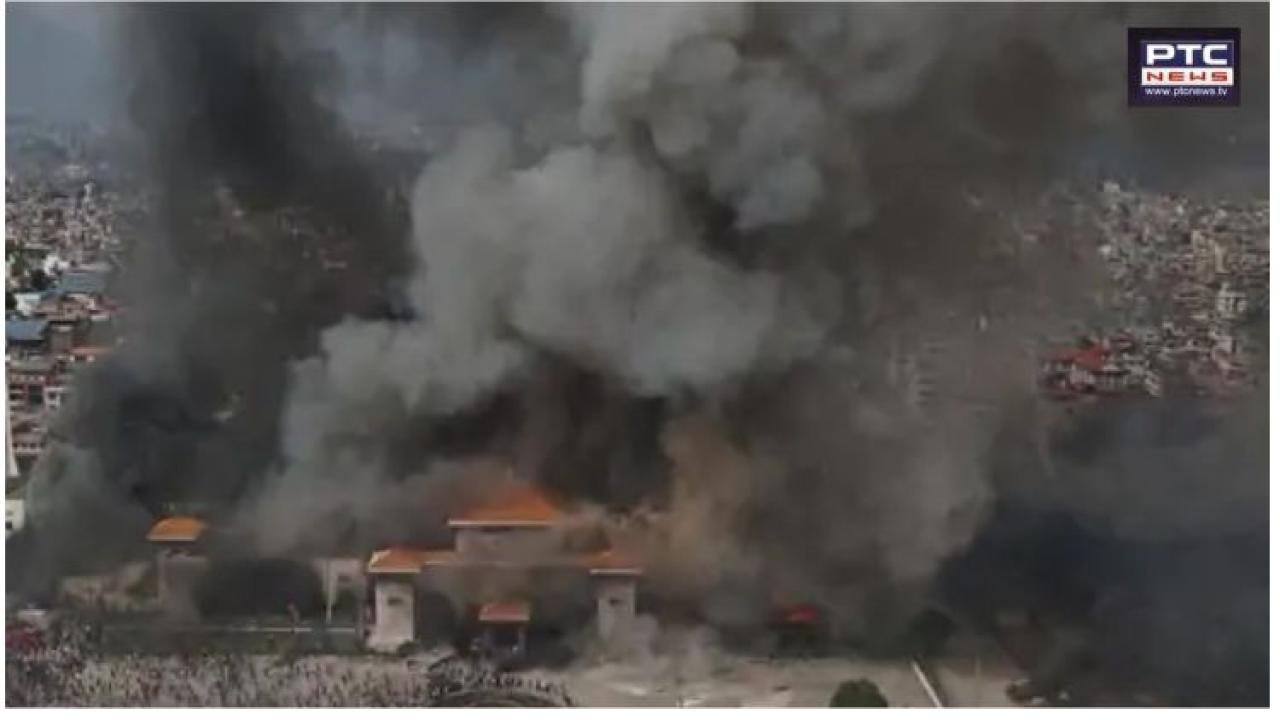
Two Indigo flights bound for Nepal's Kathmandu were diverted to Uttar Pradesh's Lucknow owing to the closure of the airport in Nepal amid violent protests.
Nepal Parliament gutted in Kathmandu by thousands of youth protestors. pic.twitter.com/MbzMxl4F5i
Former Prime Minister Dr Baburam Bhattarai has proposed forming an interim government by including the protesting youth. He said, “Let us join hands with the youth of Nepal to form an interim government.”
As anti-corruption protests in Nepal escalate, the Nepal border with India has been put on high alert
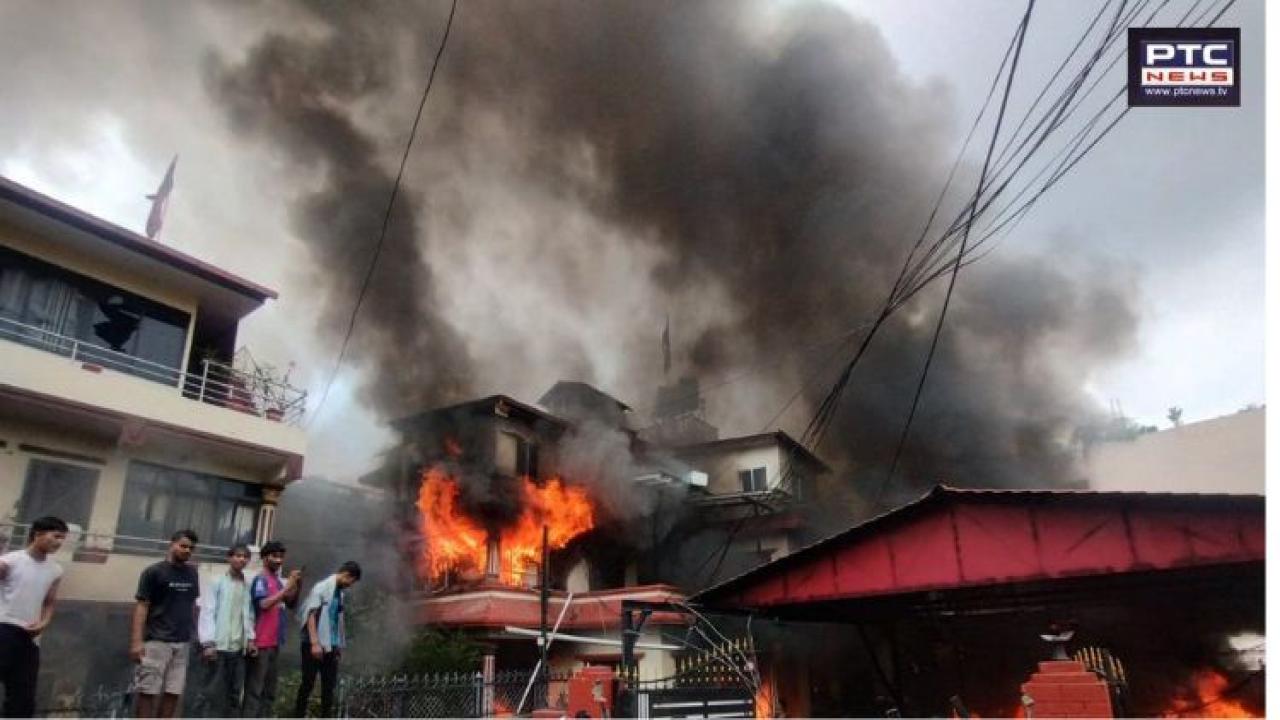
Tribhuvan International Airport in Kathmandu has been completely closed due to a fire in the Gothatar area, rising unrest, and growing security concerns.
A senior official from Nepal’s Civil Aviation Authority confirmed that the situation was not suitable for flight operations.
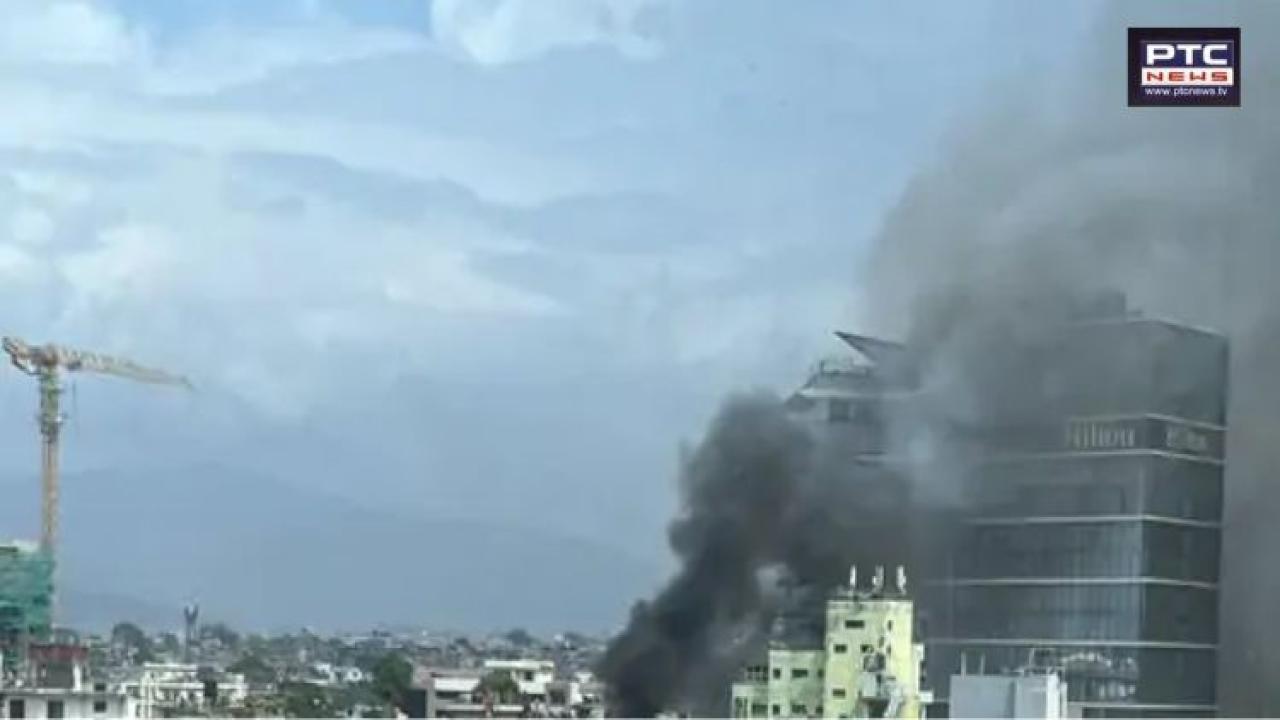
Protesters attacked the Hilton Hotel in Kathmandu and set parts of it on fire. They first pelted stones at the hotel’s glass walls and then broke through the main gate to enter inside.
The police attempted to disperse the crowd, but due to the large number of protesters, it became difficult to bring the situation under control. Smoke was seen rising from the hotel premises, though it is not yet clear whether the fire actually broke out inside the hotel.
Protesters have escalated their campaign by targeting the homes and offices of senior political figures across Nepal. Residences of top leaders—including the private homes of the President and Prime Minister—were vandalised and set ablaze.
Among those attacked were:
Pushpa Kamal Dahal ‘Prachanda’, CPN (Maoist Centre) Chairman
Foreign Minister Arzu Rana Deuba
Mahesh Basnet, UML Leader
Gagan Thapa, Nepali Congress leader
Ramesh Lekhak, Former Home Minister
Sher Bahadur Deuba, Nepali Congress President
President Ram Chandra Paudel’s private residence
Prithvi Subba Gurung, Minister of Telecommunications
Nepali Congress Headquarters in Kathmandu
Nepal’s Tribhuvan International Airport is being prepared for closure due to security reasons, a senior official from the Civil Aviation Authority of Nepal said. The move comes after repeated incidents of arson in Gothatar and nearby areas.
The official added that, for now, aircraft currently in the air will not be permitted to land at Kathmandu airport.
According to media reports, protesters vandalised and set fire to the residences of Nepal’s President and Prime Minister.
Nepal’s Water Supply Minister Pradeep Yadav resigned on Tuesday, stating it was inappropriate to remain in office after 20 persons were killed during Gen Z-led protests on Monday. His resignation was confirmed by his personal secretariat.
Protesters torched Ullens School in Lalitpur, owned by Foreign Minister Arzu Rana Deuba. The police reported that demonstrators also blocked fire brigade vehicles attempting to douse the flames.
Demonstrators have reportedly been using the Discord app to coordinate their actions. Shared messages include instructions on marching toward the airport, preparing Molotov cocktails, employing acetylene gas to disable aircraft tyres, and targeting police stations to seize ammunition.
Nepal President’s residence torched as protests spark resignations
Nepal Agriculture Minister Ramnath Adhikari has also stepped down, citing the government’s “authoritarian” response to the protests. Earlier, Home Minister Ramesh Lekhak, who quit on Monday evening, hours after 20 persons were killed during clashes between protesters and police.
Nepal Agriculture Minister Ramnath Adhikari has also resigned, in the wake of the protests.
#WATCH | Nepal | People in Kathmandu stage a massive protest against the government over alleged corruption and the recent ban on social media platforms, including Facebook, Instagram, WhatsApp and others. pic.twitter.com/vCyY9XKtww
— ANI (@ANI) September 8, 2025
Authorities in Nepal have tightened security around major political party offices and leaders’ residences amid ongoing protests across the country. Curfew has been imposed around the headquarters of the ruling UML and Nepali Congress parties to prevent further clashes.
As a precautionary measure, the government has announced the closure of schools and colleges in multiple cities for the next two days, aiming to ensure the safety of students amid rising unrest.
Nepal Home Minister Ramesh Lekhak has submitted his resignation taking moral responsibility for the deaths of 20 student protesters during violent clashes earlier today. Sources report that Lekhak offered his resignation during a meeting with Nepali Congress office-bearers.
The move comes amid mounting pressure from opposition parties, who had demanded his immediate removal following the tragic incident.
All exams scheduled for September 9, 10, and 11, 2025 (from 7 am to 10 am and from 12 noon to 3 pm) have been postponed.
Kathmandu authorities have significantly widened the curfew zone as protests intensify across the city. What initially began as a limited curfew in parts of Baneshwar, following breaches by demonstrators, has now been extended to cover major government and residential areas.
The newly restricted zones include the President’s residence at Shital Niwas, the Prime Minister’s residence in Baluwatar, the Vice-President’s residence in Lainchaur, Maharajgunj, and all sides of the Singha Durbar administrative complex. Officials stated that the expansion is intended to prevent further clashes near high-security areas and maintain law and order as unrest continues to grip the capital.
Pushpa Kamal Dahal, popularly known as Prachanda, chairperson of the main opposition party CPN (Maoist Centre), has urged Gen Z protesters to remain calm and act responsibly amid escalating unrest. Speaking at a programme in Arughat on Monday, Prachanda expressed solidarity with the youth-led movement, noting that their demands closely align with those of his party.
“I urge my brothers and sisters in the Gen Z movement to proceed with patience and help ease the situation,” he said. “Your issues and our issues are the same.”
In a demonstration of support, the Maoist Centre has temporarily suspended its campaign focused on the Mid-Hill Highway, citing the nationwide protests and the ongoing political crisis in Kathmandu and other regions.
At least 20 persons have died and over 250 injured in Nepal amid escalating protests, with 18 fatalities reported in Kathmandu and two in Itahari. Tensions remain high around the parliament building in the capital, where violent clashes between demonstrators and security forces continue. Authorities are struggling to contain the unrest as protests spread across multiple cities.
Nepal has been gripped by a wave of high-profile corruption scandals in 2025, fueling widespread public anger and raising tough questions about political and bureaucratic accountability. From ministerial resignations to billion-rupee embezzlement cases, the country is witnessing one of its most turbulent years in governance. Key developments include:
Minister Rajkumar Gupta’s Bribery Scandal
In July 2025, Federal Affairs Minister Rajkumar Gupta stepped down after the leak of an audio recording in which he allegedly sought a bribe of NPR 7.8 million in exchange for manipulating appointments to the Land Commission in Kaski district. His resignation followed mounting political pressure and nationwide condemnation.
The Long-Running Land Scandal
Former Prime Minister Madhav Kumar Nepal has been formally charged over a controversial land transfer deal dating back 15 years. The Commission for the Investigation of Abuse of Authority (CIAA) claims the transaction breached ownership ceilings, causing losses of NPR 185.85 million (approx. USD 1.35 million) to the state. Altogether, 92 people—including former ministers—have been named in the case.
Nepal Telecom Irregularities
In June 2025, the CIAA charged 18 officials, among them current and former managing directors of Nepal Telecom, for alleged irregularities in billing contracts and the embezzlement of public funds. Authorities are seeking NPR 334.8 million in damages.
Visit Visa Extortion at Tribhuvan Airport
In May 2025, CIAA officials raided the immigration office at Tribhuvan International Airport and arrested Joint Secretary Tirtha Raj Bhattarai on charges of visa extortion and trafficking. The scandal triggered nationwide outrage, forcing the government to establish a high-level inquiry panel.
Pokhara International Airport Embezzlement
A parliamentary probe has revealed embezzlement of nearly NPR 14 billion during the construction of Pokhara International Airport, a project financed by Chinese loans. Investigators highlighted major procedural lapses and a lack of transparency, raising questions about oversight and accountability.
Giri Bandhu Tea Estate Land Ordinance
An ordinance passed in early 2025 permitting real estate companies to exceed legal landholding limits has drawn fierce criticism. Opponents allege the measure was designed to sidestep a Supreme Court ruling in the Giri Bandhu Tea Estate dispute. A contempt petition has since been filed, further intensifying legal and political backlash.
Nepal has enforced a curfew at the Bhairahawa border with India following escalating protests in the Terai region. Demonstrations have intensified across several cities, with protesters demanding change. Authorities said the curfew in Lumbini district’s Bhairahawa area aims to control unrest and uphold law and order.
Amid intensifying unrest, major opposition forces in Nepal — the CPN (Maoist Centre) and the CPN (Unified Socialist) — have demanded the resignation of Prime Minister KP Sharma Oli, calling for a political shift to address the ongoing crisis.
The wave of protests has triggered strict measures, with authorities imposing curfews in several cities, including Itahari and Rupandehi, to contain the growing demonstrations.
Nepal Prime Minister KP Sharma Oli has called a Cabinet meeting at 6 pm at his official residence in Baluwatar
#WATCH | Nepal | Protestors vandalise the Parliament gate as the protest turned violent in Kathmandu, as people staged a massive protest against the ban on Facebook, Instagram, WhatsApp and other social media sites, leading to clashes between police and protesters pic.twitter.com/dkh9Mg7BGc
— ANI (@ANI) September 8, 2025
As many as eight persons have been killed in Nepal Gen-Z protest, including five at Trauma centre and one at Kathmandu Medical Centre.
As demonstrations continued in Kathmandu against the government’s ban on social media platforms, Nepal’s Gen-Z group issued an appeal urging protesters to disperse peacefully.
In a social media post, the group wrote: “There are too many vested groups rattling the mass. Please leave safely as soon as possible. We have already won the day. Let’s go home safely today.”
The appeal came amid growing concerns that outside influences could hijack the largely youth-driven protests.
Nepal has moved to block major social media platforms, including Facebook, X, and YouTube, citing their failure to comply with government regulations requiring official registration.
Minister for Communication and Information Prithvi Subba Gurung said over 20 platforms widely used in Nepal were repeatedly notified to register but did not respond. As a result, access to them would be restricted immediately.
In contrast, TikTok, Viber, and three other platforms will continue operating in Nepal, as they have fulfilled the registration requirement.
The government has also been urging companies to set up a liaison office or official contact point within the country. In addition, a new bill introduced in parliament seeks to ensure that social media companies are properly regulated, accountable, and more responsive to national concerns.
In Nepal, frustration is mounting among young citizens after the government blocked 26 unregistered social media platforms, rendering popular sites such as Facebook, YouTube, and X inaccessible since Friday. Instagram, which counts millions of Nepali users, is also among those affected—disrupting entertainment, news consumption, and online businesses. The move has triggered widespread outrage, and on Monday, thousands of young Nepalis poured into the streets of Kathmandu, demanding not only the restoration of social media platforms but also an end to the entrenched culture of corruption in the country.
PTC Web Desk: Thousands of young Nepalis took to the streets of Kathmandu on Monday, voicing strong opposition to the government’s decision to block social media platforms and demanding an end to systemic corruption in the country.
Since Friday, major platforms, including Facebook, YouTube, and X have been inaccessible in Nepal after authorities ordered a shutdown of 26 unregistered sites. The move sparked outrage among citizens, leaving millions of users, who depend on social media for business, news, and entertainment, frustrated. Popular apps like Instagram have also been affected.
Carrying national flags, the largely Gen-Z demonstrators began their protest by singing the national anthem, followed by chants condemning both the social media ban and entrenched corruption.
“We were triggered by the ban, but corruption is the larger issue we are fighting against,” said a protester. Another protester described the government’s action as an “authoritarian attitude,” adding, “We want change. Previous generations endured it, but ours will not.”
Interestingly, TikTok—still accessible in Nepal—has seen a surge in viral content, contrasting the struggles of ordinary citizens with the lavish lifestyles of politicians’ children flaunting luxury goods and foreign holidays.
The government had earlier directed companies to register locally, appoint grievance officers, and comply with regulations following a Supreme Court order in 2023. In its Sunday statement, officials maintained that Nepal “respects freedom of thought and expression” and remains committed to ensuring a safe digital environment.
This is not the first time Nepal has restricted access to online platforms. In July, the Telegram messaging app was blocked over fraud and money laundering concerns, while TikTok had faced a nine-month suspension that was lifted last year after compliance with Nepali laws.
- With inputs from agencies