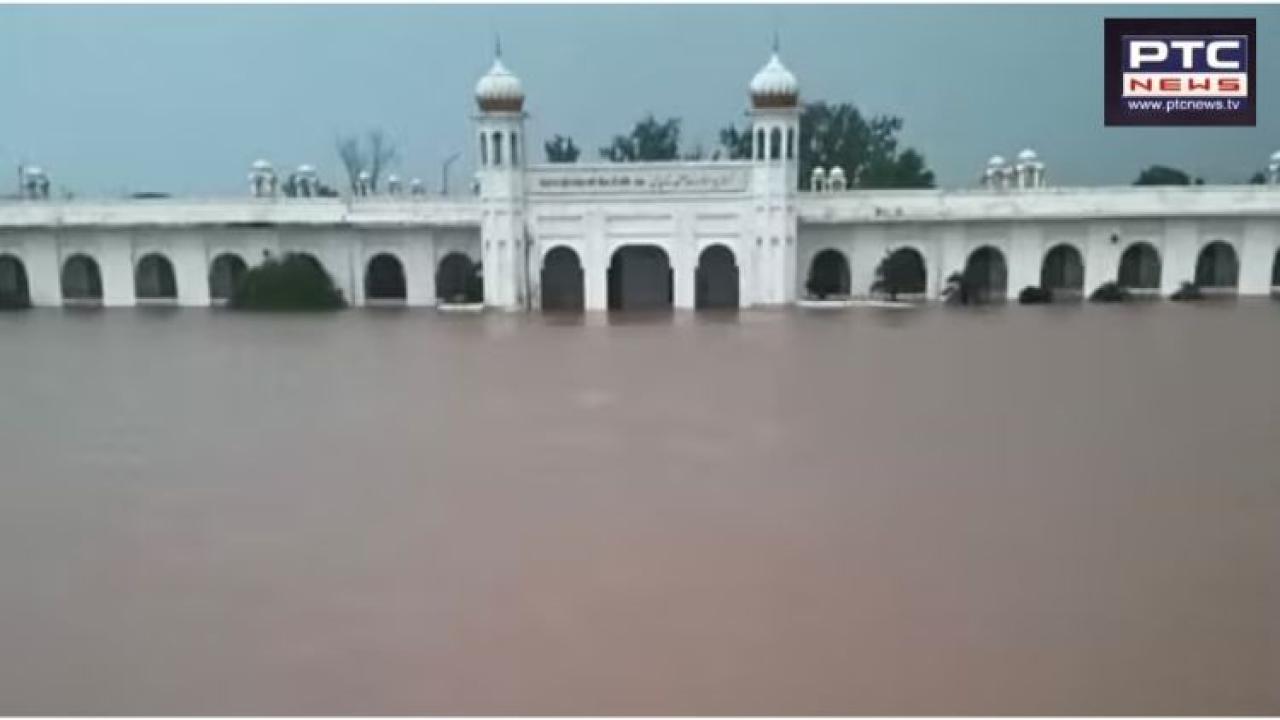
Floods submerge Gurdwara Kartarpur Sahib as heavy rains wreak havoc in Pakistan’s Punjab | Watch





PTC Web Desk: Revered Gurdwara Sri Kartarpur Sahib, located just 4.5 km from the India-Pakistan border, has been severely affected by flooding following days of heavy rainfall in Pakistan. Visuals emerging from the site showed the historic gurdwara nearly submerged under floodwaters, with the Kartarpur Corridor — the visa-free passage for Sikh pilgrims from India — also inundated.
The flooding comes after India released excess water from swollen rivers and dams into low-lying areas along the border, prompting New Delhi to alert Islamabad about possible cross-border flooding. In response, tens of thousands of people across Pakistan’s Punjab province have been evacuated to safer locations.
Today Morning Guruduwara Kartarpur Sahib is under water after heavy rainfall and flood around Narowal.
Prayers ????????????@pmln_org#FloodAlert #FloodRelief #PunjabFloods2025 #Narowal pic.twitter.com/7l8NstE5BQ — Vishal Anand (@VishalAnand93) August 27, 2025
According to officials, nearly 2 lakh residents from vulnerable areas have been shifted to higher ground. The National Disaster Management Authority (NDMA) confirmed that advance alerts were issued about a surge in the Sutlej River, with evacuations underway across multiple districts.
The Government of Punjab (Pakistan) stated on its official X handle that the province is grappling with a flood emergency due to dangerously high water levels in the Ravi, Chenab, and Sutlej rivers. At Kot Naina on the Ravi, inflow reached 2,30,000 cusecs, while at Head Marala on the Chenab River, water levels surged to 9,22,000 cusecs.
In view of the worsening situation, the army has been deployed in seven districts to assist in rescue and relief operations. Authorities reported that more than 14,000 people were rescued from Kasur district, while over 89,000 were evacuated from Bahawalnagar, near the Indian border.
The NDMA has appealed to residents to stay away from rivers, streams, and flood-prone zones, avoid unnecessary travel, and closely follow updates shared via media, mobile alerts, and the disaster alert app.
- With inputs from agencies