Aditya-L1 Solar Mission HIGHLIGHTS: ISRO launches much-awaited Aditya-L1 Solar Mission to unravel secrets of the Sun





#WATCH | Crowd chants 'Bharat Mata Ki Jai' as ISRO's PSLV rocket carrying Aditya L-1 lifts off from Sriharikota pic.twitter.com/5uI6jZfLvJ
— ANI (@ANI) September 2, 2023
#WATCH | After the launch of Aditya L-1, people gathered at Satish Dhawan Space Centre (SDSC) SHAR, Sriharikota say "We have come from Mumbai to witness this. It was an unforgettable moment for us. This (Aditya L-1) is going to be marvellous. It is a wonderful feeling that we are… pic.twitter.com/1OcncyxlH0
— ANI (@ANI) September 2, 2023
#WATCH | Visuals from Satish Dhawan Space Centre (SDSC) SHAR, Sriharikota after the launch of Aditya-L1.
— ANI (@ANI) September 2, 2023
The third stage of the separation of PSLV has been completed. pic.twitter.com/b88rRvXNSr
#WATCH | Indian Space Research Organisation (ISRO) launches India's first solar mission, #AdityaL1 from Satish Dhawan Space Centre in Sriharikota, Andhra Pradesh.
— ANI (@ANI) September 2, 2023
Aditya L1 is carrying seven different payloads to have a detailed study of the Sun. pic.twitter.com/Eo5bzQi5SO
#WATCH | Union Minister of State for Science and Technology Jitendra Singh at the mission control centre at Satish Dhawan Space Centre (SDSC) SHAR, Sriharikota ahead of the launch of ISRO's solar mission Aditya L-1. pic.twitter.com/cWKJF8If5M
— ANI (@ANI) September 2, 2023
Former Indian Space Research Organisation chairman G Madhavan Nair on Saturday said data from Aditya-L1, the country's first solar mission, will help explain various celestial phenomena taking place in the atmosphere and aid climate change studies.
#WATCH | India's first solar mission, #AdityaL1 is all set to be launched from Satish Dhawan Space Centre in Sriharikota, at 11:50 am. pic.twitter.com/k12Doj0wCR
— ANI (@ANI) September 2, 2023
#WATCH | People in large numbers at Satish Dhawan Space Centre (SDSC) SHAR, Sriharikota to witness launch of ISRO's solar mission Aditya L-1 pic.twitter.com/kzyuo8YtXN
— ANI (@ANI) September 2, 2023
Aditya L1 shall be the first space based Indian mission to study the Sun. The spacecraft shall be placed in a halo orbit around the Lagrange point 1 (L1) of the Sun-Earth system, which is about 1.5 million km from the Earth. A satellite placed in the halo orbit around the L1 point has the major advantage of continuously viewing the Sun without any occultation/eclipses. This will provide a greater advantage of observing the solar activities and its effect on space weather in real time.
After successfully soft-landing on the Moon, ISRO now has its eyes set on the Sun. With the space agency set to launch its maiden solar mission Aditya-L1 in less than two hours, the most-asked question is whether the spacecraft will "land" on the Sun.
Ahead of the launch of ISRO's first space venture to study the sun astronomer and Profesor RC Kapoor on Saturday said that the most important instrument on the Aditya-L1 mission launch will study the corona of the Sun.
In Bengaluru, speaking to media, Kapoor said, "This is a very important day. The most important instrument on Aditya L1 will study the Corona of the Sun. Normally, which can only be studied during full solar eclipse..."
#WATCH | School students at Satish Dhawan Space Centre (SDSC) SHAR, Sriharikota to witness the launch of ISRO's Aditya L-1 mission to study Sun pic.twitter.com/IN7HCQ6Vzz
— ANI (@ANI) September 2, 2023
The primary payload of Aditya L1, the first space-based Indian mission to study the Sun, which is scheduled to launch on Saturday, will send 1,440 photos each day to the ground station for analysis once it reaches its intended orbit
Ahead of the launch of the country's maiden solar mission — Aditya-L1 — a Surya Namaskar was performed at the Doon Yoga Peeth for its success.
The Surya Namaskar was performed in the presence of spiritual guru Acharya Bipin Joshi.
As the Indian Space Research Organisation (ISRO) counts down to the launch of Aditya L1, a 'havan' (religious ritual) was performed in Varanasi on Saturday, wishing success to the country's maiden solar mission.
#WATCH | Delhi: Programming Manager of Chandrayaan-3 Prerna Chandra on Aditya L1 says, "Space agencies of other countries have already done observations on the Sun. India does not have a Sun observatory. With Aditya L1 India will also have observations on Sun which will help us… pic.twitter.com/d6J0iFBZND
— ANI (@ANI) September 2, 2023
Visible Emission Line Coronagraph(VELC)
Solar Ultraviolet Imaging Telescope (SUIT)
Solar Low Energy X-ray Spectrometer (SoLEXS)
High Energy L1 Orbiting X-ray Spectrometer(HEL1OS)
Aditya Solar wind Particle Experiment(ASPEX)
Plasma Analyser Package For Aditya (PAPA)
Advanced Tri-axial High Resolution Digital Magnetometers
If all goes well with India's Aditya-L1 mission, it will bring India among few countries with probes studying the Sun.
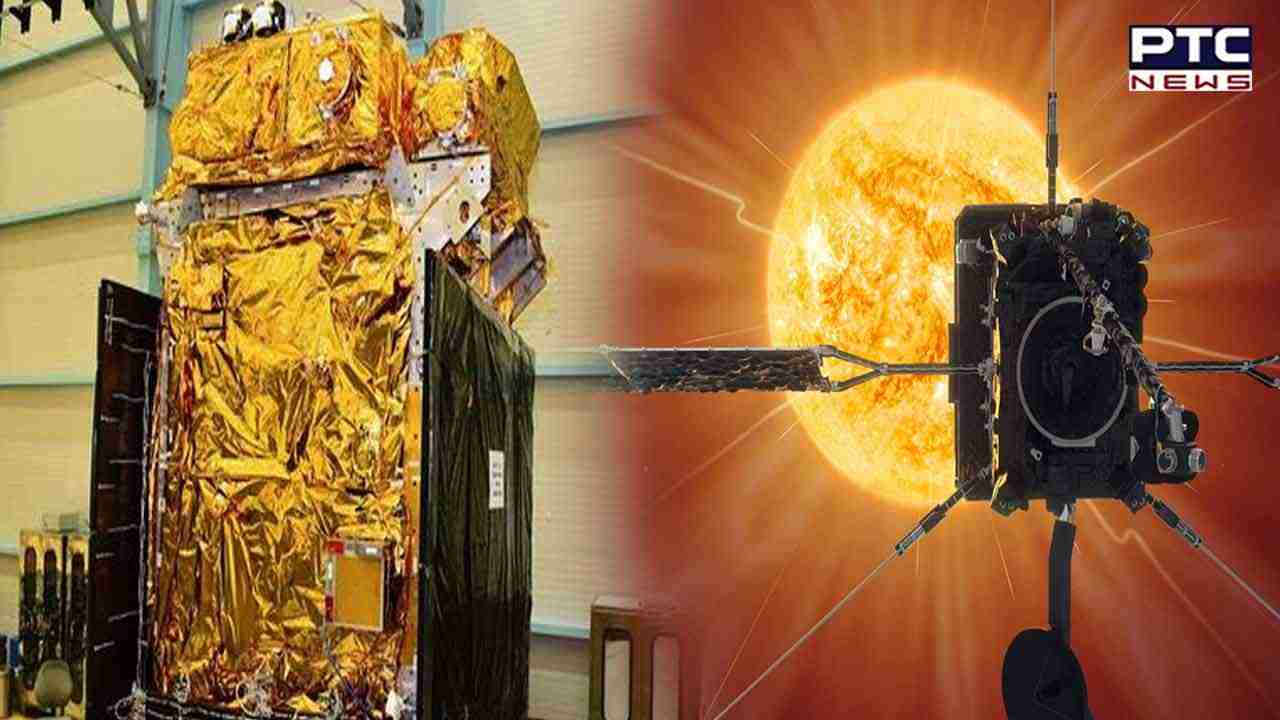
The spacecraft carries seven payloads to observe the photosphere, chromosphere and the outermost layers of the Sun (the corona) using electromagnetic particle and magnetic field detectors.
#WATCH | Aditya-L1 Mission will be launched today by the Indian Space Research Organisation (ISRO) from Sriharikota
— ANI (@ANI) September 2, 2023
(Visuals from Satish Dhawan Space Centre in Sriharikota, Andhra Pradesh) pic.twitter.com/wvJZTyE0iW
The major science objectives of Aditya-L1 mission are:
• Study of Solar upper atmospheric (chromosphere and corona) dynamics.
• Study of chromospheric and coronal heating, physics of the partially ionized plasma
• Observe the in-situ particle and plasma environment providing data for the study of particle dynamics from the Sun.
• Physics of solar corona and its heating mechanism.
• Diagnostics of the coronal and coronal loops plasma: Temperature, velocity and density.
• Development, dynamics and origin of CMEs.
• Identify the sequence of processes that occur at multiple layers (chromosphere, base and extended corona) which eventually leads to solar eruptive events.
Aditya-L1 Mission HIGHLIGHTS: After a triumphant moon landing in the unexplored South Pole region, the Indian Space Research Organisation (ISRO) is all set to launch the country's maiden solar mission -- Aditya-L1 from the launch pad at Sriharikota in Andhra Pradesh.
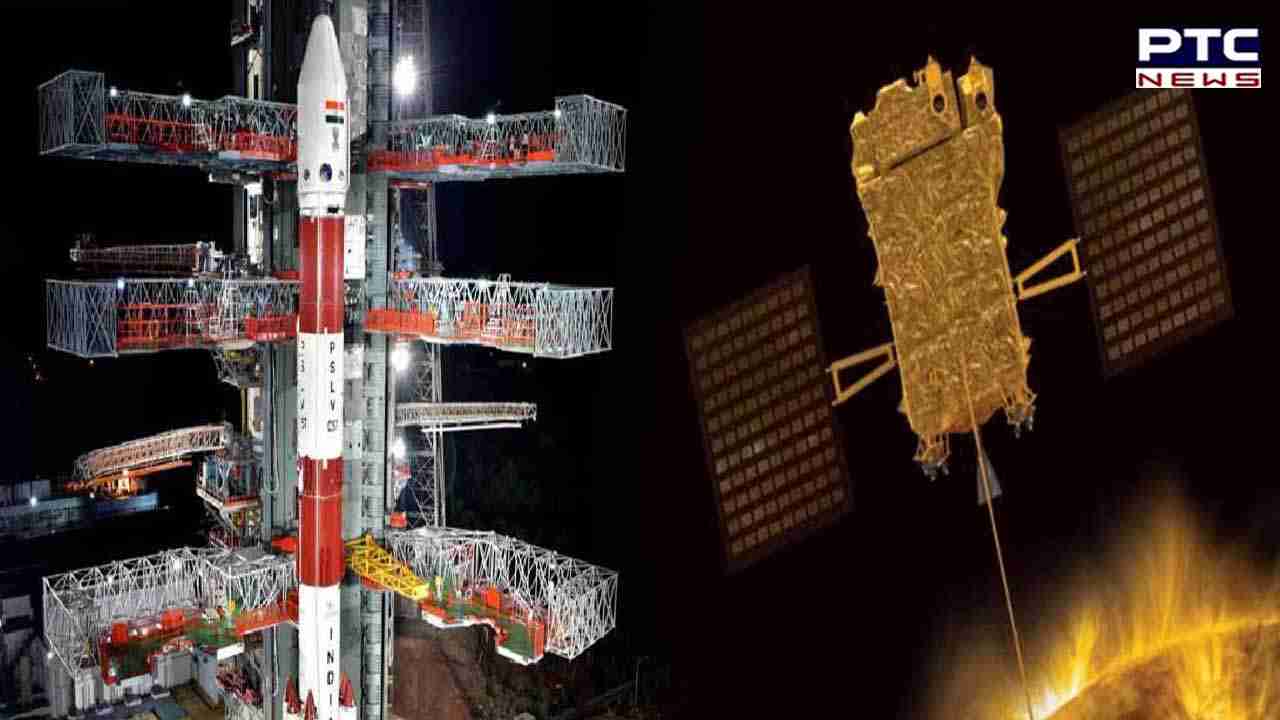
The first space-based Indian observatory to study the Sun is all set to be launched on September 2, 2023.
The launch of the solar mission will take place on September 2, 2023, at 11:50 am from Sriharikota.
With the launch rehearsal and vehicle internal checks all being completed, the Indian Space Research Organisation (ISRO) is all set for the country's maiden solar mission -- Aditya-L1 from the Satish Dhawan Space Centre (SDSC-SHAR) in AP's Sriharikota.

Aditya-L1 represents India's inaugural solar space observatory and will be propelled into space by the PSLV-C57. It will transport seven distinct payloads, enabling an extensive examination of the sun. Among these instruments, four will focus on observing solar light, while the remaining three will measure in-situ parameters related to plasma and magnetic fields.
The largest and technically most challenging payload on Aditya-L1 is the Visible Emission Line Coronagraph or VELC. VELC was integrated, tested, and calibrated at the Indian Institute of Astrophysics’ CREST (Centre for Research and Education in Science Technology) campus in Hosakote in collaboration with ISRO.
Aditya-L1 will be placed in a halo orbit around Lagrangian Point 1 (or L1), which is 1.5 million km away from the Earth in the direction of the sun. It is expected to cover the distance in four months' time.
On August 23, India took a giant leap as the Chandrayaan-3 lander module successfully landed on the moon’s South Pole, making it the first country to have achieved the historic feat and bringing to an end the disappointment over the crash landing of the Chandrayaan-2, four years ago. Overall, India became the fourth country – after the US, China, and Russia – to have successfully landed on the moon’s surface.
- PTC NEWS